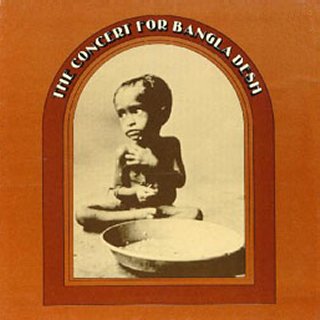
Forty years ago this August, George Harrison and his musical mentor Ravi Shankar organized the mother of all benefits with an all-star line-up: The Concert for Bangladesh at Madison Square Garden. Reeling from one of the world’s worst cyclones on record, refugees from East Pakistan (Bangladesh)—engaged in a liberation struggle from West Pakistan—flooded Shankar’s native Bengal region in India, a land still compromised from the great migration during Partition in 1947. Harrison heard his friend’s plea,and though he had no previous organizational experience he called on friends Bob Dylan, Eric Clapton, Leon Russell and Ringo Starr. Dylan, making his first public appearance in two years, chipped in “A Hard Rain’s A-Gonna Fall” and “Blowin’ in the Wind.” Harrison offered up “Here Comes the Sun” along with “Bangla Desh,” composed for the cause. Bangladesh set a precedent for immediate, organized concert charity in the name of tragedy and political strife, gathering the biggest names in music in the effort to preserve humanity.
The concert is streaming for free this weekend on iTunes in honor of the 40th anniversary, while musicians have united with UNICEF in their Month of Giving to bring relief to the children in the Horn of Africa, currently impacted by drought and famine.
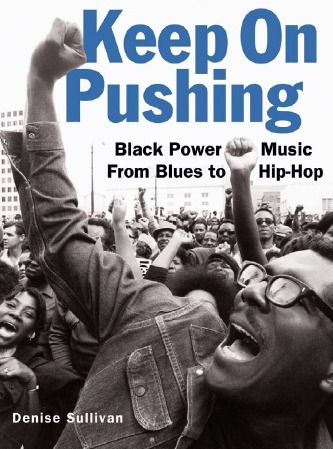
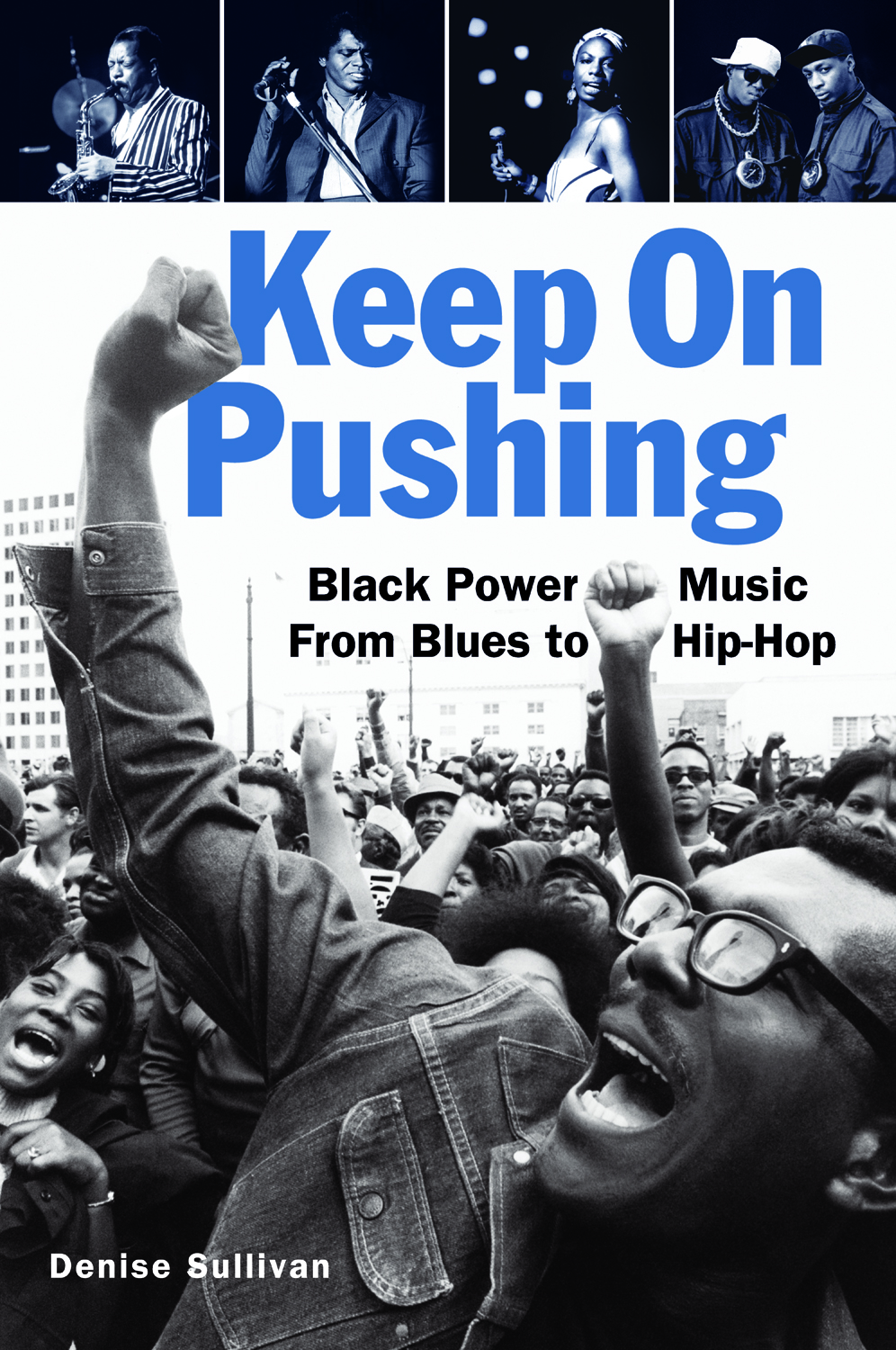
Read more on the Concert for Bangladesh and the history of charitable music concerts in Keep on Pushing.
Performing with the Impressions and with gospel music as his inspiration, Curtis Mayfield helped to set R&B in a powerful new direction in the ’60s. By the ’70s, he was contributing to the further politicization of soul music. “We Got To Have Peace” is from his 1971 solo album, Roots.
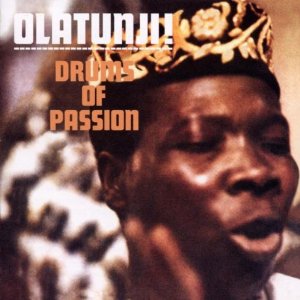
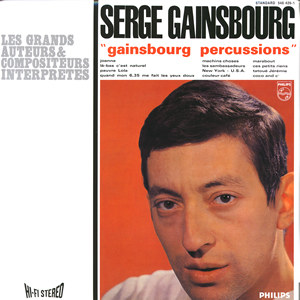
In 1964, the French singer/scamp issued his sixth studio album, Gainsbourg Percussions, a beat-driven project that included three remade (and uncredited) songs from Olatunji’s watershed recording, Drums of Passion. Olatunji’s work sold over five million copies in 1960 and introduced African percussive stylings to pop audiences around the world, its release synchronistically coinciding with the decolonization of Africa and the launch of the civil rights era in the USA. Gainsbourg’s ambitious concept album didn’t exactly take the world, nor the Bastille, by storm; largely it’s been forgotten, though it may well have been one of the earliest attempts on record of an Afro-pop fusion. Gainsbourg Percussions also marks a transitional time in the anti-authoritarian/artist’s timeline—a period in which he moved from the dying breed of chanson, into the more highly-charged yé-yé records he wrote/recorded in the mid-late ’60s with singers like France Gall, Françoise Hardy, Brigitte Bardot and Jane Birkin (they married and had a daughter, Charlotte). Gainsbourg connoisseurs are largely divided on the merits of Percussions, though the album featured a hit, “Couleur Café,” as well as the tense but hypnotic rewrites of Olatunji’s songs, like “Akiwowo” as ”New York—USA.”
Gainsbourg’s 47-year-old piece of work is once again available on vinyl; Drums of Passion was also reissued in a deluxe CD package on the occasion of its 50th anniversary last year.
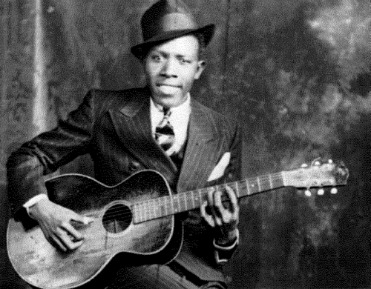
“You have to wonder if Johnson was playing for an audience that only he could see, one off in the future,” writes Bob Dylan in his book Chronicles of Robert Johnson, the blues genius whose work is still celebrated, 100 years from the day he was born. Johnson’s 29 songs were prescient in the way they would shape folk, rock, blues, and soul—as was his groundbreaking style of playing and singing them—and this week marks the beginning of his centennial year. Had he not died in 1938 at the age of 27, Johnson would be turning 100 on this Sunday, May 8th—supposedly—since the facts as we know them are still being contested, over 70 years after his death. But as the calendar opens on events scheduled for Johnson’s home turf of Greenwood, Mississippi, and across the country, in his honor we thought we’d look at his blues and revisit the well-worn folk legend about his meeting the devil at midnight at the crossroads, while we also check on the state of the 21st century blues from the perspective of a contemporary Mississippi blues player, Cedric Burnside.
From old-time and ragtime, to uptown Chicago strut, Delta picking, and hill country stomp, the root of all blues can be found in Johnson’s songs, which have served all forms of folk, rock, and even soul-jazz; he has survived homages by artists diverse as the Allman Brothers and the Rolling Stones, to Gil Scott Heron, the White Stripes and Keb’ Mo’, and satirists like Tenacious D. Indeed there is something supernatural about the way Johnson’s music, as well as the Faustian myth surrounding him, has survived time, outstretching the work of musicians from here to Yazoo, but there is obviously more to his achievements than a simple midnight pact made on the hallowed ground where Highways 61 and 49 now stand.
“I have to say, I’m a big fan of Robert Johnson’s music, and always have been, but when it comes down to him selling his soul to the devil, I don’t believe in no type of stuff like that,” says Burnside. “I think he really buckled down and practiced a lot and came out blazing,” he says. Burnside is right about Johnson’s devotion to his music rather than the devil, according to the Johnson scholars who’ve studied his life and music for at least 50 years now. But there is enough drama, dirt, and lowdown on him to fuel a legend of his likeness and many more like him, drawing as it does from existing folk tales as well as details drawn from the hard scrabble lives of other blues players and the lives they led as black men in the post-slave/pre-civil rights South. As grandson of the late R.L. Burnside, the rural South is something that Cedric knows all about; he worked alongside his granddad who sharecropped for food and shelter until Cedric was nine or 10. As for what he knows about Johnson, he learned that from his grandfather, too. He says Johnson’s works ring true to his experience in the rural blues.
“Some people that ain’t used to the blues and don’t listen to it much, they might see a movie on television, and it might have blues songs in it and the scene might be sad or violent, and that’s what their interpretation of the blues is, but it’s really way different. It’s a deep music. It’s soulful. I think it’s good for you,” he says.
For Burnside, the blues isn’t about harsh reality, breaking up, or bad times; rather, he says, “It helps you appreciate where you come from. I feel good when I’m playing it. I think about having been there and done that, that I made it through it, and I feel good about that.”
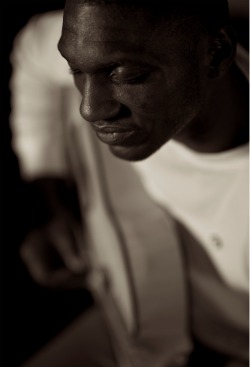
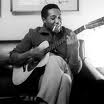
Burnside (pictured right) sings and plays guitar with his own Cedric Burnside Project and drummed with guitarist Lightnin’ Malcolm on the new album, 100 Years of Robert Johnson by Big Head Blues Club featuring jam band Big Head Todd and the Monsters, alongside tracks recorded with actual bluesmen: Charlie Musselwhite, B.B. King, Honeyboy Edwards, and Hubert Sumlin. Burnside and Malcolm caught their signature hill country groove on Johnson’s “If I Had Possession Over Judgment Day”; they also cut a mean slide version of “Ramblin’ on My Mind.” “We play similar music to Robert Johnson,” Burnside explains. “That’s all I know.”
As a kid growing up, Burnside says the family didn’t have a radio. “My granddad used to have house parties. He’d invite all his friends over; they’d set up on the porch, set up a little raggedy drum set and a little piece of amp, and go to playing, and that was our music. He explained to us, some of it was Muddy Waters, some of it was Howlin’ Wolf, and some of it was Robert Johnson. That’s how I came to know some of the music, by my granddad playing some.” Burnside is not only a fan of the Johnson guitar style, notable for sounding as if more than one guitar is playing simultaneously, but equally for his lyrics. “Some of the songs he wrote you can relate to, like ‘Come on in My Kitchen’—I definitely related to that. And ‘When You Got a Good Friend.’ They hit you right where the heart’s at. Anybody that done heard Robert Johnson or hill country blues will love to come to a live show; if they’re hearing it for the first time, they’ll love it for the rest of their life,” he says.
Clearly Burnside is a blues advocate and doesn’t have to be persuaded to talk up his state’s most famous export. He touts the North Mississippi All-Stars as “great musicians” and when I ask for recommendations he tells me the sister/brothers act, Homemade Jamz Blues Band, from Tupelo, are “phenomenal” (I have to say I agree). But Burnside reserves his utmost respect for the living Mississippi blues men Hubert Sumlin and James Cotton, who made their marks with the Howlin’ Wolf and Muddy Waters bands, as well as for Johnson’s contemporary Honeyboy Edwards, all of with whom he says it’s been his great honor and pleasure to play. The experience of sharing stages with these men places Burnside in a direct a line of Mississippi bluesman whose roots connect up directly with Johnson’s.
King of the Delta Blues
In a classic early book on the subject of the blues titled The Poetry of the Blues, by Samuel Charters, bluesman Henry Townsend explained the blues as a story in which the singer can take sympathy with another. J.D. Short seconded the emotion when he explained, “Sometimes the people that’s listening at you have actually been through some of the same things that I’ve been through, and automatically that takes effect on them and causes their attention to come.” The personal story of Robert Johnson has plenty of instability and strife for a perfect blues tale of woe, and yet through his songs run the threads of compassion Townsend describes. Born in Hazlehurst, Mississippi most likely on May 8, 1911, young Robert was shuffled between his parents’ homes until he eventually settled with his mother and stepfather in the Tunica-Robinsonville region of Mississippi. Married at 17 to a young wife who died in childbirth, old and superstitious church types might’ve said that such a fate was his punishment for playing secular songs to earn his living. You could even say this is the beginning of the so-called devil myth, though the story of bluesman Tommy Johnson (no relation) who reportedly told folks that he had sold his soul to the devil in exchange for his talent also figures in; admittedly, it’s an attention-grabber.
Needless to explain, the Mississippi Delta region was rife with folktales and blues musicians in the early part of the 20th century, their traditions and sounds descended from slaves from West Africa. Dislocated from their homeland and mistreated to degrees that they don’t teach in school, these men, women, and children were often put to work picking cotton for landed gentry. In post-slavery years, those who did not escape or migrate north often found work as sharecroppers, tending farms for owners who paid them a grossly disproportionate piece of the pie. As time went by, conditions in the South didn’t necessarily improve for black men and their families, who subsisted in a cycle of poverty. A man could be incarcerated simply for being on the street at night (the subject of Johnson’s song “Crossroads”), then sentenced to work in a labor camp or on a chain gang. This was the fate that Johnson intended to escape, and it motivated him to master music; it also kept him on the move throughout his short life.
In 1930, the blues singer Son House moved into the area where Johnson, as well as Willie Brown (who Johnson shouts out to in “Crossroads”), stayed, and Johnson picked up what he could from the blues professionals. By now remarried and with a child, Johnson’s second wife fell ill, and the crisis sent Johnson leaving town again, this time to perform in towns around Mississippi, Arkansas, and Tennessee. He found a new mentor in Ike Zinnerman, said to have developed his power by playing in a graveyard—and there again, a supernatural connection. The details have been debated for years now, but historians generally agree it was a comfortable life Johnson created for himself, away from the hard labor that caused others to be too tired to enjoy much of anything, much less develop prodigious skills as a musician. But it was a tough life as well: Not only did Johnson have a habit of loving up other men’s women, the menfolk were jealous of Johnson’s ability to get away with not working (therein the beginnings of another archetype—the layabout musician—that has persisted in and around rock ‘n’ roll for years). When he eventually returned to Robinsonville, his blues elders like House and Brown were said to be surprised by Johnson’s new-found professionalism. And soon he was ready to record.
The two recording sessions where Johnson laid down his 29 songs to tape were in 1936 and 1937. First stop was in the Gunter Hotel in San Antonio, Texas, where the Brunswick label set up a studio. Johnson played facing the wall, a set-up that has occasionally led historians to conclude that he was shy; rather, it’s likely he was trying to create a good acoustic environment for his recordings of “Terraplane Blues”, “Cross Road Blues”, and “Come on in My Kitchen”, among others. In 1937, Johnson traveled to Dallas where he recorded more sides for Brunswick, including his epic classics, “Hell Hound on My Trail”, “Traveling Riverside Blues”, “Love in Vain”, and “Stones in My Passway.”
Now keeping company with Estella Coleman of Helena, Arkansas, a woman 10 years his senior and mother of Robert Lockwood, Jr., Johnson took a shine to “Robert Junior,” just four years younger than him, and taught him everything he knew, deepening the family ties among bluesmen and between de facto stepfather and son. Johnson also fell in with an alliance of musicians including Honeyboy Edwards, Hound Dog Taylor, Robert Petway, and Tommy McClennan, all of whom were forging careers of their own. He traveled with Edwards and Johnny Shines performing all types of songs, though his own, save for “Terraplane Blues”, weren’t really well-known. Somehow, the ladies loved this song concerning the flashing lights, oil checks, spark plugs, and starter on an automobile, although it wasn’t just the sensational metaphors that attracted listeners. Johnson had a smooth style, developed and honed it, and when he played, it was like listening to a one-man band. So extraordinary were his abilities that to this day there persists a misguided theory that his tapes were sped up to achieve the otherworldly effects.
In Chronicles, Bob Dylan writes about receiving a pre-release version of Johnson’s landmark album finally released in 1961 as King of the Delta Blues. Columbia Records executive John Hammond had acquired Johnson’s previously issued recordings and had newly signed Dylan, who describes running to Terri and Dave Van Ronk’s house where Dylan and Van Ronk would listen to Johnson for the first time. “Johnson’s voice and guitar were ringing the room and I was mixed up in it. Didn’t see how anyone couldn’t be.” Van Ronk didn’t especially care for what he heard, though Dylan was immediately mesmerized, taking the record home with him and listening to it repeatedly for several weeks. “Whenever I did, it felt like a ghost had come into the room, a fearsome apparition.” He was particularly impressed with Johnson’s writing; the sophistication of the verses and economy of the lines, the way “every couplet intertwined with the next, but in no obvious way.” Dylan says he wrote down the lines so he could study their construction, “the patterns, the sparkling allegories, big ass truths wrapped in the hard-shell of nonsensical abstraction… They were so elemental in meaning and feeling and gave you so much of the inside picture.”
Sixty years later, Cedric Burnside says Johnson’s stories pull him into the action too, which is how he came to record “When You Got a Good Friend” for the Johnson tribute project. “A lot of people want good friends and they want to keep good friends—somebody that can stay right by your side through thick and thin. You’ve got something good,” he says. “A lot of people can relate to that. Some can’t.” Far from the image of a blues tough guy, Johnson advocates caring for friends, in this case a woman in question, though according to those who remember, Johnson was hardly the loyal and steadfast type. Surely Johnson was not the first or last musician motivated to hook up with the woman who would provide him with a warm bed for the night, but he was apparently notorious for catching hell from the men who normally occupied those beds.
Which leads us to the jealous husband who poisoned him—a story that is most likely true, according to Honeyboy Edwards, who was with him that night. Although, the cause of death was more likely the pneumonia Johnson caught while he was laid up from the poisoning. Had he heeded the advice of Sonny Boy Williamson to never drink from an open container, he may’ve avoided this fate. But then he would’ve missed all the ladies who reportedly sat vigil for him, attempting to nurse him back to health. And had he not fallen so ill, who knows if he would’ve felt the need for a last-ditch conversion on his deathbed, written in longhand and printed on his tombstone (one of three gravesites in the Greenwood/Hazelhurst area): “… I know that my redeemer liveth and that he will call me from the grave.” To this day, there remain three burial sites for Johnson: Mount Zion Missionary Baptist Church, Payne Chapel, and Little Zion Church.
The era immediately following Johnson’s death found his songs becoming embedded in the repertoire of his fellow Delta bluesmen like Muddy Waters, Elmore James, and Arthur “Big Boy” Crudup, to name but three whose blues helped shape rock ‘n’ roll. And yet it wasn’t until the release of King of the Delta Blues that the real obsession in the hearts and minds of musicians and fans began to swell. At the time that Dylan, followed by Keith Richards, Brian Jones, Mick Jagger, and Eric Clapton, first heard Robert Johnson, there wasn’t even a photograph of him, just 29 songs and a myth a mile long. In 1973, the first photographs of Johnson were found, the familiar close-up with cigarette and long-shot with guitar. It was in these years that Johnson’s connection to rock ‘n’ roll was established that the crossroads bargain myth grew larger. Led Zeppelin, their “Traveling Riverside Blues” and obsession with all things blues and magical, certainly contributed to spreading the music’s mystique around rock ‘n’ roll, as did the high era of ’70s Rolling Stones and their back to country-blues period around Exile on Main Street. By the ’90s, when Columbia issuedThe Complete Recordings, a generation raised on the myth of Johnson and rock ‘n’ roll was ready to embrace him like never before.
Whether through the pursuit of blues purity by collectors or by Budweiser blues and festival enthusiasts (the film Ghostworld nicely differentiates the real thing from Blues Hammer), the blues enjoy greater popularity than ever, and it probably must be said, largely among white audiences. But in recent years, that is changing too, as African Americans return to the South seeking work and better lives away from urban centers, returning to reclaim the Southern heritage that is their birthright. In Mississippi, the blues is always in style.
In 2008, a third photo of Robert Johnson was published in Vanity Fair magazine. Moving footage surfaced but was quickly waved away by scholars; in particular it was nixed by Robert Lockwood Jr.who definitively stated the man in question was not Johnson. In lieu of that holy grail of all Johnson artifacts, the inevitable digitalization has occurred. Columbia’s issued The Centennial Collection ofThe Complete Recordings as both two-disc and four-disc sets; Big Head Blues Club has dates booked through the rest of the year; Dogfish Head brewery has announced the creation of Hell Hound on My Ale, a Johnson-inspired craft beer. An exhibit of Johnson ephemera will be on display at the Cottonlandia Museum in Greenwood, Mississippi, throughout the summer.
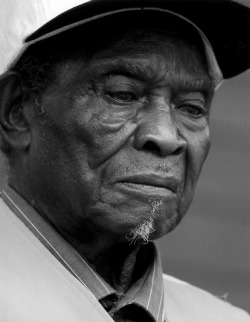
On the occasion of what would’ve been Robert Johnson’s 100th birthday, Honeyboy Edwards (pictured left), at 95 the oldest living performing and touring Delta bluesman, returned home to honor a friend. Edwards and the Cedric Burnside Project are among those on board for the official Robert Johnson Centennial Concert in Greenwood this weekend. Alvin Youngblood Hart, Keb’ Mo’, Lightnin’ Malcolm, Warren Haynes, Kenny Brown, and RJG—the Robert Johnson Grandson Band—also performed. Edwards wrote about Johnson’s unique playing style in his own blues memoir, The World Don’t Owe Me Nothing: “Robert came out with a classic blues style, with mostly a lot of minor chords. He had a lot of seventh chords in his blues and it sounded better than just playing straight. And that took with people, because he had a different sound.”
Edwards describes his fellow bluesman as a nice person who admittedly loved his whiskey and women, but who was no hellraiser. “Robert’s more popular because he died, like everybody else who dies young. But he was a great musician. He innovated his own way of playing. Robert had his own style and he held with it till he died. He wasn’t out there long, but he changed everything.”–published in Crawdaddy! May 6, 2011.
“A pleasing survey of soul music, from Lead Belly to Johnny Otis to Michael Franti to Louis Farrakhan.”–Kirkus Reviews “…packed with informative details and commentary, and those who are willing to give it the thoughtful reading it deserves (perhaps along with listening to a sampling of recordings) will be rewarded.”–Library Journal
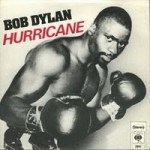
Bob Dylan’s relationship to the political world and the matters he chooses to champion or protest have been the subject of much debate, discussion, and inspiration for 50 years now. His arrival in Greenwich Village in 1961, to a scene that was informed equally by poetry and politics as it was jazz and folk, marked the beginning of his journey with topical song, to be followed by his famous retreat from it, as well as from those looking to pin a generational voice or spokesman tag on him. And yet, as the ‘70s began, Dylan was back on topic, returning to his roots as a social justice singer with “George Jackson”, a memorial for the radicalized convict and Black Panther who died in a San Quentin prison shoot-out in 1971. Dylan spoke to power again in 1975 with “Hurricane”, concerning the flawed judicial process that sent away middleweight boxer Rubin “Hurricane” Carter for an unjust term. Certainly the names George Jackson and Rubin Carter would be remembered in the halls of political history and activism (and in Carter’s case, boxing as well), even if their stories hadn’t been the subject of Dylan songs. But it’s also safe to say that in both cases, Dylan’s songs contributed toward increasing awareness among rock fans of the shortcomings of a criminal justice system in need of reform, as well as toward an understanding that all human life is of equal value, no matter the person’s race or class. In the case of Carter, a song even affected the outcome, though for Jackson it was too late: Like Dylan, he would’ve turned 70 this year—though as the song goes, “Lord, Lord, they cut George Jackson down” in 1971.
“George Jackson”
Against a backdrop of escalating war in Vietnam and social and political mayhem to accompany it at home, by the late ’60s and early ’70s, the climate was hot for topical rock and soul songs which documented the times. John Lennon put forth “Imagine”, the follow-up to his and Yoko Ono’s initial bursts of song devoted to giving peace a chance. Marvin Gaye voiced his concerns in “Inner City Blues (Makes Me Wanna Holler)”, “What’s Going On?”, and “Mercy, Mercy Me (The Ecology)”, while Cat Stevens boarded the “Peace Train” that would ultimately take him to study the Qur’an and inspire a conversion to Islam. It was also more or less expected that in these times of trouble, serious artists would weigh in on the events with a song. From the chart-busting Motown artists who began to draw from a repertoire that was blacker and stronger, to the rush-released recording by Crosby, Stills, Nash and Young of “Ohio” concerning the shooting tragedy at Kent State, the appetite for topical songs in the US was evidenced by their chart successes. And it was in part thanks to Bob Dylan’s early ‘60s pro-civil rights and anti-war songs that rock music with a message thrived throughout the decade. Although, from 1966 through much of 1971 Dylan remained in self-imposed exile from touring, leaning more towards poetical and philosophical flavors, rather than those polemical or topical for his songs—that is, until his unexpected return.
Performing in public for the first time since his Isle of Wight concert in 1969, Dylan appeared at Madison Square Garden on August 1st at the Concert for Bangladesh, the model for contemporary all-star rock charity events. Organized by George Harrison and Ravi Shankar, the rally for Bangladesh raised awareness and funds for the residents of East Pakistan and Bengal India, regions beset by complications of war and a cyclone and the flooding and famine that went with it. An already troubled region was now devastated, and as Shankar outlined the situation for concert-goers, Dylan helped to draw them, performing “A Hard Rain’s A-Gonna Fall”, as well as a handful of more apolitical songs.
It was later that month at San Quentin during the summer of 1971 that George Jackson was shot to death during an alleged escape attempt following a prison riot in which inmates and a guard were killed. Less than a month after the Jackson incident in California, a historic event at Attica Correctional Facility wherein prisoners took control of the prison to protest its poor conditions resulted in more fatalities and became an unmistakable call for prison reform. Perhaps it was that call that Dylan was responding to when in November, he cut and released “George Jackson”, a 45-rpm record that reached the Top 40 in January of 1972. Opening with the blues trope, “I woke up this morning,” Dylan’s “George Jackson” is not a typical blues song, though it surely addresses the larger topic of racial and socio-economic oppression from which a certain strain of blues was born.
Jackson had made it to California from the streets of Chicago; a 70-dollar robbery landed him in prison, his sentence indeterminate. Jackson found trouble inside the prison walls too, and as his sentences were extended—chiefly behind events occurring at Soledad State Prison in which three black inmates and a white guard were killed—he used the time in solitary to educate himself. He studied psychologist Franz Fanon (The Wretched of the Earth), Marx, and Mao, and came to understand the incarceration of poor blacks for petty crimes in a political context. A leader in moving prisoners to radicalize, Jackson joined the Black Panthers while on the inside, and went on to become one of the group’s most celebrated members. However by 1969, J. Edgar Hoover—declaring the Black Panthers to be public enemy number one—had set out to decimate them, and other groups like them, with a counterintelligence program, and was largely successful at it. Nevertheless, Soledad Brother: The Prison Letters of George Jackson was published in 1971 and was greeted by a positive reception by intellectuals and political progressives. That Jackson had been framed in the Soledad incident, for conspiring to kill a guard, was a widely held belief; subsequently, a vocal celebrity chorus came to Jackson’s defense. But a few days before his trial for the murder was to begin, a riot broke out in San Quentin in which inmates and guards were again slain; Jackson was shot while running across the yard in an alleged escape attempt. The details of the case are still being debated by scholars, historians, and survivors, many of them with a personal attachment to the events of that day.
“The power of George Jackson’s personal story remains painfully relevant to our nation today, with its persistent racism, its hellish prisons, its unjust judicial system, and the poles of wealth and poverty that are at the root of all that,” wrote historian Howard Zinn in an updated version of Jackson’s Soledad Brother. Wresting larger truths from the events of 1971, Dylan delivered his summation in these often quoted lines from “George Jackson”:
“Sometimes I think this whole world
Is one big prison yard
Some of us are prisoners
The rest of us are guards”
Dylan cut two versions of “George Jackson” for a double sided seven-inch: A “big band” version featuring Kenny Buttrey (drums), Ben Keith (steel guitar), and Leon Russell (bass), and a solo acoustic version. Among the various issues of the single—and there are many—is a picture sleeve with an image of Dylan performing at the Concert for Bangladesh. Reggae group Steel Pulse covered “George Jackson”, while the original Dylan single of it remains a sought-after collectible among record fans.
“Hurricane”
While Dylan’s late ’60s and early ’70s performances were scarce and scarcely political, hisalbumsSelf Portrait and New Morning were the personal reflections of a more inwardly directed songwriter. Though he stepped out with the Band for Planet Waves and a tour in a new era of big-time rock ‘n’ roll concert business, he retreated again, against the backdrop of a marital disintegration that famously produced Blood on the Tracks in 1975. But by summer of that year, he came out swinging.
“Here comes the story of the Hurricane
The man the authorities came to blame
For something that he’d never done
Put him in a prison cell but one time
He coulda been the champion of the world”
Dylan once again spoke to criminal injustice when he took on the plight of boxer Rubin “Hurricane” Carter, who was serving time on a triple murder conviction in a New Jersey state prison. Impressed with Carter’s book, The Sixteenth Round, in which Carter explains his history as a vocal supporter of black rights and his experience of being framed by New Jersey law enforcement, Dylan was moved to visit him in prison. As the story goes, following a five- or six-hour talk with Carter, Dylan set about writing the tribute with Jacques Levy, his collaborator at the time. “Look, there’s an injustice that’s been done and Rubin’s gonna get out, there’s no doubt about it,” Dylan told author Larry Sloman. “But the fact is, it can happen to anybody.”
“Hurricane” transcends simple topical protest song. Broadcasting as clearly as the pistol shots that rang out in that New Jersey night, Dylan sets the scene and creates a detailed picture of a world unfamiliar to the majority of his listenership—many of them now younger, and largely unacquainted with the combustible state of race relations in Patterson, New Jersey, circa 1966. The song stirs feelings of empathy and compassion; it becomes a companion for believers in the cause to free Rubin Carter, as well as for others wrongly imprisoned behind false testimonies and racial bias. Following the release of the song as a single in 1975 and the formation of a grassroots movement for Carter’s freedom based on the false evidence used to convict him, the boxer was released on bail and granted a new trial the following year. His conviction was finally overturned in 1988.
During his 1975-’66 Rolling Thunder Revue, Dylan and friends performed “Hurricane” onstage every night. The entourage, including Allen Ginsberg, Joan Baez, Joni Mitchell, T Bone Burnett, Bob Neuwirth, and Ramblin’ Jack Elliott, rolled into Madison Square Garden in December of 1975. They were joined that evening by singer Roberta Flack and boxer Muhammad Ali for a benefit billed as “The Night of the Hurricane.” Ali addressed the crowd playfully, in characteristic rhyme. “I’m so glad to see you all with the cause because you have the connection with the complexion to get the protection,” he said from the stage.
Carter also spoke that night, his words delivered through the house PA via telephone. “Muhammad… on a serious note, my brother Bob Dylan once wrote, ‘Walk upside down inside handcuffs, throw up my legs and kick them off. Say all right, I’ve had enough. Now what else can you show me?’” Carter said, quoting from “It’s Alright Ma (I’m Only Bleeding).” “Speaking from deep down in the bowels of the state prison of New Jersey, the fact that I’m speaking to you and the other brothers and sisters in the audience, that’s revolutionary indeed.” Praising the love of his wife and daughter, Carter said his hope was alive. “I knew that if I remained alive, that if I kept myself well… I knew they were going to come to my rescue, and tonight, here you are.” And though eventually all charges against Carter were dropped and he was exonerated, controversy still surrounds his case.
Richie Havens, a frequent interpreter of Dylan’s songs who opens all his shows with “All Along the Watchtower” (to name just one of Dylan’s pointed “post-protest” era tunes), says that “Hurricane” remains his favorite among all of Dylan’s songs. “That was an incredible job of going in there and winning, getting him out of there. Unbelievable,” Havens said in 2008.
If I had to pick just one, I would have to say that “Hurricane” is my favorite song by Dylan too. From the first time I heard it in 1975, it spoke to matters that as a young person I had little experience with, and yet I felt the truth in the lines, especially the one about the criminals in their coats and ties and how they put the wrong man behind bars. Everyday, I couldn’t wait for the song to come on the radio so I could stop whatever I was doing, and for an entire eight minutes and some odd seconds, be transported, away from whatever real or imagined injustice was happening in my immediate sphere. This was not my parents’ Dylan (not that they listened to him), the vast catalog of songs from the ’60s that at the time meant so much to so many yet very little to me; this was the new ’70s Dylan. His exciting return to protest, and of course rebellion, was something that I as a member of a new generation of listeners could totally get with.
Perhaps the goodwill of however many Dylan fans, young and old, diehard or just discovering him, rushing toward the Carter case and the folks who feverishly worked on it gave the cause a boost. Without a doubt, it was a song that set a direction for me—toward further discovery of folk and story songs, topical singing and freedom movement, liberation, cultural celebration, and message songs; the kind that contain secret, hidden histories of ourselves and of our country; the kinds of stories that aren’t often told in school but rather handed down in oral tradition, read in books like Carter’s and Jackson’s and, of course, heard in Bob Dylan’s songs.–
“For some odd reason, I know everybody,” says Richie Havens. Whether it was destiny or a cosmic hiccup, the musical climax of the ’60s was an auspicious day for Havens when an unplanned three-hour set opening the Woodstock Festival opened his doorway to worldwide recognition. “We landed, they chased me, I went on,” he explains. And yet, even if things hadn’t gone down that way, Havens would still have made his mark on rock history as a graduate of the original Greenwich Village folk scene, as a writer and interpreter of substantive songs, and as the third point in the magic triangle that connects Bob Dylan and Jimi Hendrix.
“I gave him the words to that,” says Havens, speaking of Hendrix and “All Along the Watchtower”, the song Havens still uses to open all his shows. The first song Havens ever covered by Dylan was “A Hard Rain’s A-Gonna Fall”; he’s since reworked “If Not For You”, “It’s All Over Now, Baby Blue”, “Lay Lady Lay”, “Maggie’s Farm”, “The Times They Are A-Changin’”, and, most recently, “Tombstone Blues” for the surreal biopic I’m Not There in which he also appeared. As for Hendrix, Havens first witnessed him in action in an uptown club and was so impressed, he hipped him to the Village scene. “I did share that with him—that he didn’t need to be a studio musician, at the whim of everyone else—that he could be in his own band… that’s how we started out knowing each other.”
The last time Havens saw Hendrix was at the second Isle of Wight Festival; the pair had planned to meet in London soon after but Hendrix never made it. “He was a very shy person, quiet person, until he got on stage; then he grew two feet tall,” Havens continues. “He created himself and this showed when he walked up on that stage, how powerful it was and how necessary it was… he loved Bob Dylan’s songs too.”
Beatnik Beginnings
With his ears that catch the rhythm of words and a heart that stays constantly tuned to the station of brotherly love, Havens is a fellow traveler for freethinking ’60s grads and a father figure to those who wish they could’ve been there. As someone who falls in the gap, I can be easily mesmerized by stories of Allen Ginsberg, Hendrix, Dylan, and Woodstock among other things, and so I was willing to take the leap into Havens’ world. Like a new age beatnik who broadcasts the subterranean news through his songs, poems, artwork, and stories that reach across generations (his latest album is No One Left to Crown), Havens fits Jack Kerouac’s description of Beats as “characters of a special spirituality.” A self-proclaimed “song singer” and “all-around expressionist,” he was not only present, but he participated in the cultural shift that began with the Beats and carried over into a mass movement in the ’60s. And yet for Havens, the decade was just the staging ground for the bigger change that’s going to come, the one he says is taking place right now: He calls this phenomenon humanity’s becoming. “I’m blessed to see that we’re really just beginning on what it was we were supposed to be working at, in order to bring about the connection of all of us to each other,” he says.
Back in 1958, when Richie Havens was a teenage doo-wop singer in the Bedford-Stuyvesant neighborhood of Brooklyn, the kids there called him a beatnik. Not knowing for sure what that meant, he took a train with a friend to Greenwich Village to see what he could find out.
“We found out these guys in the neighborhood were talking about poets, and what they might’ve thought was derogatory became a very positive thing to us,” says Havens. It wasn’t long before he was reading his own poems in Village coffeehouses. “We’d sit at a table with our little books and Ginsberg would say, ‘What’s in those books? Get up there and read them!’ That’s how it began for me.
“A lot of people say, ‘What did we do? We didn’t do much.’ Oh yes we did,” he says, in answer to the cynics. “That which was a part of us was connecting up with what we were becoming at that point. And so it was wonderful to see changes. We made an atmosphere. That’s what we’re doing now. Backgrounds and atmosphere. Oh, that’s a good title! Backgrounds and atmosphere.”
Finding work in the Village as a portrait artist, he also discovered folk music in the coffeehouses and began to spend more and more nights in them, arriving later and later to the painting gig, while moving further away from his Bed-Stuy roots. He might crash in the city with singing pals like Little Anthony and the Imperials, but doo wop was no longer compelling to him, nor was the Brooklyn he knew as he watched his neighborhood and old pals take directions he wasn’t going. And so he left doo wop and a potential life in “show biz,” and became a part of what he calls the “communication business,” joining up with the folk scene. “I gave up show biz when I found a different song to sing, like Freddie Neil’s song to ‘Tear Down the Walls.’ In 1959? I’m going, ‘wow.’”
“The music’s in the air, where every man is free,” sang Fred Neil on “Tear Down the Walls”, one of his early-period folk songs. “When I think about it, that’s a heck of a time, when almost nobody was asking those kinds of things or projecting them,” says Havens.
“And Dino Valenti, ‘Love is but a song we sing, and fear’s the way we die,’” he sings, quoting “Get Together.” “He wrote it in 1958! We were awakening by these songs… I couldn’t wait for them to write another song so I could sing it from the audience with them.” Havens took to singing-along, especially while Fred Neil performed, “in harmony no less,” while Neil, who had a reputation as friend-to-the-new-folkie, advised him to get a guitar and learn his own. Three days later, Havens returned to the Village and began to perform six nights a week for the next six years.
“I thought it was time for my friends to hear something more than what we were relegated to do,” he says, referring to the diminishing options for his street corner pals. Havens’ parents were working people; his paternal grandfather was a Blackfoot Indian who traveled east with Buffalo Bill Cody and his Wild West Show. His maternal grandmother was a Caribbean Islander from Great Britain, “born on Christmas Day,” who helped raise him while his parents worked. He recalls one day, as she hung laundry on the line in the backyard, she asked him what he wanted to do with his life. “I said, ‘I want to meet everyone in the whole world.’ I was about five. I’d sit outside and look at the moon in daylight all the time… I’d make a circle with my hands, like a big open eye, and just cut out everything but the clouds going by… I was always fascinated to be a part of this becoming. I don’t think there was any negative feeling I could have.”
There were other teachers: He credits singer and activist Nina Simone and writer and activist James Baldwin as forces in creating an audience for a new brand of socially conscious black expression. He was invited to tour with Simone in 1963—although as they were literally traveling down the road together they overhead on the radio that President Kennedy had been shot. “It was one of the saddest days of my life and of course the tour was over. From that moment on there was a new depth in everything I sang or interpreted,” he wrote in his 1999 autobiography, They Can’t Hide Us Anymore.
A Mixed Bag
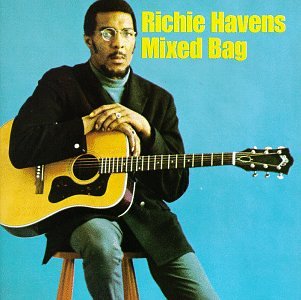
He cut some songs in the early to mid-’60s, but it was his 1967 and 1968 albums, Mixed Bag and Something Else Again, that revealed his own growing consciousness, as well as the imprint of Fred Neil, whose strong strumming style and suspended notes echo through Havens’ own work. Tangling with war and the civil rights issues on “Handsome Johnny” (the lyrics were written by his friend, actor Lou Gossett, Jr., himself a onetime Village folkie), he also took on “The Klan.” He laid down his famous version of Dylan’s “Just Like a Woman”, the song which he says personally illuminated the multi-dimensionality of womankind for him. Simone would go on to perform the Havens song “No Opportunity Necessary, No Experience Needed;” it was her commitment to dynamic, emotional song interpretation that also freed Havens to sing the songs of others in whatever mode moved him. And though Simone’s music defied boundaries, by virtue of his acoustic guitar strumming, Havens is most often put into the folk or folk-rock bag.
“All music is folk music,” says Havens. “There is a folk-music quality to my generation’s rock ‘n’ roll. We were singing about things without thinking of them as social commentary.” Then, as now, if Havens has an overriding message, it concerns freedom, something that he says “we are supposed to have already.”
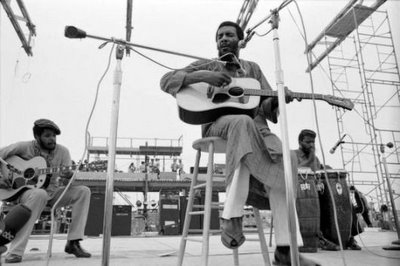
“Freedom” is the name of Haven’s best-known song, the one that famously evolved out of an improvisation at the end of his accidental three-hour opening set at Woodstock. He and his two-man group were meant to be fourth on the bill, but they were thrown on stage as the first because, unlike some of the other acts, Havens and company were present and accounted for, easy to set up, and all importantly, had not ingested the infamous brown acid.
“I went and did my 40 minutes, I walked off and they said, ‘Richie, can you do about four more songs?’ No one was there to go on. I went back and sang the four songs. I walked off. ‘Richie… four more?’ They did that six times until I realized, I don’t have another song. I’m done. I’ve sung every song I know. It’s two hours and forty-five minutes later… and that’s when I start that long intro, that’s me trying to figure out what I’m going to play, and I yell out the thing about the guitar microphone… please, let me stall a little bit more!”
After about a minute of freelancing a percussive riff in his distinctive open-D tuning, accompanied by an Afro-Cuban conga beat, he cried the word “freedom,” and then repeated it eight more times. “I just went with that… all of a sudden, ‘Motherless Child’ came out. I hadn’t sung that song in 14 or 15 years. I used to sing it early on in the Village.” He also slipped in a couple of secularized verses from a song he calls “I Got a Telephone in My Bosom” (a variation on the song that became known as “Jesus is on the Mainline”), which he learned during a brief gospel education. And though he was in a state of improvisational ecstasy, Havens could still sense that by participating in Woodstock, he was taking part in history.
“They can’t hide us anymore” was the thought that went through his head upon seeing the masses at Max Yasgur’s Farm that day. At first observing the scene through the floorboards of the helicopter that was delivering him to the gig, and later from his vantage point on the stage, “I thought, ‘when the pictures come out in the newspaper, they’ll see we are now above ground. We’re no longer relegated to the underground.’”
The Here and Now
Part of Havens’ method for delivering his message remains through singing the work of others. OnNobody Left to Crown, he finally got around to recording Jackson Browne’s “Lives in the Balance”, an urgent missive on the human cost of war that he’s been performing for some time now. He also pulls out a show-stopping version of the Who’s “Won’t Get Fooled Again.”
“I wanted to do it right after it came out, I loved it so much, but I thought, ‘it doesn’t need to be said twice—the Who’s done it.’ I held that in a box—my hold it box. It took this long to come back around and it fit.”
He describes a similar situation with “The Great Mandala.” “I’d been trying to get that song from Peter Yarrow for like 20 years… it’s a song that’s always haunted me. It has an almost Brecht kind of thing to it—very staunch and very on the one. The lyrics just kill me… the amount of dictatorship on the planet and what’s happening to it and how it’s falling by the wayside at this point. That’s what I see. All of the things we were not told, we’ll find out within this year, no doubt about it.”
He wrote and recorded the title song live years ago, but saved the studio recording of it until now. “What if they gave an election and nobody came? What would we be doing? There’s nobody left to crown but us, for all of the things we’ve been through because of politics… for example, we learned this year that every law that was passed was passed in the middle of the night and no one knew it.”
For all of his political awareness, Havens has never been one to exercise his right to vote—until now. He went to the polls for the first time for the 2008 presidential primaries. “I found that it was now necessary to do that.”
Soon after the Woodstock experience, people all over the world started to request he play his own creation, “Freedom.” “And I’d say, ‘Freedom? Which freedom?’ And they’d say, ‘You know, “Motherless Child.”’ Holy smokes! Then it turns out to be in the movie and this is a big time change for me.” Havens had never seen himself perform until the Woodstock film came out months later. “It scared me to death, it was just so large. It wasn’t me, you know. It was a song. I became a mechanism to get that song out.”
The Woodstock Festival and the Isle of Wight shortly thereafter introduced Richie Havens to audiences on a massive scale as a dynamic acoustic performer and ambassador of socially conscious song and thought. He never tires of his responsibility as a ’60s generational spokesperson, though he’s an even bigger supporter of youth and the environment; in 1990, he helped to found the Natural Guard in New Haven, Connecticut, an organization where kids began to “guard the natural” in their own surroundings. From a community garden that fed the homeless to a lead poisoning awareness campaign, kids spotted the problems and created solutions that had a lasting impact on their community as well as their own lives. “It really was based on children using their own community as the endangered environment. The most put-upon group is children.” Children from three different chapters were recognized by then-Senator Al Gore for their environmental justice efforts.
If Havens has learned anything through his years of becoming, it’s that his work here isn’t yet done. “Don’t expect everything that happens to finish itself at once. It’s still happening, and it’ll reveal itself to you.” As he travels (he works three nights a week, down from his Village-era six), he finds that the local talent who open his shows seek his counsel on how to proceed with their careers. Advocating the digital DIY approach, he tells them, “Make your record, get someone to help you put it out, and go to the world directly. Get your feedback from the whole planet. That’s where you connect.”
Of course, that’s easy to say if you’re Richie Havens, the boy who told his grandmother he intended to meet everyone in the world some day and a man who believes music can change the world. But can it, really? “Absolutely,” he says. “And it will soon.” —published on September 10, 2008 in Crawdaddy!
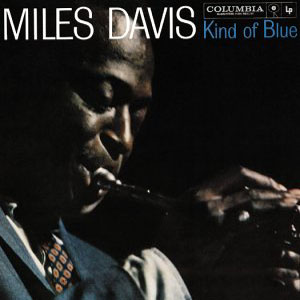
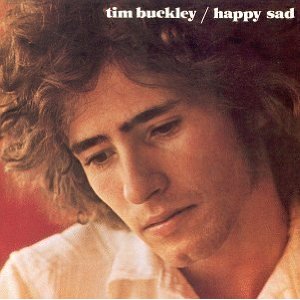
In July of 1969, while Neil Armstrong took his walk on the moon, here on earth, Tim Buckley and Miles Davis were taking their own giant steps toward where only few had gone before: Buckley changed his style and went jazz-rock on his acoustic odyssey Happy Sad, while Davis went entirely electric, forever changing jazz and launching fusion with In a Silent Way. Both men had their reasons for changing their songs… Dig these origins of the new music.
Davis’1959 album Kind of Blue had already revolutionized jazz, steering away from chord progression and toward modes or scales as the base for its jams. Contributing to Miles making the leap in his own music was his contemplation of the piano style of Ahmad Jamal. “In Jamal he recognized a kindred spirit and freely borrowed whatever he could from him,” wrote Jack Chambers in Milestones: The Music and Times of Miles Davis. “Davis made no effort to conceal his debt.” Nor would Buckley try to hide his 10 years later when he used Miles’ “All Blues”, from Kind of Blue, as the inspiration for his vocal improvisations on “Strange Feelin’”, which opens Happy Sad. Improvisation, interpretation, and expression of influence are of course just a part of what makes jazz swing.
Buckley had been studying up on the music’s construction while hanging out at his Venice, California pad, listening to Miles and guitarist Gabor Szabo and saxophonist Roland Kirk, among other jazzers. He was a fan of the Modern Jazz Quartet, especially its vibraphonist Milt Jackson, who specialized in cool, and was inspired to secure a vibes player of his own, David Friedman, for his new lineup. In December of 1968, Buckley, with his 12-string acoustic, headed to Elektra Sound Recorders in Los Angeles with Friedman, Lee Underwood on lead guitar, Carter Collins on congas, and John Miller on acoustic bass for the recording of Happy Sad. The acoustic lineup was a switch, as was the absence of Buckley’s writing partner, Larry Beckett—an attempt to break free from the constraints of poetic social protest and into the revolution of his own mind. Guitarist Underwood recalls this period and his time with Buckley in his memoir, Blue Melody: Tim Buckley Remembered.
“Tim treasured his independence above all,” he wrote. “Right from the beginning, the music industry’s business categories never fit. Buckley was unique. He played Buckley music.” As a singer-songwriter Buckley appreciated the spirit of Fred Neil and his acolyte Richie Havens, both of whom pushed folk’s limits with the use of suspended chords and improvisatory jams. Underwood confirms the genesis of “Strange Feelin’” as the result of Buckley walking in on Friedman and Miller playing Miles’ “All Blues” at the recording session.
With roots planted in the same American soil that sprouted the work and sacred songs that bloomed into blues and R&B, it was inevitable that by the mid-’60s, post-bop/modern jazz and rock (which was doing its Beatles/Dylan self-contained band and singer-songwriter thing) would meet. Twenty-two-year-old composer and pianist Herbie Hancock had pointed the way in 1962 when he used the blues as a base for “Watermelon Man” and scored a pop hit with it; he was then promptly snapped up by Miles for his band. Young guitarist Larry Coryell created a synthesis in 1966 when, with drummer Bob Moses and saxophonist Jim Pepper, he formed the Free Spirits. They released one album, Out of Sight and Out of Sound, before Coryell left the group and went on to conquer the world of jazz fusion guitar, while Jeremy Steig, with Jeremy and the Satyrs, gave jazz-rock-fusion a shot in 1968, too (you may know Steig’s “Howlin’ for Judy” as the main sample from the Beastie Boys track, “Sure Shot”). Though one-offs, Coryell and Steig had succeeded in bringing a touch of rock’s freaked-out psychedelic vibe to jazz, while freaked-out rockers were getting all jazz-like. As Jimi Hendrix, Duane Allman, and Jerry Garcia were taking soloing and improvisation to new extremes, rockin’ the jazz organically grew: The Doors specialized in Miles-forged modalities, while acts diverse as Blood Sweat and Tears, Frank Zappa, and England’s Soft Machine all drew from variations on jazz themes. So too did Van Morrison on his singer-songwriter-folk-jazz-solo-acoustic album Astral Weeks in 1968, for which real jazzers (including bassist Richard Davis and the Modern Jazz Quartet drummer Connie Kay) were hired for the sessions.
On the Miles side, this was the period in which he was said to have proclaimed, “I could put together the greatest rock ‘n’ roll band you ever heard.” Until then, he assembled a great band period for the recording of In a Silent Way, its individual members going on to inform the direction of jazz fusion from those days forward. Convening at CBS Studios in February of 1969 were Herbie Hancock and Chick Corea on electric piano, Wayne Shorter on sax, Dave Holland on double bass, John McLaughlin on electric guitar, and Tony Williams on drums, with Joe Zawinul, the composer of “In a Silent Way”, on organ. The album’s electric keyboard sounds would become identifiable as one of fusion’s prime instruments. Having opened the door to electric music on the albums just prior to In a Silent Way, Davis’ follow-ups, Bitches Brew and On the Corner, took melding new tastes and textures even further out, while fusion became the dominant direction for jazz in the ‘70s. In the wrong hands, fusion is a senseless mess, which is how it earned its bad rap. But in the hands of experts, it served as a gateway to funk and hip-hop and a great harmonizer between all styles. Hancock specifically would become fusion’s jazz warrior with the full synth sound of Head Hunters, but he’d been working the borders since his “Watermelon Man” was recorded by Afro-cuban bandleader Mongo Santamaria. Hancock’s “Cantaloupe Island” is said to have brought the funk rhythms to jazz as early as 1964; his slamming ‘80s “Rockit” period (on which DXT rocked the turntable) and the return of “Cantaloop (Flip Fantasia)” with a rap by Us3, put Hancock at every juncture of rock ‘n’ rap and jazz.
Down through the years, it’s been widely acknowledged that Davis’ wife at the time, singer and scenester Betty (Mabry) Davis, exerted her rock ‘n’ soul interests on her husband, introducing him as she did to Hendrix, among other rock ‘n’ rollers. But it was all part of a logical progression for Miles, who had even tried the slogan “Directions in Music by Miles Davis” to lift him beyond the limits of just jazz. Buckley’s record company had tried a slogan to describe him too—“Buckley music”—though Buckley liked “heart music” to describe his work, if in fact he had to have a label at all. “I feel proud of Happy Sad,” writes Buckley guitarist and friend Underwood. “Rough spots and all. Its heartsong flies in spring’s blue skies outside of time. Some of the music on it will last for decades to come.” True that, though it would take another folk-singing switch-hitter to turn rock toward jazz and into something entirely new, and then sustain that direction for the rest of her career: Joni Mitchell had also studied Miles, and following a period of woodshedding with the blue notes in 1971, she released Blue. Composed with alternate tunings and unusual juxtapositions of notes, the album was a game-changer in pop and certainly a milestone for Mitchell, who steadily moved into regions you could only call “Mitchell music.”
I asked my friend Pat Thomas, who leads the contemporary jazz-prog-rock consortium Mushroom, to weigh in on the subject of jazz and rock, and he pointed to 1970 England and Soft Machine’s Third,another considered classic of the genre. “Some of the most over-the-top fuzzed-out and distorted playing I’ve ever heard,” he says. The Soft Machine’s meeting of jazz, rock, and classical also equals the birth of prog, another subject for another column. Jazz-rock-prog is alive and kicking on Mushroom’s latest, Naked, Stoned & Stabbed, an adventure in Afro, Latin, and jazz rhythmics mixed with freaked-out folk, blues bases, and ambient, Alice Coltrane-trance states. Like Tortoise, Mushroom use music—all music—to travel outta sight and outta sound. If you’ve got any contemporary or classic fusion faves, we’d love to hear your comments, as you’ve just read some of mine save for one:
In 2007, though you couldn’t call it fusion, you wouldn’t call it rock, though you might call it jazz, two legends collided after four decades of music making. River: The Joni Letters, was a collection of mostly Mitchell songs performed by Herbie Hancock, joined by Wayne Shorter, Dave Holland, and special guest vocalists for the sessions. The jazz cats would call it too much, but I think it’s out of this world. Better yet, leave off the label and just call it Music: It’s the next big thing.–published May 13, 2010 in Crawdaddy!
Welcome to Keep On Pushing, the blog, beta version. Have a look around, get acquainted with the material and let us know what you think. In these weeks leading up to the book’s publication you may see content appear, disappear or reappear as we fine tune things around here. We look forward to presenting you Phase Two of the site soon. Until then, here’s the introduction to Keep on Pushing, the book:
Intro
Not long before she died in 2008, the singer Odetta was asked if there were a song she’d like to be remembered by. “Yes,” she said, then from her depths rose the notes of the lamentation “Sometimes I Feel Like a Motherless Child.” Outlining the song’s genius, she noted, “Not all the time, but sometimes, I feel like a motherless child.” Odetta had spent a lifetime devoted to singing and to the study of the songs of her African American heritage. Following my own research in preparation for writing this book, it’s Odetta’s remarks on the songs of slavery—and why they are also the songs of freedom and liberation—that I found to be the most valuable in conveying the essence of music’s potential to unleash power. She said,
You’re walking down life’s road, society’s foot is on your throat. Every which way you turn you can’t get out from under that foot. And you reach a fork in the road and you can either lie down and die, or insist upon your own individual life. Those people who made up the songs were the ones who insisted upon life and living, who reaffirmed themselves. They didn’t just fall down into the cracks or the holes. I think that was an incredible example for me and I learned from that.1
Odetta’s words speak directly to the question of power—who’s got it and who does not—and its fundamental relationship at the intersection of music and political and social movement. That Odetta was an African American, and a woman giving her fierce voice to the concept of power, is no coincidence. That she first took a stand in the pre-civil-rights era of the fifties is purely inspirational; that she kept up the momentum for fifty years is miraculous. She was a champion of life, and she sang as if she’d die for her people. Born on New Year’s Eve in Birmingham, Alabama, Odetta was just nineteen when she was introduced to the music of Lead Belly. He immediately became her favorite singer after she heard his music on the coffeehouse and cafe scene just starting to brew in San Francisco in 1949, the year he died.
The old songs were still very much alive to her, waiting to be put to use for a new purpose, and she set about learning Lead Belly’s slave songs, work songs, prison songs, and freedom songs, trusting in her bones that these musical depictions of human strength and suffering would still need to be sung one hundred years or more from when she was born. Picking up the guitar and letting her hair go natural, Odetta claimed her power. “Folk music straightened my back and kinked my hair,” she said, and it did so just in time for a new style of music coming on. It was a little more forceful, a little more demanding, and it spoke to the new generation, with its mind set on freedom.
Long before civil rights, Black Power, and women’s liberation were designated the most powerful people movements in the twentieth century, Odetta was among those visionary souls who dared to sing a dream of freedom. Her story, like those of the musicians you will read about here, creates a bridge from the old world to the new, from the time when black folks and women were supposed to know their so-called places to the era of broader freedoms and equality in the ongoing fight for justice. Like prayers, the songs were free for the singing, and Odetta was free to sing them, though as an earthbound woman, it wasn’t always going to be easy—the look on her face often revealed more than the songs did. The civil rights movement with which she was aligned has been well documented; plenty has also been written on the connection between the gospel and soul music that immediately followed in the new era of black pride and consciousness. Less documented is the collective exploration of cultural heritage and identity, the pride, power, and political changes identity creates, and music’s key role in those explorations and changes. To put it another way: among political and social historians it is widely accepted that the Black Power movement was the model for women’s liberation, gay liberation, and other minority and cultural liberation movements that followed, winning rights for Native, Latino, and Asian Americans, and seniors, children, and the handicapped, among other people. And just as Black Power had its roots in the freedom movements that preceded it, the music that accompanied Black Power was rooted in earlier movements, though the way it grew is trickier to delineate. The soundtrack to Black Power was created by all kinds of soul-powered people: activists, orators and poets, as well as musicians of all types, from classical to rock. The soundtrack’s route from there to here is circuitous, with unexpected twists, standstills, violence, surprise breakthroughs, and glass ceilings. It also includes white and Native people, as did the Freedom Rides organized by the Congress of Racial Equality (CORE) and the Student Nonviolent Coordinating Committee (SNCC) in the sixties and John Brown’s and Harriet Tubman’s abolitionist efforts one hundred years earlier. Indeed, there were inspirational moments along freedom’s road in the sixties—good reasons to celebrate and occasional victory songs to be sung. But the soundtrack to liberation dared to question the new freedoms and the quality of life “freedom” brought in the face of liberty’s inconsistencies and its costs, especially in a time of war: “What’s Going On?” “Who Will Survive America?” and “Compared to What?” And though the movement may have been extinguished, its soundtrack will not be vanquished—though like the movement, there were some serious attempts made to silence it.
Undeniably, considering how it motivated young people and documented the times, music’s intersection with political and social events in the sixties has not been matched since. The period was a clear demonstration of how anger at injustice and a desire for change could galvanize large groups of people for a cause, just as sure as the music could. The songs of black liberation are about pulling together as a people in the name of survival. The songs ask listeners to join together and do something. The songs stir the soul in the place where the universal chords of sisterhood and brotherhood ring. Liberation music is music as a necessary companion, a friend who entertains, tells stories, and soothes pain—in a time of rising tension, war, and senseless violence.
Though some music from the sixties sounds dated and clearly belongs to the psychedelic era, the music rooted in black liberation is unbound by time. It is always relevant, any time or any place in the world where people are broke and hungry and in need of relief. Empowering music—the old songs and the new—felt essential in the run-up to the 2008 election of Barack Obama, the first black president of the United States. It remains essential now—in a time of war, economic disaster, health crises, and ecological emergency. The lyrics offer incendiary rage and righteousness, while in the music are ineffable sounds of every deep emotion, from despair to elation. The songs are perfect accompaniments for people in search of their constitutional rights to freedom, equality, and the ever-elusive liberty and justice, not just for some but for all. The songs of black freedom carry us from sleep to awakening, from hopelessness to faith, from bravado to true courage, from chaos to peace, sometimes all within the same song. Like a traditional ballad of mixed origins that gets handed down and rearranged over time, parts of the story you are about to read will ring through while other parts will evaporate quickly, lost in the mist that fogs the unique lenses through which we see our own histories. In the words of W. E. B. Du Bois, “I pray you then receive my little book in all charity, studying my words with me, forgiving my mistake and foible for the sake of faith and passion that is in me, and seeking the grain of truth hidden there.”
Some of the songs and singers you will read about are familiar, and legendary,while others have largely gone unheard; some were deemed by government and law enforcement so strong as to be dangerous—a threat to national security. But in stark contrast to the words and actions of oppression, singing is an act of life and liberation. As we sing along, these songs invite us to tap into an energy reserve that is accessible to all, if only we choose to plug into it. It’s about power: who’s got it, who needs it, how to get it, and what to do with it once it’s got. And it’s what Odetta was singing about all along.

 “A pleasing survey of soul music, from Lead Belly to Johnny Otis to Michael Franti to Louis Farrakhan.”–Kirkus Reviews “…packed with informative details and commentary, and those who are willing to give it the thoughtful reading it deserves (perhaps along with listening to a sampling of recordings) will be rewarded.”–Library Journal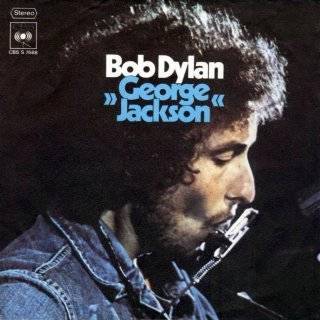
 “Here comes the story of the Hurricane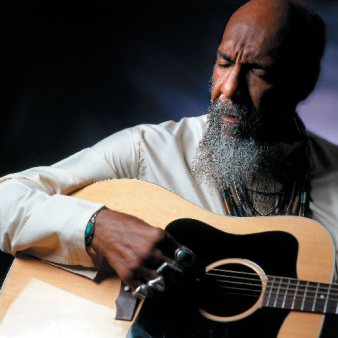
 Denise Sullivan