
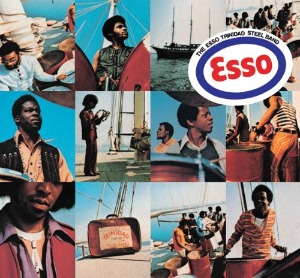
When 80,000 barrels of oil spilled into the waters of the Santa Barbara Channel in January of 1969, the crude-splattered water, beaches, and birds along the California coast in its aftermath became the symbols of modern eco-disaster. While the ensuing public outcry helped hasten the formalization of the environmental movement as we now know it, for musician Van Dyke Parks, the spill and “the revelation of ecology,” as he calls it, was a very personal, life-altering occasion. “It changed my M.O. and changed my very reason for being,” he says. The Union Oil rig rupture in Santa Barbara made Parks go calypso.
“When I saw the Esso Trinidad Steel band, I saw myself in a Trojan Horse,” he says. “We were going to expose the oil industry. That’s what my agenda was. I felt it was absolutely essential.” From 1970 to 1975, Parks waged awareness of environmental and race matters through the music and culture of the West Indies, though in the end, “You don’t know whether to laugh or cry. That’s what makes Van Gogh go,” he says, “That’s what great art does.” Though Parks is referring directly to Esso Trinidad’s happy/sad steel drum sounds, he could just as easily be talking about his own experience during what we’ll dub the Calypso Years.
Over a five-year period, Parks produced albums by the Esso Trinidad Steel band (1971) and Bob Dylan favorite, the Mighty Sparrow (Hot and Sweet, 1974); he also recorded his own calypso-inspired works, Discover America (1972) and Clang of the Yankee Reaper (1976). Born from his passion for popular song and launched at a time when grassroots protest was at an all-time high, Parks had every reason to believe calypso consciousness would prevail. But he hadn’t factored in the complications of taking on big oil, nor of touring the US with a 28-man steel drum corps from the Caribbean. He was unable to predict that the sessions with Mighty Sparrow would be fraught with rage, and that his efforts would earn him the enmity of Bob Marley, whose production requests he ignored in favor of calypso. And yet, you get the feeling he’d agree in one hot minute to do it all over again the exact same way if given a chance to revisit this section of his checkered recording history.
Parks is generally a well-mannered and affable Southern-born gent with a mildly mischievous streak. A one-time child prodigy on clarinet, he’s often mentioned in tandem with his Southern California work with Beach Boy Brian Wilson, who was reportedly too tripped-out to continue theirSmile-era collaborations. A formidable freethinker and raconteur of psychedelic dimensions himself, you can hear the Parks imprint, curly-cuing through “Heroes and Villains” and “Sail On, Sailor”; songs that made a lasting impression on the Beach Boys sound. Rarely at a loss for bookings as a composer, arranger, musician, and producer (Parks would go on to work with artists from Harry Nilsson and Ringo Starr to Joanna Newsom and Rufus Wainwright), his song “High Coin” traded freely on the hippie covers market while he juggled sessions by psychedelic bands as well as singer-songwriters Randy Newman and Phil Ochs. It was following the critical success of his first solo work, Song Cycle, in 1968 and the oil spill in ’69, that Parks began in earnest his pursuit of the music of the West Indies—specifically calypso and steel drum (also known as steel pan). Initially played on instruments made from clankity household odds and ends, by the ’40s, steel drums were made from a surplus of oil barrels, washed ashore the islands of Trinidad and Tobago from the coast of Venezuela. “America pollutes its environment with oil: Little Trinidad makes beautiful music from the drums that you throwaway,” says pan player Godfrey Clarke in the Esso liner notes.
Serving as the accompaniment to Carnival (for which Trinidad is world-famous), calypso is also often accompanied by lyrically potent verses that alternately use breezy and nasty humor to signify its weighty concerns: Imperial oppression and the extreme poverty of the islands. Ideally, the counterculture audience could’ve dug this political/party music with its motives to create equality and earthly harmony. Surely younger folks could identify with the calypsonian struggle, more than say, Liberace’s audience in Las Vegas, which is where Parks found the Esso Trinidad Tripoli Steel band working in the late ’60s. “I saw them as enslaved in their relationship to Liberace; I thought it was a vulgarity. I wanted to save them from their trivialization.” What had begun as Parks’ desire to popularize calypso at that point became his crusade.
The Land of the Hummingbird
“I just love that performance of ‘Aquarium,’” Parks says of Esso’s album finale. “You see, it represents that eco-consciousness that the album should project. I’m just telling you why I did it: I devoted the album to Prince Bernhard, who was the head of the World Wildlife association. Everything was directed to making it a proper, political, green album.” Nearly 40 years later, the Bananastan label has issued newly-minted versions of the Parks-produced Esso and Sparrow’s Hot and Sweet. Not only are the calypsos strangely contemporary, I find I’m deeply moved by Esso’s environmentally-tuned music from the island officially nicknamed the Land of the Hummingbird. When Parks suggests we meet beside the Santa Monica Bay, I agree: There is no better place than under the sun for a talk about his rarely-discussed calypso intermezzo. “This has been a well-kept secret,” he begins with a whisper. “The promotion men were successful at that.”
Parks’ devotion to calypso puts him in the unique position of serving as the music’s chief 21st century stateside ambassador; as it is, his relationship to calypso predates his own childhood and runs in the family. According to Parks, his mother’s uncle was the founder of the University of Miami and a calypso devotee. “Of course, they were touched by calypso down there. He had been to Trinidad at the same time as FDR,” explains Parks. President Franklin Delano Roosevelt’s 1936 trip to Trinidad, documented in the song “FDR in Trinidad”, is among the first calypso standards. By the 1940s, “Rum and Coca-Cola”, as sung by the Andrews Sisters, had brought calypso music to the American masses. “Of course, everyone was aware of ‘Rum and Coca-Cola’, which was incidentally my mother’s favorite drink,” says Parks. Though, everyone was not necessarily aware that the jolly little song was also a critique of American military presence in Trinidad (nor would it be a truly great calypso without the double edge). But the Andrews Sisters’ vocal stylings would soon be outdone by authentic calypsonian Harry Belafonte’s ’50s success with the Jamaican folk song “Day-O (The Banana Boat Song)”, calypso’s most enduring hit. In the early ’60s, Parks recalls he and his brother were “left in the dirt” on a bill they shared with calypso’s Andrew “Pan” de la Bastide. But it is in the music’s details rather than its broad overview where Parks gleans inspiration: The origins of the intensity of the music, the unparalleled musicianship of the pan players, the wordplay of the singers and their emotional extremes—from treachery to triumph—are the elements of interest to Parks.
“I was serious about serious music from an early age. Hardwired to a lot of music of dead white guys—very serious discipline—I had three brothers who played. We had this musical oleo in the house, from Bill Haley and the Comets to Les Paul and Mary Ford, Fats Waller, George Shearing, Paul Whiteman, the usual popular American diet, from 78s on. To me, calypso music was everything that the Memphis blues was, everything that Schubert and his sort were of the 19th century Romantic songwriters. Melody: Fantastic, like studying a novel with many subplots, seeing all of them resolved by the conclusion of the work. Lyrics: The scansion, the absolute art of phrasing, it had absorbed everything proper from the British Empire, so you find this incredible intelligence of mind. These are the scions of African nobility, the protectors of the musical and oral tradition. That’s what I think of calypso—the greatest pop music.”
The music of the West Indies was begotten from a 19th century slave history. “Barbados, adjacent to Trinidad, is direct in line of the slave trade that unfortunately plagues us all,” says Parks. But while European settlers imposed customs and traditions on the islands’ people, the indigenous population and those whose origins were African engaged in their own forms of expression. It’s that combination of sound, from two hemispheres and at least three continents, that make up the basics of calypso. Working with the large ensemble steel band, “I took it as an incredible opportunity… from a standpoint of my very American identity,” says Parks. “This group presented such a great opportunity in testing my ethics.” Though were the ethical challenge not combined with the band’s esthetic of extreme musicianship, individually and as a collective, Parks probably wouldn’t have traveled the distance he did with Esso.
“It was really a profound experience to me, to hear the small fish that run by quickly in the ear during Saint-Saëns’ ‘Aquarium’ from The Carnival of the Animals. Those fast notes that shimmer through the piece, they are 32nd/10th notes, there are 10 in a figure, and these guys memorized this thing in a matter of two days and they did an incredible job.” The band was led, as it were, by Hugh Borde. “He was their captain, there was no leader,” explains Parks, though for those two days in the studio he passed his captain’s hat to Parks and pan man Kenrick Headley, who led the group through versions of songs like “Apeman” by the Kinks, “I Want You Back” by the Jackson Five, and Simon and Garfunkel’s “Cecilia.” The Rev. Fr. John Sewell, an Episcopalian missionary who served transcribing the ultimately jaw-dropping versions of the playful classical and orchestral pieces in Esso’s repertoire, also assisted the group. “They were the first to do it,” says Parks of Esso’s classical works on pan, “and it became a requirement for all steel bands to have a classical test piece. So they might do ‘Waltz of the Flowers’ by Tchaikovsky or ‘Unto Us a Child Is Born’ from Handel’s Messiah.” For the recording, they chose the aforementioned Saint-Saëns and the frantic “Sabre Dance.” The steel band also cut a Parks favorite, “Erasmus B. Black”, a wordplay tune penned by the Mighty Sparrow in which an innocently christened baby ends up with an unfortunate double entendre of a name. “I thought there was a great deal of theater and comedy in the group. I’ve never enjoyed myself so much, almost understanding what was going on!”
Keep Your Eye on the Mighty Sparrow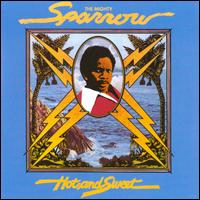
Steel band players gain entry into the prestigious ensembles through a highly competitive audition process. The spirit of musical competition and excellence is rooted in poverty, though it’s a celebratory event, staged each year at Carnival, the annual pre-Lenten festival that finds pan players and wordsmithing calypsonians performing for cash and crowns. The annual Carnival Road March is a calypso competition at its fiercest and reigning supreme eight times was the Mighty Sparrow—his wins rivaled only by contemporary calypso’s Super Blue and Sparrow’s friend and competitor, Lord Kitchener. While Sparrow had traveled to the US seeking help from Belafonte at the height of calypso’s popularity, Kitchener was making a name for himself in England. Upon their respective returns to the islands, Kitchener and Sparrow spent the rest of the decade and into the early ’70s duking out the Road March and Calypso Monarch crowns.
“I wanted very much to do Lord Kitchener,” admits Parks. “Lord Kitchener, to me, is the greatest of all the calypso singers, but Sparrow was absolutely rhapsodic.” In his liner notes to Biograph,Bob Dylan wrote of the Sparrow: “… as far as concept and intelligence and warring with words, Mighty Sparrow was and probably still is the king.” “I thought he would be more difficult to sell than Kitchener,” says Parks. “Sparrow would show up with a cape; Kitchener would’ve shown up in a fedora.” Perhaps Sparrow could sense Parks’ preference for Kitchener upon his arrival at Miami’s famed Criteria Studios. Or maybe it was a hurricane, just about to make its way to land, that turned the session into a perfect storm. “We got to Miami. Phil Ochs appears,” begins Parks, referring to his friend and fellow traditional music enthusiast, famous for folk-singing and a notorious unraveling that had already begun. “Phil is somewhat deranged. The rain starts to whip against the wall absolutely horizontally. We are near the eye of the hurricane. It’s a big one. The studio owner Mack Emerman wondered if we should airboat the whole thing to Barbados.” In a world without Pro Tools, the crew obtained remote power from their own generator and hunkered down as the hurricane passed. “What you hear, we did in two days. Sparrow would step up to the piano and go pht pht—pht pht. You notice that’s irregular,” explains Parks, pounding on the picnic table before us for emphasis. “It’s not pht, pht, pht, pht. You know, it’s said that irregular beat is something that started in Curaçao as the natives imitated the Dutch governor, Peter Stuyvesant… he had a lame leg and so he would pht pht—pht pht. That’s what I heard… it’s the rhythm that Sparrow played for two bars before the piece begins. And then the band came in. This didn’t take a producer. This didn’t take an efficiency expert. This was incredible.”
Rather than arriving at the studio with a finished set of lyrics, Sparrow came with phrases. “Sparrow knows exactly where he’s going… he knows how to get the cat out of the tree, get the cat down; he’s got the chorus solved. He’s very able. There is nothing false about his incredible musical skill. That he can ideate phraseology with such powers of deception is a very good quality of his work. It’s the very same power of deception that I see in Schubert, that also likes to take you out somewhere, then puts you somewhere subtly that is surprising and refreshing.” Of the songs he compiled for Hot and Sweet, Parks cites two standouts: “More Cock” (“I asked for it. I know, it’s my fault.”) and “Maria.” “My favorite. As Ted Turner said… ‘it only looks easy.’ To me, it’s as good as anything I’ve heard out of Allen Toussaint. It’s tight.”
Co-produced with Andy Wickham, the session with Sparrow was not without incident. Parks describes British Wickham as “right wing” and in thrall to “Country and western and super-America, Buck Owens and Merle Haggard.” Parks says, “I remember he was ecstatic with ‘Okie from Muskogee,’” Haggard’s toast to redneckism. And yet, like Parks, Wickham loved calypso. “He came to realize how much the butt [of the jokes] the British were.” Wickham could also appreciate the melodies (“He loved Wagner, secretly,” says Parks) and the lyrics (“Very good turn of phrase,” he’d say). But it was sport that bound Wickham to the calypsonians. “He knew all the West Indian super heroes of cricket,” says Parks; however, that did not make him the boss of Mighty Sparrow.
Sparrow was not one to take studio direction. “Which is a big mistake. Every bullet counts on a record,” says Parks. “It was hard. It was a bumpy ride. It was occasionally filled with rage and great hostility. And blackberry brandy; I think the record was a four quarts of blackberry brandy record.” The necessary lubricant relieved some of the tension courtesy of the elephant in the room: The British Empire. “Well, the British were leading the decolonized African freeman, and I was right in the middle of all that. The Sparrow is filled with bravado and severe opinions that aren’t always convenient… There were moments that you hoped the guy in the cape wasn’t going to show up at dinnertime to protest his individuality to everyone.”
By the time Parks was finishing with Sparrow, calypso’s rhythmic energy was in the process of being subsumed by disco, while the war on poverty was being fought by reggae, the Caribbean’s other music. “Calypso was feeling very disco-ed, which is funny because they wanted to feel disco-ed, and yet, they were bothered by the fact that disco was calypso. It was a dead ringer,” Parks says, once again sounding out beats at the picnic table. “They were mad as hell about that. And then reggae hit the fan—in a big way—and I was delighted.” This is when Parks received his call from Bob Marley.
Clang of the Yankee Reaper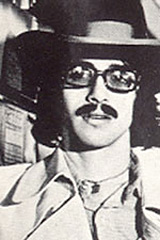
“‘Let’s face it, Mr. Parks, the white man is finished in the Caribbean,’” said Marley to Parks. “I thought that was a rather harsh thing to say. He was so pissed at me, because I didn’t have time to work for him because I was so trying to get 28 toothbrushes… I was just too busy and he took it as a slight.” Though, what may’ve been a missed opportunity with Marley, Parks made up for it by recording with his contemporary, Jimmy Cliff. “Jimmy Cliff was a big deal to me,” he says. Believing Cliff’s melodies often prevailed over Marley’s “rhythm machine,” Parks helped the singer secure his publishing and played keyboards on Cliff’s 1976 album, Follow My Mind. “I honestly think that the Jamaicans showed a greater power of adaptability against ‘guns, germs, and steel’ than calypso. Trinidad is more removed—it’s a different world…”
Following the Sparrow production gig and Parks’ own Clang of the Yankee Reaper (a good half of its material bearing the earmarks of calypso), by the end of the ’70s, Parks was back in the bosom of the California singer-songwriter scene, working with Lowell George, Nicolette Larson, and again with Harry Nilsson. So what then of calypso, his first Caribbean love?
“Calypsonians were an uncapturable lot, really, and I’ll tell you why… They never had any regard in an engagement in copyright. Maybe it’s an uncommon modesty of sorts.” Matters of contractual arrangement were a formality that, according to Parks, was of no interest to calypsonians. “It finally dawned on me there is an undeniably vulgar aspect to contract agreements because they’re built to check coercion and that’s a sad way to approach any mutual trust. These songs are for a moment’s discovery, born of such a highly extemporaneous, unanticipated purpose. A solution to a problem is what it’s all about.”
Artistically, he was satisfied by the calypso interlude. “Those two recordings were made at the apex of analog. Such a phenomenon of sound and so nuanced… small notes that all make up the way it feels in the bones.” Environmentally, the idea to link calypso or any music to the earth’s wellness was visionary on Parks’ behalf; the frontiers of such thought combined with activism are yet to be fully explored. Although at one time he’d hoped to deliver his message directly to consumers at the pump—as a “premium gift” with fill-up: A sound sheet of the Esso Trinidad Steel Band singing “White Christmas” with Bing Crosby—his dream of harmony, enlightenment, and environmental healing through steel band music was too far-reaching. Idealistically, Park could not fulfill his full vision with Esso.
“I was in the crosshairs of the racial divide with these gentlemen who had no idea about such things. A guy shot at us—a farmer up on a hill with a shotgun—when the bus broke down on the road in the South. The culture collision was probably among the top five benchmark psychological events of my life, for so many reasons.” Esso’s US tour ground to a halt for good when their aforementioned bus crashed. Several men were hospitalized and one was laid up at the Parks household for four months. “I came up as quickly as I could with another record about calypso to keep the focus on the medium. I put a Greyhound bus and a Continental Trailways bus on the front cover, just to get these men out of bed.” The Parks album Discover America contains interpretations of “FDR in Trinidad”, “The Four Mills Brothers”, and “Bing Crosby”, among others from the calypso canon. Parks’ time with the steelband was drawing to a close, though not before one last act in which he finessed a potentially sticky situation with Standard Oil of New Jersey that ultimately okayed the Trinidad Steel Band to retain the use of Esso in its name, without an injunction.
He still stands by a statement he made of Esso, those years ago: “The greatest group I’ve ever had the privilege to produce.” Like his calypso brethren, Parks may’ve been bloodied, but his confidence in the art of calypso is unyielding. “All of the bravado of such poverty—poor people speaking plainly, representing the disenfranchised—is what calypso is all about,” he states. “It’s not only topical songs that are optimally crafted, both lyrically and melody—it’s that they do things: They move mountains. It’s a life force.”—published on November 19, 2009 in Crawdaddy!
Filed under: Calypso, Esso Trinidad, Mighty Sparrow, Van Dyke Parks
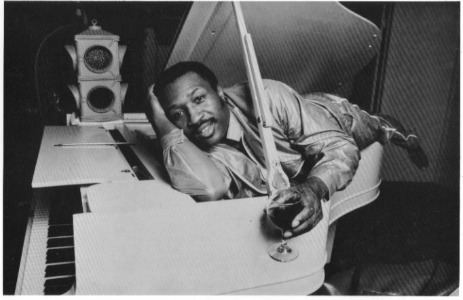

 “A pleasing survey of soul music, from Lead Belly to Johnny Otis to Michael Franti to Louis Farrakhan.”–Kirkus Reviews
 Denise Sullivan