Tassili is Tinariwen’s latest collection of desert blues from Mali. This song features Kyp Malone and Tunde Adebimpe of TV on the Radio, the contemporary indie rock band from Brooklyn.
Tenor saxophone giant, Sonny Rollins, turned 81 on September 7. Last week, he turned in a short but hard-swinging set at UCLA’s Royce Hall. After running through about seven songs, he finished up with “Don’t Stop the Carnival”, and his word was my command. My Sonny Rollins Weekend began with his Friday appearance on the Tavis Smiley show. Saturday I cleaned the house to the tune of Saxophone Colossus (great for me, though probably not so interesting for you). On Sunday, I reflected on something the giant of Harlem jazz had said on Thursday, about trying versus doing (or was it doing versus trying?), while presumably he was trying to do what he’s done so many nights before, somewhere on the road to infinity.
Starting with Miles, Monk and Max Roach, Rollins took his own giant step toward direct political and musical fusion on Freedom Suite, the 1958 album on which he was accompanied by bassist Oscar Pettiford and drummer Roach. “The Freedom Suite,” a nearly 20 minute piece, was the first jazz instrumental to claim social issues as its inspiration. “America is deeply rooted in Negro culture. It’s colloquialisms, its humor, its music. How ironic that the Negro, who more than any other people can claim America’s culture as his own is being persecuted and repressed. That the Negro who has represented the humanities in his very existence is being rewarded with inhumanity,” wrote Rollins on the album’s original sleeve notes.
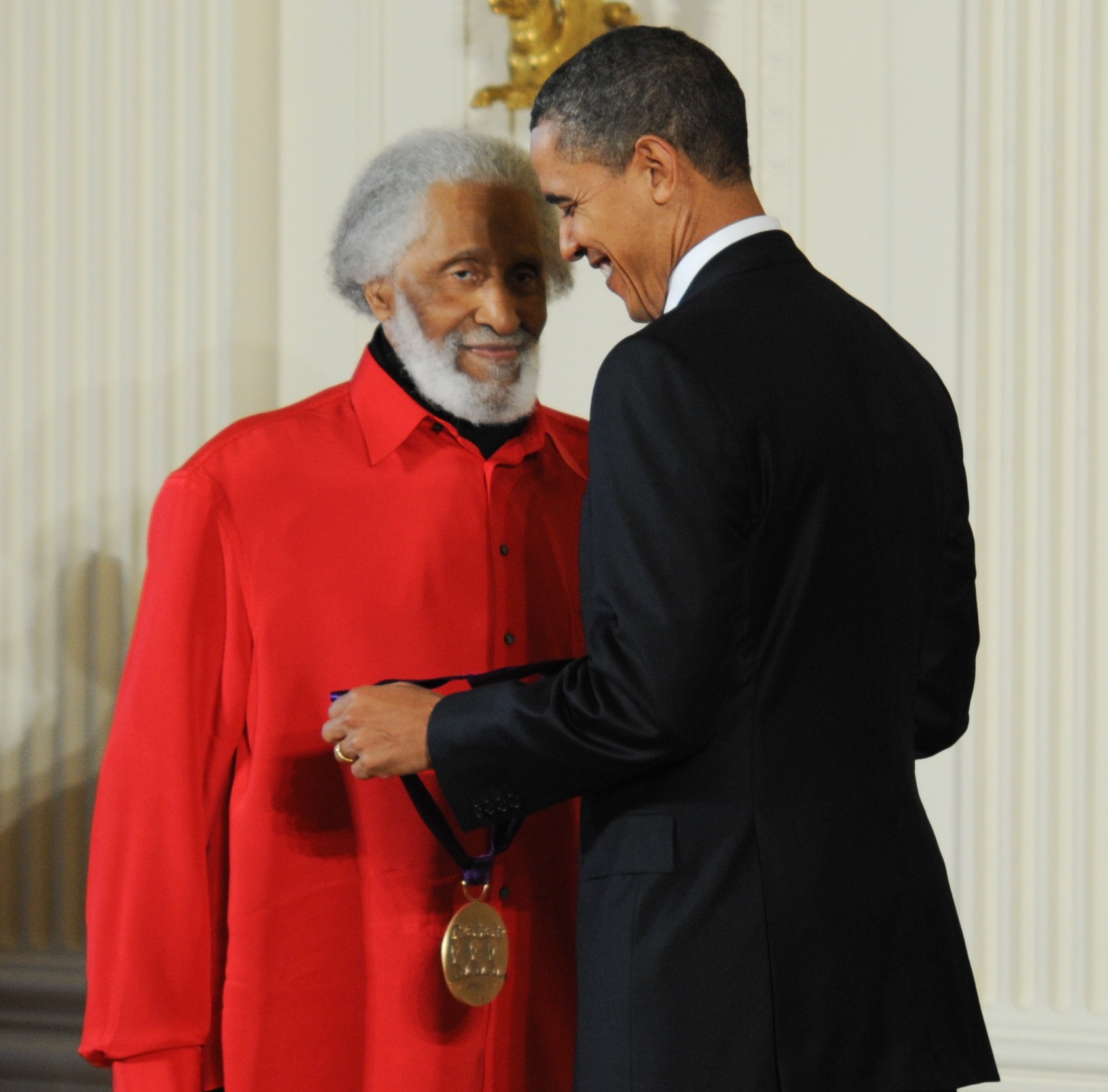
Last year, Rollins received the National Medal of the Arts from President Obama. This year, on December 4, he’ll receive his Kennedy Center Honors. Congratulations, Sonny Rollins: Keep on Swinging.
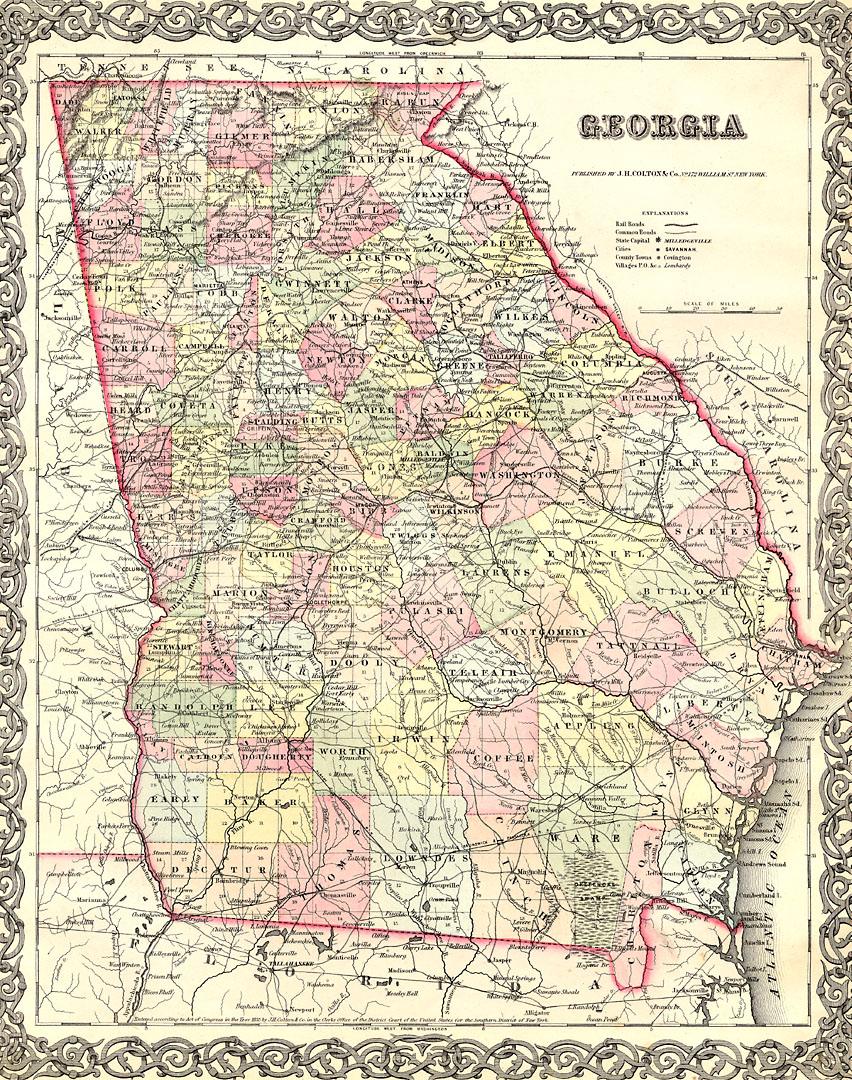
Georgia was on my mind this week—in the news, in the news—not once, but twice. I lived there once upon a kudzu vine, in Atlanta, one block from the railroad tracks, spitting distance from Cabbagetown, the Ebenezer Baptist Church on Auburn Ave. and the Carter Center, devoted to “advancing human rights and alleviating suffering.” I lived on a peaceful patch of urban land, in the most broke down flat on the block, and for the most part, I liked it. As for the rest of ATL’s urban sprawl, there was a whole lot of driving involved; it reminded me of LA, only greener. I arrived down South, a freethinking, single white female from San Francisco, and was generally told I’d blend in with what was then called the “cosmopolitan” scene there, though I felt more like I’d landed on the moon. For one thing, it was impossible to get a decent cup of coffee there back in ’89, a fact I never failed to remind my otherwise hospitable Southern pals, who in turn never failed to remind me, what would I know, anyway? I was, afterall, fresh from “the land of fruits and nuts.” Nevermind that those so-called fruits and nuts had taught me everything I knew about rock’n’roll at the time, as well as style, attitude and keeping it real (compared to what, I don’t know). Anyway, I don’t see those friends much anymore: We’ve largely gone our separate ways or they’re dead and gone now. These things happen, though I’ve never really gotten used to them, nor do I like the idea of today here, tomorrow gone, though I’ve learned to accept life’s goings and comings, little inconveniences, and realities. Part of how I dealt in Atlanta was with Coca-Cola: It pretty much cures everything that hurts.
In Atlanta I found new friends, and much to their horror there were nights I’d venture out alone, without them–a woman on her own—apparently some kind of taboo in the South, only I didn’t know that. So off I’d go, usually to the Colorbox, where musicians and DJs and artists of all kinds didn’t mind if I talked their ears off. They understood that I knew Georgia thanks to Little Richard, James Brown and Blind Willie McTell, Carson McCullers and Flannery O’Connor, President Carter and Dr. Martin Luther King. I also knew that when Flashlight by Parliament played it meant last call on the dancefloor and that my heart would sink because it would be another week before I would see my friends and hear another De La remix turned up that loud again. Outside the Colorbox, and two records stores–Wax ‘n’ Facts and Wuxtry–the other place I felt at home in Atlanta was an hour outside of it in Athens, the college town known primarily as home of R.E.M., the South’s most beloved alternative rock band. Their music and members once inspired me to do things–to take action in my community, to be a better person, to get into it and get involved. They were partly why I was in Georgia working in the first place. R.E.M. reinforced for me in the post-punk era that music and message were actually compatible–that you could be human and be a rock star, that you could live, large, make mistakes and fall down, and move on. And though I largely moved away from their music and the friends that bound me to it, upon the occasion of R.E.M.’s announced break-up this week, following 31 years together as a band, I got to thinking about them and Georgia again, my life and how I’ve lived it, and all the people that have been and gone. Me and Georgia were not forever either; ultimately it was a state I had to leave…
It wasn’t so much I got homesick for the West Coast, it’s just that things were different there, in ways that just didn’t set right with the Cali in me. Some people I knew and actually liked exercised their right to bear arms–just because they could–and that was one thing. These were people with whom I thought I had things in common, whose company I enjoyed, and yet, they thought it was also their right to determine my right to choose, and to exercise their right to free speech with nonchalant use of words I’d come to recognize as hate speech. As a native San Franciscan and proud daughter of the blue state sisterhood, I was born to choose, and there are words I was raised up to never use, no matter what. And yet, there is one thing on which my homestate and Georgia regrettably agree and that is the death penalty: We both have it and aren’t afraid to put it to use on a semi-regular basis. And that’s the real reason I was thinking so hard on Georgia this September 21, the International Day of Peace, as it was preparing to execute one of its sons, Troy Anthony Davis, and did.
Some might say that as a music critic, it is not my job to weigh in on matters of life and death, but I disagree: There are some circumstances of this old life that I refuse to accept and one is the death penalty. Like former President Jimmy Carter, I reject it, in the name of “advancing human rights and alleviating suffering.” “The death penalty in our country is unjust and outdated,” says the peanut farmer from Plains and you can call me a fruit and a nut, if you like, but I agree with him. I encourage anyone who feels the same way to take action and get into the reinvigorated effort to abolish the death penalty now. The link takes you directly to Amnesty International, an organization that for 50 years has fought in favor of human rights all over the world—I first heard about it in the ’80s, thanks to rock’n’roll and R.E.M.
It was 48 years years ago today that the four Birmingham, Alabama girls, Addie Mae Collins, Denise McNair, Carole Robertson and Cynthia Wesley, lost their lives during the bombing of the Sixteenth Street Baptist Church. Today an official marker was rededicated there in their names.
Singer Nina Simone wrote “Mississippi Goddam” in immediate response to her anger following the event, just three months after the murder of Medgar Evers in Jackson, Mississippi. “I shut myself up in a room and that song happened,” she said. From that moment forward, Simone was committed to writing and performing material that would jolt people awake or into action. The song remains one of her most enduring works.
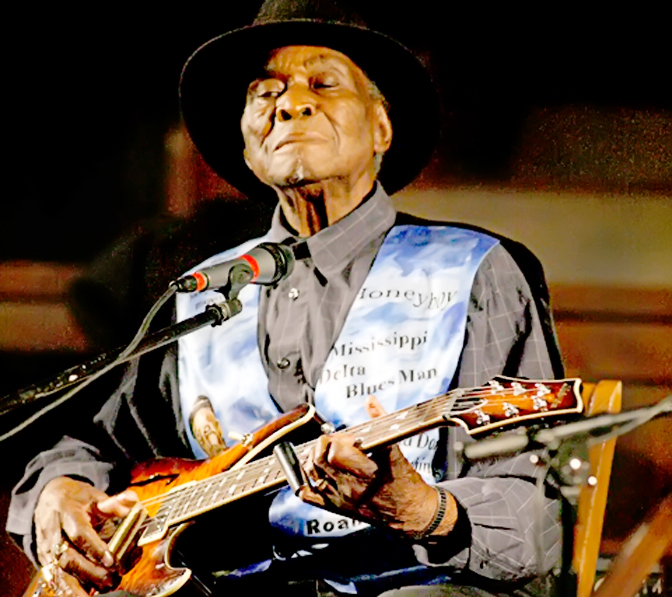
David “Honeyboy” Edwards, one of the last of the old-time Mississippi Delta blues players, passed on August 29, 2011 at the age of 96. He worked on the road, playing through this year, until ill health finally forced him to slow down and officially retire—last month.
Born in 1914 in Shaw, Mississippi, Edwards was a contemporary of Robert Johnson‘s, as well as a friend. He maintained that he was with Johnson on the night the legendary bluesman sipped from the poison bottle that would be the death of him, fueling the myth and legend with some actual fact. Edwards of course had his own style and sound too; I was at once honored and humbled to have seen him perform his slip ‘n’ slide renditions more than once in Southern California, where he appeared frequently in his final years. Mercifully, not only was he recorded aplenty, his story was documented in 1997 in his epic blues tale, The World Don’t Owe Me Nothing, a must-read for blues and rock ‘n’ roll devotees, and anyone interested in the music and lives of rural musicians in the pre-Civil Rights South. “The blues is something that leads you,” he wrote. “You got to go where it leads you.” Deepest condolences to his family, friends, fellow musicians, and many admirers, as Mr. Edwards rambles on to rest in peace.
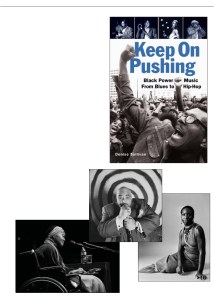
“A pleasing survey of soul music, from Lead Belly to Johnny Otis to Michael Franti to Louis Farrakhan . . . Sullivan offers a welcome exploration of how African-American popular music became America’s vernacular.”—Kirkus Reviews
Sullivan . . . combines impressive research and wide-ranging interviews in a multilayered narrative about the power of music within black liberation, civil rights, antiwar, and gender-related movements . . . This is for anyone interested in a thorough analysis of music as a commanding force in change as well as a continually evolving artistic presence.” —Library Journal
“Reaching as well into the areas of punk rock, reggae, and finally hip-hop, Keep On Pushing admirably points out numerous key developments and connections throughout a vital, revolutionary element of popular music.” —Under the Radar
“…Sullivan paints with condensed strokes, documenting in succinct sections how the music segued with powerful protest movements to smash disfranchisement and rouse sometimes fleeting victories, daring “to question the new freedoms and the quality of life ‘freedom’ brought in the face of liberty’s inconsistencies and … costs.”—-Pop Matters
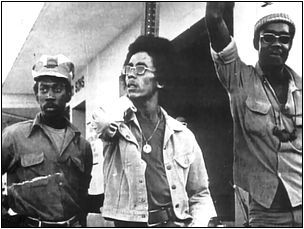
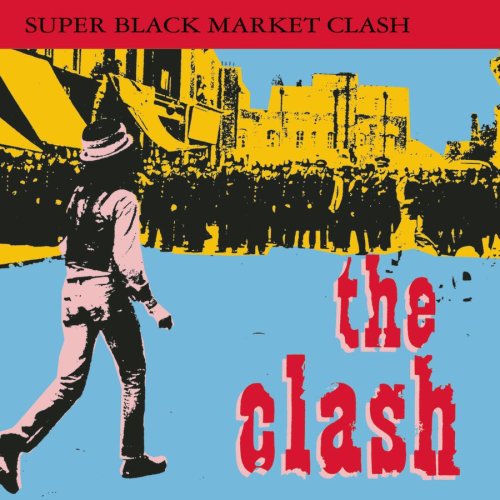
“I guess you want to know what we think,” said Mick Jones at Wednesday’s Big Audio Dynamite show at Club Nokia. It was the fifth day of the London riots, but Jones was far from the frontlines of his native Brixton; he’s on the road this summer celebrating 25 years of B.A.D., the post-Clash project he launched with Don Letts, the punky reggae DJ and filmmaker who also bears the distinction of introducing Bob Marley to his “baldhead” friends. Thirty-five-years ago this summer, Londoner Letts faced-off police at the Notting Hill Carnival riot (that’s him on the cover of the Black Market Clash EP); the events there had once-upon-a-time inspired Joe Strummer to write, “White Riot”. What binds the civil unrest London sees now to then is of course police harassment of youth, particularly those in low income areas hard-hit by austerity measures that have decimated after school programs and depleted prospective scholarship funds. But there was no need for such heavy asides or stage patter from Jones or Letts: They rock the bells in their topical tunes largely from the ’80s which still spell out the matters quite plainly, whether the trouble is racial and with empire building (“A Party”), or the petty grievances and gross injustices that drive them crazy, which they call out in their eponymous theme song. The pair also appeared to be having a blast playing together again, each of their compositions seemingly more pertinent than the last. Still sonically and sartorially sharp, Big Audio Dynamite’s old songs can easily be repurposed as songs for the New Depression, from the debt ceiling rap of “The Bottom Line,” to the new jam, “Rob Peter Pay Paul.” The audience with a mean age of about 40 was averaged with the help of kids who likely first heard of B.A.D. thanks to their appearance at the Coachella Festival this year. Personally, I was just happy to be in the house with a friend, listening to two artists who I believe have merged music with message seamlessly for the duration of their respective careers, as well as during their time as collaborators. B.A.D. are the true torchbearers of the work done by the Only Band That Matters, and I am truly sorry to hear that Brixton, an area with which the Clash was closely aligned, has been hard hit during yet another season of civil unrest in London. “I kinda wish I was home,” said Jones in answer to the question of the riots, then he struck up “Sightsee M.C.,” the 1986 B.A.D. song in which he and Strummer had as much as predicted the recent replay: “You can guarantee that she’ll burn tonight ‘cos England keeps the household white.”
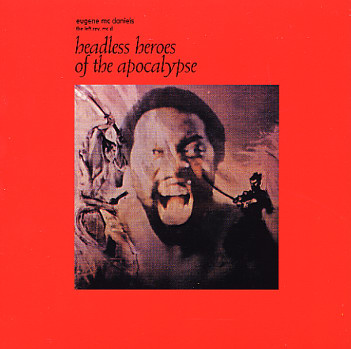
The music of Gene McDaniels was a big inspiration to me before, during and after the writing of Keep on Pushing: In many ways he and his largely untold story was the motivation to write a book that provides not only an overview of intersections between music and social and political movement, but takes a close look at some of the artists/activists who were undermined by a climate and culture ultimately unequipped to support their visionary work. And yet, rare groove chasers know well the name Eugene McDaniels; his 1971 album for Atlantic, Headless Heroes of the Apocalypse is a standard-bearer for psychedelic soul/funk/jazz rhythms and is borrowed frequently for its samples (most famously by the Beastie Boys in “Get It Together”). The album is a fierce statement of black pride, anger, and frustration, equally powered by a super-soul fever, peace, and ultimately love. It’s a showcase for McDaniels breadth as a composer, from folky singer-songwriter styles (“Susan Jane”) to proto-rap (“Supermarket Blues”); McDaniels’s strongest words are demonstrations of righteous indignation, though he also offers spiritual ideas.
The Lord is black, his mood is in the rain,
The people have called he’s coming to make corrections
You can hear his voice blowin’ in the wind
McDaniels is the composer of “Compared to What,” the 1969 jazz-soul wartime protest made famous by Les McCann and Eddie Harris: “Possession is the motivation that’s hangin’ up the goddam nation.” McDaniels was born in Kansas City in 1935, studied at the Omaha Conservatory of Music, and graduated from Omaha University. After forming a band in the 1950s, he signed with Liberty Records and hit in 1961 with “A Hundred Pounds of Clay,” followed by five more Top 40 hits, including “Tower of Strength.” All in all, McDaniels had six Top 40 records in 1961 and 1962 before he turned his focus to writing (he worked closely with Roberta Flack and ultimately wrote her hit “Feel Like Making Love,” among others). By the time he attempted to launch his solo career as a singing and songwriting artist, McDaniels had had the time to chew on what he wanted to say and had an intensely unique way of saying it. He was fearless with his melodies and in his verses. The instrumentation was a wild combination of folk-funk: electric and acoustic bass rubbed against guitar, drums, and piano, and they all combined with lyrics that strike chords of deep recognition. With the fascist-fighting folker’s impeccable style of oration, he injects the song with theatrical and emotional soul power. As he sings, he evokes images of a man increasingly incensed and so confused by injustice that he’s stretched to the point of losing his mind. His elegy for the red man, “The Parasite (For Buffy),” dedicated to Sainte-Marie, is a shining example of his dramaturgical song style that places his subjects in a social, political and psychological context. But McDaniels’s revolution of the mind is a peaceful one; though he paints pictures of hell and all hell breaking loose, his narrator does not advocate use of violence as a solution. Rather, violence is portrayed as the problem. “Supermarket Blues” describes a situation in which a man demands his money back for a can of peas marked as pineapple and ends up with a beating. Somehow he even finds a way to inject dark humor into the mess: “I wish I’d stayed home and got high instead of coming into the street and having this awful fight.” Whatever darkness he’s describing, McDaniels’s point of view remains poised and unique; his higher consciousness and keep-on-pushing spirit bleeds between the notes of each slyly rendered gospel-laced track. Years later, the white-rapping, Tibetan-Freedom-loving Beastie Boys would turn to McDaniels, nicknamed the Left Rev McD, for a sample, as would the Afro-centric, conscious hip-hoppers, A Tribe Called Quest. Last year, John Legend and the Roots brought back a version of “Compared to What.”
During the course of the five years I was writing and researching Keep on Pushing, I attempted to reach McDaniels a number of times, hoping he would answer some of my questions about his early ’70s work and the mysterious stories of conspiracy and suppression that surround it, though my requests remained unanswered. In the book, I attempted to unravel his story the best I could, the facts based on bits and pieces from pre-existing interviews, including information passed on by Pat Thomas who reissued Headless Heroes of the Apocalypse and its predecessor, The Outlaw. With little information available to me, in the end, I came to my own conclusions about McDaniels and his exceptional work, the kind of music that reaches inside, touches the soul, and alters it. The Left Rev. McD made a difference, and mercifully the music remains, though his presence will be missed: Eugene McDaniels made it real—no comparison.

 Denise Sullivan