
 Everyone’s talking about the new Bettye LaVette tell-all book, A Woman Like Me, in which she dishes the dirt on her old friends from the Motor City and describes some of the worst gigs she ever had, among other shockers. I’ve not yet read it (Santa forgot to deliver it), but I had my own conversation with LaVette a couple of years back and it was originally published in Crawdaddy! online. I’m reposting it in its entirety here, or as LaVette would say, it’s making a ” comeback from the crypt,” just in time for the new year.
I’d certainly heard of the battle of Bettye LaVette, a struggle that lasted for decades and ended with the singer’s triumphant comeback, but I hadn’t really heard Bettye LaVette until I put on The Scene of the Crime, LaVette’s disc on which she’s accompanied by the Drive-By Truckers: So moved was I by her song interpretations, by the record’s end, I was hunched in a chair, sobbing into my hands.
LaVette is a seamstress of song, ripping up the compositions of others and tucking and tailoring them until they’re customized to fit a dynamo. The ability to pinch syllables here, personalize language there, and slip inside a song the way LaVette does is at the heart of her artistry. The moment I grasped how much power she packs into a song came somewhere in the middle of her remodel of “Talking Old Soldiers”, an Elton John and Bernie Taupin tune she’d rescued from the ’70s. As she told of graveyards and memories, LaVette sang, “It don’t seem likely I’ll get friends like that again,” and Taupin’s words about a soldier became not only a ballad of a sole survivor but the story of a woman’s life. I think it was LaVette’s tough but tender declaration of the idea that where there is life, there will also be loss that got to me. But I’m not sure… I don’t think very clearly when my rational thoughts are mingled with the primal stuff. When I was done listening, I knew I wanted to ask her about how she prepares to go that deep into the world of song, night after night.
Of course, LaVette’s heard that query and others like it plenty of times before. It’s probably safe to say that LaVette has heard everything. “Like about recording, they’ll say, ‘Was it very difficult to do this?’ and I’ll say ‘No, they’re just songs. It isn’t surgery. Basically, they’re just like “Happy Birthday”, you just rearrange them!’ she says excitedly. And yet, without her 40 years of dark nights packed into them, the songs she sings in Scene of the Crime would hardly be the same at all.
Once or twice in her promising career the soul songstress had the rug pulled out from under her cha-cha heels. The story of her long-waged war on going unheard started in 1962 when, at the age of 16, she was dropped from her label on the eve of a tour to promote “My Man—He’s a Lovin’ Man”, her Top 10 R&B hit. There was another less notorious incident, when “Let Me Down Easy” (a sweet and low slice of mid-’60s soul released by another record company) failed to take the world by storm as planned. But LaVette’s infamous blow came in ’72, on a second bet with Atlantic, following the completion of her session in Muscle Shoals, Alabama, with the Memphis Horns. It was hoped that the masterful Child of the Seventies would be her overdue breakthrough, though the record was inexplicably locked in a vault for the next 28 years.
Between ’62 and ’02, LaVette recorded (she charted R&B a few more times) and performed, though she was often relegated to hotel bars and stages even less illustrious. “The same show you see now I was doing for $50 a night. That’s the way I was raised. That’s the way I work mine,” she says. And yet the stone survivor hasn’t lost her ability to laugh at what’s been framed as her tragic fate. “I figured that if I could live long enough to get over to everyone’s house and do a show on their porch, I could get to ‘em all,” she says. Meanwhile, offstage she fielded dumb-ass questions like, “Didn’t you used to be Bettye LaVette?”
And then, at the turn of the century, the winds of change started to blow for the artist who was once and always Bettye LaVette. First off, a French record label dug up the tapes of Child of the Seventies and released it as Souvenirs, setting the gears in motion for her now-famous comeback “from the crypt,” as she calls it. By 2004, a collection of newly recorded works, A Woman Like Me, had earned her a W.C. Handy Award for contemporary blues achievement. Her steady and recent ascendance is owed to the critical and commercial acceptance by rock audiences for two albums recorded and released in the last three years for hipster haven, Anti Records, starting with 2005′s I’ve Got My Own Hell to Raise (a collection of songs produced by Joe Henry and written by women, among them Aimee Mann, Sinead O’Connor, and Fiona Apple). But mostly it’s last year’sScene of the Crime, for which she returned to Muscle Shoals to record 10 handpicked songs produced by herself, David Barbe, and Patterson Hood of Drive-By Truckers that brings it all back home for LaVette and kicks things up a notch.
Recorded at FAME Studios in Hood’s hometown, he assembled the studio personnel, including his band as well as old-soul hands, like his dad and bassist David Hood (who played on LaVette’s obscured Child of the Seventies album) and keyboard legend, Spooner Oldham. Together, they created a bed of Southern comfort upon which LaVette laid her smoke and honey voice. The singer chose the songs—from the likes of writers such as Willie Nelson and John Hiatt to (brace yourself) Don Henley—then proceeded to give them her patented country-soul twist (you have to believe anyone who can wrest some goodness from a Henley song has got it going on). In addition to her 14 karat pipes, LaVette’s got jewel-toned ears. She’s constantly listening and hearing things in songs that most regulars can’t detect, though only a handful will make the cut and get the LaVette treatment. “For me, it’s like choosing who I would make love to. Just because I liked a guy, I wouldn’t have to go to bed with him… but we could be friends,” she says.
Born in Michigan as Betty Haskins, LaVette claims she’s been singing since she was 18 months of age, following a dictionary-defining soul music baptism: she witnessed the traveling gospel stars of the day come to drink and dance the night away at her mother’s Detroit juke joint, though her own Catholic roots left her without much church in her voice. “Gospel certainly has an influence in any black voice, but you hear more blues in my songs because every Sunday morning my family had a hangover,” she says. “My people are from Louisiana, so there was that mixture of gumbo, prayer, drink, the rosary, and that whole bit. They’ve got that so jumbled up; I don’t think anybody understands it. But my mother understood it perfectly,” she says.
When the ’62 tour was scuttled LaVette was just 16; the disappointment she endured while watching her peers overtake the Detroit music scene left her with a hole in her soul the size of Wayne County. Eventually, she filled the space with lesser passions and valuable life skills, though she says, “They took my joy,” to borrow a phrase from a song she favors by Lucinda Williams.
When I spoke to LaVette about her joy a couple of weeks before Christmas, she was off the road in New Jersey, at home with her husband, Kevin Kiley. The singer who has been described as “fierce,” “tough,” and “stubborn,” sometimes all in the same sentence, was charming and effervescent, though her voice was tired and hoarse. “Since last Thursday, all I’ve done is talk and drink champagne,” she said. “I’ve called everyone I’ve ever known.” LaVette had been letting folks know that, after 45 years in the business, she had just received her first Grammy nomination for her performance in the TheScene of the Crime. And with that, the battle of Bettye LaVette is finally won.
Crawdaddy!: Congratulations on your Grammy nomination. Am I right in guessing that the feelings accompanying the industry validation are somewhat bittersweet?
LaVette: All of the bitter is gone. I’ve done so many things with the bitter. It’s more like a vindication—like someone who’s been in prison for 46 years and is finally rele
ased.
Crawdaddy!: Was there a part of you that always believed recognition would come?
LaVette: No, not in the last 20 years. You can’t believe that for 46 years. People who say, “I always knew this would happen…” are crazy just like me, but they just took it another way. Even if I thought it for 30 years, it’s impossible to think you’re going to be up for a Grammy after 40 years. I didn’t think that I’d have another record contract. I figured some little label in Europe would offer me something and put it out and I’d do that. As long as I could sing, I could continue to work.
Crawdaddy!: If you don’t mind me asking, how did you come by your name, your last name in particular, which is pretty unusual?
LaVette: As everything in my life, they came over a period of time. The spelling of it is one story; the naming of me is another.
Crawdaddy!: Please tell both stories.
LaVette: After we came out of the studio one Sunday, they said, ,”You can change your name if you want and have a stage name,” and I was coming up with stuff like LaLa LaFool. I was 16! I wanted to be glamorous… I was thinking of grand names, not realizing the more grand the name the more you had to live up to it. Everybody wanted to be a Labelle or a Vandella. My best girlfriend… introduced me to everyone in Detroit who was recording at the time. I loved her and my mother hated her. Her middle name was Lavett and I thought it was so pretty. I added the e to LaVette because it looked better and I added the e to Bettye when I started doing theater because it made a pretty autograph. There was an article that said it had to do with numerology. Why does everything have to be so complicated? I think I might be a little disappointing as an interviewee because people want me to say, “I had to light five candles and paint the room orange.”
Crawdaddy!: I don’t think that’s disappointing at all. Your story is a perfect illustration of teenage reason: You weren’t thinking of the future, you only cared what your best girlfriend thought and what your mother didn’t like and you wanted to be a glamorous grown-up. What got you discovered at that age?
LaVette: A guy discovered me, who was just like any other guy, trying to pick me up, saying he could make me a star, only he took me to Johnnie Mae Matthews. I was really lucky… it was just a lucky set of circumstances (Lavette’s record for Matthews was nabbed for distribution by Atlantic Records). When I signed with Atlantic, Berry Gordy wanted to have a deal with Atlantic. Atlantic was the biggest recorder of black R&B music in the world. I still know people who Berry Gordy owed five dollars to, at that time. People ask me, how is it that you were never a part of Motown? It was nothing to be a part of! It wasn’t a business move! [laughter]. This was segregation… truly a time when all blacks knew each other. All the blacks who drank corn liquor and who had come up from the South and had jukeboxes in their living rooms came to my house. All the blacks that wanted to be on jukeboxes hung around on the streets and in front of Motown and the zillion other recording studios there at the time. There were the blacks that were like Aretha’s father, the Reverend Franklin, or like Berry Gordy’s parents who had black businesses. All of these people who have now become legends were just poor black people like me, including Berry Gordy, or maybe even mostly Berry Gordy.
Crawdaddy!: I know you’ve told this part of the story many times before, but when Atlantic dropped you, how did you deal with the initial disappointment?
LaVette: I never got over it. But you just add the feeling to a song. I’ve been waiting for them to call for 46 years on and off. I’d wait some weeks and I’d give up some weeks. In the back of my mind, whether I believed at one point they were ever going to call, I did make the decision that if they ever called I was going to be ready. That’s a decision you really have to make. You have to decide that you are going to drink as much water as you do champagne… that you are going to cry and puff up your face as much as you don’t. You have to let people be good to you. You have to believe at some point that you really are good and that’s what you’re going to do, even if you’re going to do it for $50 a night.
Crawdaddy!: When you worked with Cab Calloway on Broadway in the ’70s, did he have any words of wisdom on the ups and downs in the life of an entertainer?
LaVette: No. I just had to act the way my manager taught me, like he was the star and I wasn’t. I worked on my craft, went to bed at a certain time, got only so drunk, showed up on time. That was the way show business used to be. I’ve been lucky with people… people who believed in me, people who’ve had faith in me, stuck with me. They’ve helped me stay alive. I just got my voice back today because from Thursday till the day before yesterday, I’ve been calling people. I called my best friend in the fifth grade… she and her husband have always supported me, coming to little dives and bringing their neighbors with them. I called everybody who ever bought me a drink or tried to help me.
Crawdaddy!: The new album is just fantastic. I love the opening Eddie Hinton song, “Take Me Like I Am (Still Want to be Your Baby).” Have you always liked his songs?
LaVette: I am not a music enthusiast at all. The last people I liked were Otis Redding and [obscured by laughter] but songs run out of my husband’s nose. He’s a record collector and dealer and a historian and he knows everyone who has ever heard tell of a microphone. I’ve been exposed to more music in these five years that we’ve been married… he plays music continuously. Like now, I’m watching the Republican debate because that’s what really entertains me and he’s listening to music in his office. But if music of any kind is playing, I hear it regardless. If I’m trying to relax, all I can hear is music. In five years, I’ve heard him play 30 songs that I liked—30 I wanted to sing. I picked 10 that I asked him to catalog for me. Patterson Hood sent me 50 songs and I didn’t want to sing ‘em and the record company sent me about the same amount of songs and I didn’t want to sing ‘em, and I’ll explain to you, it wasn’t that I didn’t like them, it was that I didn’t want to sing them.
 Crawdaddy!: I’d like to talk a little about the relationship between country and soul music, how it’s so effortless for you to slip a country song into a soulful arrangement.
LaVette: My mother’s favorite singers were Red Foley and Tex Ritter. She must’ve been the only black broad who sold corn liquor in the ghetto who listened to Red Foley and Tex Ritter, and she was an avid Grand Ole Opry listener, so I heard that every week. And then we had the jukebox there in the house that had all the latest black songs of the day. I was hearing that and I wasn’t thinking of any of it as country or blues, those were just the songs I heard. And then, it being segregation, we had all the gospel singers coming to the house… I was singing whole songs when I was like 18-months-old. My mother said I never spoke baby talk, I immediately started talking. I never saw any children, so I talked like they talked and I cussed like they cussed.
Crawdaddy!: Did you like the music of your day?
LaVette: I was always an avid Drifters fan. The first time I went on the road with Clyde M
cPhatter and Ben E. King I was breathless… I’d only been singing for like a month. When Otis Redding joined us and we were working at the Royal Peacock in Atlanta, Otis and I, we were the people that no one had ever heard of, the last ones on the totem pole, and we were giddy: we’re with Clyde McPhatter and Ben E. King!
Crawdaddy!: Which song do you think of as your signature?
LaVette: “Your Turn to Cry” and “Let Me Down Easy.” “Let Me Down Easy” beared up well till they could find me down in the crypt, so I would think, “Your Turn to Cry” and “Let Me Down Easy.” If everything else disappeared that’s what I’d want to be remembered by.
Crawdaddy!: As I was listening to “Talking Old Soldiers” from the new album, I started to weep and I wondered if it’s hard for you to put yourself in the kind of space to sing the sad songs, night after night?
LaVette: It’s hard to sing as hard as I do, and it’s hard to move about on those heels and stay in perfect form, that’s the hard thing. But the songs are sad, no matter if you sing ‘em 100 times. It’s a very sad song. Every time I would hear that haunting piano, it would put me in that mood. I wouldn’t have to conjure it up or think of when my puppy died or anything. When I’d hear that sad, haunting sound on piano, even if I didn’t know that song, I would think of something else sad. It’s a sad, desolate song. I told my husband… people are going to be hiring me for funerals!
Crawdaddy!: I almost have to stop listening it’s so sad.
LaVette: I love that feeling. I’ve always lived my life in b-flat minor. “Let Me Down Easy” was in that key. Some people in England tell me it’s the saddest song they’ve ever heard. I’ve talked to men my age who said they were in boys’ school and had to crawl under their beds, listening to it crying and they didn’t even know what they were crying about. I can remember coming home from school, listening to Bobby Bland’s “Lead Me On.” I guess I was 12 and I was breaking down crying, it was just so sad.
Crawdaddy!: You open your shows with a rocker, “The Stealer”, by Free. How did that one enter the set list?
LaVette: That’s from the It’s Your Turn to Cry album. I never sang it, since we recorded it, until we started this five years ago. That is so much fun and it’s so me. We just decided it’s going to be my opening tune forever. The first CD, from after the coming out of the crypt, I was trying to sell it. “The Stealer” rose to the occasion so I let it be the opening tune. I think show business, I don’t think records. I think maybe Bob Dylan could open with whatever he wanted to or something, but when I think of opening a show I think of something that really properly introduces you, makes everyone stop talking. “The Stealer” has worked out great.
Crawdaddy!: In your live show you continue to perform “Joy” by Lucinda Williams too. I love the way you sing that. What is it about that one that makes it a keeper?
LaVette: The song immediately appealed to me. When they listened to that song they asked me, “Why do you like that?” That was one they couldn’t hear at all. When I listened to what she was saying, I knew exactly what she was saying. I could tell she was talking about a lover but my lover has been this career thing all these years. “Talking Old Soldiers” was an old soldier but I was talking about this bar I used to hang in. The stories can relate to you, even if they’re “Rudolph the Red Nosed Reindeer.”
Crawdaddy!: What did you do with all your emotions when you weren’t singing as much as you are now?
LaVette: I would just take the emotion and do other things with it. I would make something hearty like gumbo, put all that stuff into other things. I would garden because they weren’t letting me sing. I would put it everywhere. People were coming by leaving their cards, asking if I would do their yard! It was breaking my heart, but I took the pride, that I had done it so well. But do you think I wanted someone asking me to do their yard?
Crawdaddy!: I need to ask you to reveal another secret: How do you stay in shape?
LaVette: I do yoga. I need to keep my stomach and back muscles strong so I can holler and sustain notes. I don’t think people realize this is a physical activity. You have to rest, drink a certain amount of water. But a routine? No. I don’t feel like I owe it to this business to work out everyday… I worked out every day while I was waiting to relieve frustration. That and stomach in, no matter if you’re making love or making coffee.
Filed under: Interview, Soul, Bettye LaVette, real talk, Soul legend

 Readers of Keep on Pushing often ask if I intend to write a part two and if so, whose stories will I choose to help illustrate the ongoing struggles to battle injustice and wage peace in our time through song? Well, one of the first artists that always comes to mind is Tjinder Singh of Cornershop. Officially in business since 1991, Singh and his collaborator Ben Ayres fuse hip hop, Beatles-styled pop and Punjabi folk jams to tell Singh’s own story as an artist of color, originally from England’s industrial center, the Black Country. Earlier this year, I pointed readers toward the Cornershop single, “Milkin’ It,”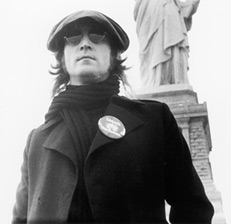
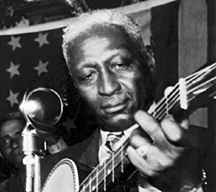 Lead Belly died on Dec. 6 1949. This is part of his story, adapted from my old Crawdaddy! column, The Origin of Song.



 Denise Sullivan
