So sung Walter “Furry” Lewis, born on March 6, 1893 in Greenwood, Mississippi and raised in Memphis, Tennessee. He sung of injustice regularly, dispensed mostly by the uneven hand of Judge Harsh, the arbiter of “Good Morning, Judge”- fame and God-given name of the guy who did the sentencing in Lewis’ part of town.
They arrest me for murder and I ain’t never harmed a man
The arrest me for murder and I ain’t never harmed a man
Arrest me for forgery and I can’t even sign my name
Lewis’ story isn’t much told, though the chapter in Rythm Oil by Stanley Booth tells it as it’s known. Lewis worked on Beale Street during its high cotton days; he lost his leg jumping a freight train; spent the depression, the war, the ‘50s, and part of the ‘60s working sanitation detail for the City of Memphis. It was in his retirement that he was rerecorded and began to perform again. Allen Ginsberg loved him, and so did the Rolling Stones; Joni Mitchell wrote a song about him and Lewis hated it (it crossed some lines). He appeared on Johnny Carson’s show and acted in the Burt Reynolds movie, W.W. and the Dixie Dancekings. Died in ’81 at 88. His “Judge Harsh” blues made a real impression on me in The Year of Our Injustice, 2004, which was around the time Fat Possum released Good Morning Judge (there are plenty of other Lewis titles available but I like that one).
Furry Lewis’ songs and old-time style will pick-you-up when you’re down. Listen for the way he ends his jams abruptly and without ceremony. His delivery and his guitar style are unique–check the move he calls “spanking the baby.” His outlook was generally optimistic, though his lines and the rhymes can break your heart.
Tell me baby, what eee-ver have I done?
Tell me baby, what eee-ver have I done?
Blood in my body done got too low to run
“I may be weak, but I’m willing” he said. I rely on his blues to chase away my own; turning on his music, I find I just can’t stay down for too long. Covering the spectrum of life in his songs, from white lightening and black gypsy to high yellow, he’ll turn your face red while personally guaranteeing to turn your money green. And above all, he had a new way of spelling Memphis, Tennessee: Double m, double e, great God, a, y to z.
A benefit for producer Tom Mallon will be held in San Francisco on Sunday March 3.
Somewhere in the world tonight there will be a benefit held for a musician in need of relief.
According to a survey published by Rock & Rap Confidentialthere are over 1000 musician for musician healthcare benefits annually in the US. “I suspect that number has increased,” says Rock & Rap’s resident advocate Lee Ballinger who compiled the stats a couple of years ago, while benefit concerts continue to be on the rise: Given the worldwide economic climate, the cost of individual insurance premiums in the US, and the number of requests my own household receives for participation in such events, it’s clear that grassroots fundraising in the name of healthcare is a reality of 21st Century American life.
And yet, community music events are just one puzzle piece in a complicated jigsaw of a healthcare plan, or more accurately a lack of one, currently impacting mid-career and older music folk now leaving us in epidemic proportions. Sure, we’ll all reach our time of dying, but a swath of a generation and entire class of mid-life professional taken out by illness and the financial burdens that accompany it? That’s the result of neglect rather than natural cause.
The impulse to care for our fellows is born from compassion and human nature, we’re all doing what we can, and the music community is especially proud that “We Take Care of Our Own.” But some of us are at particularly high risk: Take the example of Paul Williams, the founder of the pre-Rolling Stone rock magazine Crawdaddy! wasting away in an assisted living facility following a long journey with early onset dementia. His wife, singer-songwriter Cindy Lee Berryhill supports him and their son during a now critical passage while subsisting on income derived largely from teaching music lessons. We take care of our own is nice in theory, but who is taking care of them, not one but two of us who gave their lives to rock’n’roll?
Since the birth of the blues, mortality rates for musicians have never looked good: Rock is well-known to be a high-risk, life fast/die young profession. Toxically drunk and disorderly, small plane crashes, and ill-health brought on by lack of rest and road food are just some of the worst-case scenarios. A recent study even made the link between fame, premature mortality and childhood trauma. But for every well-documented and woeful tale of what made Jimi Hendrix, Janis Joplin, Kurt Cobain and Amy Winehouse go down, there are dozens more musicians whose problems are not those of wealth, fame, or unlimited access to pharmaceuticals.
The working musician who has managed to sustain a recording and performing career creating outside the mainstream spotlight lucky enough to reach mid-life is rock’s current unnecessary casualty. Traditionally, these musicians are in it for the long haul, the ones you dig deep to read up on, the innovators who rarely achieve super-fame, or even financial stability, but who are their profession’s workhorses and musician’s musicians. By mid-life, they are more accomplished than ever, but when illness strikes, it will not only sideline them temporarily, it may do enough damage to make sustaining their career as it was once known impossible. These working musicians are especially vulnerable not only due to age and lifestyle, but to the high cost of healthcare and changes in the music industry’s payment model and the toll it’s taking on a generation of favorites is starting to become noticeable. Not taking into consideration gospel, folk, blues, r&b, hip hop, international music and the disaster that struck New Orleans and its music people—in recent years, comeback legend Arthur Lee, songwriting giants Willy DeVille and Alex Chilton, super-rockers Ron Asheton, Sandy West, Buddy Miles and indie-adventurers,
Mark Linkous and Vic Chesnutt made their way to the great gig in the sky. Then there are the musicians whose names you may not recognize firsthand but a glance at your record collection reveals the losses: Duane Jarvis, Amy Ferris, Michael Bannister, Tim Mooney, your friend, family member, band mate who was gone too soon—their name belongs here, too. They are not the first generation to be dismissed: Think of what happened to a chunk of the first generation of rockers: Most of them faded into obscurity, penniless, their contracts bunk, their psyches destroyed and their spirits demoralized.
Though the circumstances and causes are as varied as cancer, heart attack and suicidal depression, these musicians were casualties of a healthcare infrastructure insufficient to support their special needs. Combine that with existent assistance agencies bogged down in bureaucracy, a fickle youth-obsessed market, diminished sales income from streaming, the price of gas on the road, the full catastrophe of life after 40 which often includes divorce, raising children while caring for aging parents, and you’re beginning to get a glimpse into the hot mess of the lives of the people who provide us with the so-called soundtracks to our lives. Sure, it’s arguable that some of these players may’ve survived their circumstances and respective illnesses—bodily and mental as the cases may be—if they had been given better information, had better managed their finances or simply had better genes or luck of the draw. Perhaps it was simply their time. But I don’t buy easy answers and arguments to complicated questions. Reminiscent of the AIDS epidemic that peaked in the early ‘90s and took out a generation of mid-life men, the conditions confronting mid-career, mid-level musicians is partly a consequence of no-one listening to the voices asserting that we have a crisis on our hands and there is not enough being done to correct it (and most certainly that crisis extends beyond the music communities and into the heart of America).
Foundations like MusiCares and Sweet Relief, two of the highest profile agencies music people of all ages turn to when they are in need of gap and emergency assistance, are overburdened. Last month, MusiCares, staged its annual pre-Grammy fundraiser at the Staples Center and according to Kristen Madsen, Sr. Vice President of MusiCares, “A majority of the net funds raised from the 2013 MusiCares Person of the Year Tribute to Bruce Springsteen will go directly to help music people in need.” I asked specifically how that breaks down but no answer was provided. As for Sweet Relief whom I did not contact, their website reports they are currently supporting direct campaigns to help the elderly Lester Chambers get on his feet, as well as with the healthcare needs of international music pioneer Cheb i Sabbah, among other artists. Both organizations are committed to doing good works, are well-intentioned and have helped countless musicians, though neither can be counted on to be the sole solution for families in crisis. I’m also sad to report that both entities are in need of a little of that human touch when interfacing with musicians and families faced with illness and financial ruin. Applying for assistance is confusing at the best of times, but for artists felled by illness and hospitalization, the filing of complex and binding financial statements can be not only an overwhelming, from a sickbed it is impossible task.
I speak from experience. In 2009, my husband, Peter Case, was hospitalized for an emergency surgery and the music community rallied: First responders were fans, followed by fellow musicians who donated through a fan-conceived website. Benefits over three nights and in three different cities were organized and the money collected went directly to pay medical expenses due to our then lack of insurance and lost income from his cancelled tour dates and my need to care give. Assistance organizations were contacted and one reached out, but in the end, their contributions added up to a fraction of our total bill. The outstanding amount was covered by a faith-based charity: Though they shall remain anonymous, faith-based organizations merit mention not only as our saviors but because they too are stretched to their limits and need your help. In our case, it was a combination of all entities working together for a common goal, taking care of their own, but an eleventh hour reprieve is not a solid plan.
Universal health care would be the ultimate solution for working musicians. The Patient Protection and Affordable Care Act (PPACA or Obamacare) may be a way for individuals to reduce their costs. There are plenty of services out there, and if you know going in they are maxed out and not to expect much from them, they may be able to help. The services offered by MusiCares and their suggested outside resources are on their website as are assistance options compiled by Rock & Rap Confidential. “One way to connect and amplify the power of musicians is through 100,000 Poets and Musicians for Change,” suggests Rock &Rap’s Lee Ballinger. The organization promotes community among artists and is invested in highlighting events for peace and sustainability, including health care reform and the promotion of benefit concerts, a necessary ritual embedded into music culture as well as society at large.
The all-star benefit concert was a concept pioneered by the late Ravi Shankar and George Harrison when they organized the Concert for Bangladesh in 1971. Today, wherever in the world communities are devastated, people are hungry or in need of relief, musicians are there, like the ghost of Tom Joad, to put on a show, whatever the cause. From high ticket events, down to sliding scale, pass the hat donation-style shows, community musical gatherings raise not only necessary funds but spirits, especially in times when bystanders often feel helpless or in need of inspiration. Until anyone has any better ideas, they will remain a large part of the solution to a larger systemic problem involving the cost of health care, especially diagnostic tests, and the hazards of the rock’n’roll lifestyle. It is also why this weekend in San Francisco, a hugely impressive role call of mid-career musicians will be coming home, reuniting and lending their support to Tom Mallon, recently diagnosed with a brain tumor. As a producer, engineer and musician in his own right, Mallon recorded San Francisco punk and alternative bands at low cost at his recording studio during the ‘80s and ‘90s; he was also a member of American Music Club. “In San Francisco, we take care of our own,” says musician and H.E.A.R. founder Kathy Peck an advocate for local musician’s health and welfare, and acknowledged for her work by Pete Townshend and Les Paul.
No doubt your local scene has its Tom Mallon or Kathy Peck—musicians and their advocates, able-bodied and disabled, the quiet shepherds and not-so quiet speakers of your community’s musical intentions. Now is the time step up and help them and the musicians of their generation, of your generation, in your town and across the miles and help them meet their goals: It could be a large check from a made musician or industry-sponsored organization or simply a kind word, a prayer or a homemade card of acknowledgement. Because this and that and all of it put together is what it means when we say, “We Take Care of Our Own,” and the time to take care is right now, before they’re all gone.
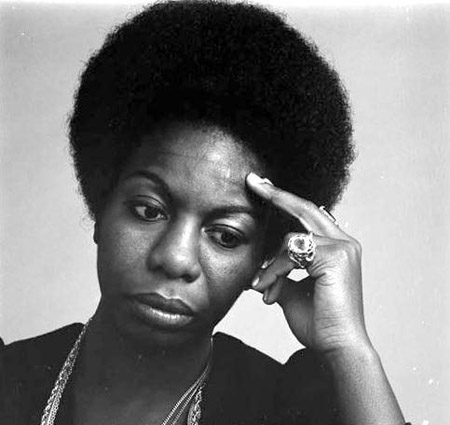
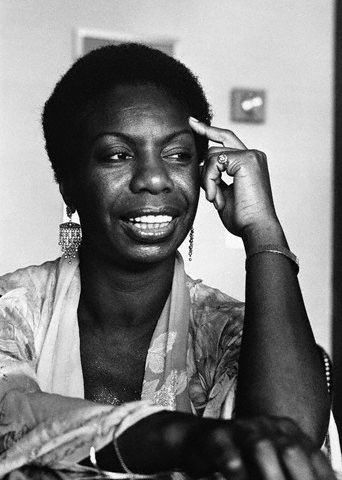
“I want to shake people up. I want to shake people up more.” These words were once spoken by international super-artist Nina Simone. It’s safe to say she succeeded with her mission: More than 50 years after her debut, few can match Simone’s supreme gifts as a vocalist, pianist, and arranger, the diversity of her repertoire, and the way those songs rattled consciences. Her music’s agelessness, as well as her delivery, has kept the melodies, as well as her message, fresh. And though her contribution to rock ‘n’ roll isn’t the first thing you may think of when it comes to her virtues, Simone was what we call a rocker: Her fierce attitude and the way she adapted some of rock’s best-known songs contributed toward getting across her message of true liberation.
“What we were looking for then was to shake people out of their complacency,” says Al Schackman, Simone’s musical soulmate and foremost collaborator. Schackman served as the genre-defying artist’s musical director, as well as a multi-instrumentalist, guitarist, and musical companion for just about the entirety of her career; the pair shared what both have described as a rare, telepathic communication that served them onstage as well as off. Much of their work together was compiled in 2008 on the four-disc set To Be Free: The Nina Simone Story, which includes a hefty slice of Simone’s “rock” repertoire alongside the jazz, folk, standards, and originals for which she is otherwise famous.
“If you wanted to classify her, she said she was a folk artist,” says Schackman, a Greenwich Village folk scene regular himself, though that isn’t necessarily the kind of folk Simone was talking about. She sang the songs indigenous to a country’s and people’s origins, from New Orleans and the “House of the Rising Sun” to Nigeria and Olatunji’s “Zungo”; she also interpreted Jacques Brel’s “Ne Me Quitte Pas” and the European ballad “Black Is the Color of My True Love’s Hair”, among other folk tunes.
For the album To Love Somebody, she took on “Turn! Turn! Turn!” from the folk-rock canon and turned it into a laidback jam. What Pete Seeger had borrowed from the Bible and what the Byrds turned into a reverent folk-rock cover, Simone deconstructed, finding the song’s soul. Another one of her great performances is the self-celebratory “Ain’t Got No/I Got Life” from Hair: The American Tribal Love-Rock Musical. She turned in versions of singer-songwriter classics like Sandy Denny’s “Who Knows Where the Time Goes”, Leonard Cohen’s “Suzanne”, and Randy Newman’s “Baltimore.” And while George Harrison and Richie Havens were songwriters she relied on more than once, their guitar strums and worldviews apparently music to her ears, she could also sing the blues. Simone was a full-service song interpreter.
“Oh yeah, Screamin’ Jay Hawkins,” says Schackman. “‘I Put a Spell on You.’ He wrote that song like a comedy, like he was the big magician, having fun with it. When she did it, it was dead serious… ‘I put a spell on you, the things you do, don’t you lie’… it was a warning. She’s tellin’ her man, ‘You’d better be cool.’ We did the Guinness Blues Festival in Dublin and Screamin’ Jay was there too, and he came back into the dressing room and he kneeled down in front of her and said, ‘The song was never done ’til you did it.’
“When she did a piece of music, she would claim it as her own. Because it would change totally,” he says, pointing to a version of “Revolution” by the Beatles, as customized by Simone for her own purposes in 1969, one of the most famously intense years in 20th century history.
“The people were directly involved and affected by what was going on… she wanted to make sure that they were really shaken out of what she felt was their sleep. One of the ways that we did that was like really blasting off on the tune, ‘Revolution’, where at the end we try to set off an atomic bomb, that kind of thing. People weren’t expecting that out of her at that time. To all intents and purposes, that one particular piece was a real departure from what her music was known for. It bordered on—I can’t say rock—but it kind of had that feeling.
“In the interludes, in the little breaks, she wanted me to get as far out as possible on the guitar. I used a slide to just really be able to make like explosive sounds… I would be playing notes using the slide,” as when Schackman plays the familiar Elmore James lick the Beatles borrowed for “For You Blue.” “But in the end, I took that slide and just went nuts on it, totally explosive.”
Simone had a rare musical gift, and her commitment as a fierce freedom fighter elevated her stature as an internationally understood and sometimes misunderstood vocalist. Her uncompromising attitude at crossing music with politics put her in a class with musical rebels, from Marvin Gaye and Chuck D to Bob Dylan and John Lennon. Not only did she use her originals like “Mississippi Goddam” and “Four Women” to convey her feelings on race matters, she worked in established pieces like Brecht-Weill’s “Pirate Jenny” to rouse audiences. “‘Pirate Jenny’ will scare the hell out of you the way she did it,” says Schackman. “There were people that came to concerts, like a family with a young kid… and during that song they’d leave. They’d get up and leave the concert ’cause of her language. She was ‘Pirate Jenny.’”
I asked Schackman how he tackled Simone’s notoriously fiery nature. “At times it was very difficult. A couple of times it was dangerous,” he says, though he maintains that Simone’s unpredictable disposition contributed positively to her creative process, especially to her unparalleled intensity onstage. “It helped her to be able to take on different characters. On one night, a song might have one type of character, and on another night, it would have a totally different character. It was wonderful—amazing.” He seeks to clarify that drugs never fueled her: “I can tell you she wasn’t a junkie. She didn’t do dope.”
As Simone famously shifted gears from Duke Ellington to Jimmy Webb, there were certain songwriters she favored: She wrapped her voice around Bob Dylan’s “Just Like Tom Thumb’s Blues”, “Just Like a Woman”, and “The Times They Are A-Changin’” as well as the perhaps unlikely Bee Gees, who she ended up covering four times. She gave a psychedelic soul shot to “To Love Somebody”, turned in a breezy “In the Morning”, and also laid down two lesser-known numbers, “Please Read Me” and “I Can’t See Nobody.” According to the liner notes of To Be Free, Simone was turned on to the British-Australian trio by Animals singer, Eric Burdon.
Schackman tells a story of the night in 1964, backstage at the Village Gate, when Simone and Burdon first met. “One time, Art D’Lugoff, the owner of the Village Gate, brought an artist back to see Nina, and he said he was like, her biggest fan. He told her what a fan he was and that she had inspired him… and she attacked him for stealing her song… this white guy had stolen ‘her song.’ I’ll never forget that. He was scared half out of his mind.”
It was Schackman’s understanding that the Animals scoring a hit with “House of the Rising Sun”, a song sung famously by Simone, Bob Dylan, Odetta, and countless others, was what sparked her ire for him. In Burdon’s take on the meeting, the meeting occurred at least a year later, at which time the origin of “Don’t Let Me Be Misunderstood”, the 1964 Simone track which the Animals hit with in ’65, was up for debate.
“So you’re the honky motherfucker who stole my song and got a hit out of it,” says Simone, according to Burdon in the book not-coincidentally titled Don’t Let Me Be Misunderstood. Burdon laid on Simone an accusation of her own song-thievery; she responded by warming up to him, and the pair would go on to become friends.
“If she did a piece of music, she would change it completely, not even thinking about it. She wouldn’t be concerned necessarily of where it came from or whom it came from. It’s only what it meant to her,” says Schackman. Some of her most evocative versions emerge when she does Dylan. “Like ‘The Times They Are A-Changin’.’ She was very aware of the meaning and the spirit inside of that song,” says Schackman. She delivers Dylan’s “Just Like Tom Thumb’s Blues” in a more somber, less sharp mood than the writer’s own. She also recorded “Ballad of Hollis Brown”, Dylan’s story of a starving farmer who kills himself and his family out of desperation. “It’s one of my favorite pieces I ever did with her, just the two of us,” says Schackman. “It’s an amazing piece of work.
“We were one. We had a telepathy,” he says, and it’s an idea Simone echoes in her autobiography. “… Al was right there with me from the first moment, as if we had been playing together all our lives. It was more than that even: It was as if we were one instrument split in two, I, the piano, Al, the guitar. I had never felt so much freedom in playing; knowing that someone knew where I was going and I knew where he was going. It was like telepathy—we couldn’t lose each other. And Al had perfect pitch, too, so I never had to tell him what key to play.”
“There was never any telling how she would craft a piece of music,” says Schackman. “I honestly have to say, I never really heard her sing or perform a piece of music the same way twice. That’s what I loved about it and that’s what made it difficult for other musicians to play with us. There would be times when we would be playing “The Other Woman” in E flat, and she would take it down to D, three tones, because she was in a certain mood and her voice didn’t want to be that low. Sometimes her voice didn’t want to be that high. She wouldn’t tell you and so as soon as she played her first note, I’d have to whisper over to the bass player the key.
“We were exposed to all kinds of things, and I would bring things to her and she would bring things to me,” explains Schackman. “She listened more to recordings. We’d sometimes hear stuff driving around in the car. She didn’t go in anybody’s direction. She was beyond anyone’s direction,” he says. “A lot of times she was difficult… there were times in her career that she wouldn’t work with anybody and it was just the two of us. I played guitar, bass, conga drums, sitar, vibraphone, running around the stage, depending on the piece of music. To me, that was some of the highest stuff. There was nothing in our way.”
The “Jazz” Age
Nina Simone entered this world on February 21, 1933 as Eunice Kathleen Waymon in Tryon, North Carolina. Her mother was a Methodist minister and her father was an odd jobber; their child’s musical life started officially at four, singing and playing piano as a member of her mother’s AME church choir. Encouraged and supported by teachers and townspeople, she made it to the Juilliard School, though when she wasn’t accepted for further study at the Curtis Institute of Music in Philadelphia, she took the blow personally; perceiving her exclusion as an act of racism, she carried the wound with her for the rest of her days.
Out of school, she sought work as an accompanist and developed a following at an Atlantic City piano bar, though fearing her mother would not approve of a daughter in the cabaret business, she went undercover and changed her name to Nina Simone. Her first album, Jazz as Played in an Exclusive Side Street Club (also known as Little Girl Blue) was released in 1958. It was a huge success—one of those late ’50s records that every American household seemed to have—riding largely on the strength of Simone’s Billie Holiday-inspired take on “I Loves You, Porgy” from the popular musical Porgy and Bess.
“She was put in a jazz category, but she very strongly said she was not a jazz artist,” says Schackman. He and Nina bonded when the two were holding down respective “jazz” gigs in 1957 in Bucks County, Pennsylvania. “I was playing with my group at a club in New Hope. She was playing solo at a bistro that was part of the Bucks County Playhouse Inn, a very nationally known summer theater. Some people heard me playing and thought it would be great if the two of us would play together, so they asked her, and she said okay, and they brought me down one evening. She looked at me for a second and didn’t say anything, didn’t even tell me what she was going to play and just started her introduction to ‘Little Girl Blue.’ Her introduction was a Bach piece called ‘Good King Wenceslas’—they play it at Christmas. I knew what key she was in and I felt where she was going. So she started on a fugue, a counterpoint, and she got to the first section of it and I came in with a third part. She looked up at me and that was it. She went into her song and we had a three-part invention going and she suddenly comes in with this beautiful little love ballad that was amazing—it blew me away. I’ve never heard anybody be able to isolate music and then sing something totally different on top of it. That was our meeting and we just blew each other away. Afterward she said, ‘I would like you to come for tea… 2 o’clock on Sunday afternoon,’ and gave me the directions to her house. She turned to leave, then turned around and said, ‘And bring your guitar.’”
He explains that they shared bonds that went beyond music. “She was raised in a rural setting, as was I. We both related to that and talked about being footloose and fancy free. She had the church and she came into music through the church and I came in listening to all kinds of music from Hebraic to Indian music. She just totally dug that I went to all those places because those were places she’d go by herself and I’d be able to go with her, playing in the tradition of where she was.”
Schackman says he knew something extremely important happened that day in Bucks County, but where it would lead, he had no idea. Due to a prior studio engagement with Burt Bacharach, he missed the recording session for Little Girl Blue, the album that would begin Simone’s journey away from the piano bars and onto the international stage. In addition to “I Loves You, Porgy”, the album also contained one of her most beloved numbers, “My Baby Just Cares for Me.”
Considering the keys and time changes, the mastery of her instruments and the improvisatory nature of her performances, it’s easy to understand why Simone would find herself classified under the catch-all of jazz. A set list that included “Mood Indigo”, “Nobody Knows You When You’re Down and Out”, and “Wild Is the Wind” would perhaps underscore that classification. But as Simone told author LaShonda Katrice Barnett in the book, I Got Thunder: Black Women Songwriters and Their Craft, “There are those who think jazz is scatting and nonsense. Jazz is associated with drugs, alcohol, and degradation. I have always resented the label because jazz is not what I play or how I live… I play black classical music, which I feel includes all of the forms I experiment with—the classical tradition, gospel, rhythm and blues, popular music.”
Jazz, or any category, simply could not hold a massive force like Simone. Inspired by the Civil Rights struggle and her socially conscious, artistic friends like Lorraine Hansberry and James Baldwin, Simone embarked on her political path. She came out strong with “Mississippi Goddam”, her self-penned anthem that transcends genre description
and is perhaps her most recognized composition.
“When I heard about the bombing of the church in which the four little black girls were killed in Alabama, I shut myself up in a room and that song happened. Medgar Evers had been recently slain in Mississippi. At first I tried to make myself a gun… then Andy, my husband at the time, said to me—he said to me, ‘Nina, you can’t kill anyone. You are a musician. Do what you do,’” Simone told author Barnett.
Schackman suggests that, artistically and politically, things had already begun to break open for Simone following their visit to Africa in 1960. “A big influence was when Baba Olatunji took us to Africa for a big international festival, to Nigeria. That was really the beginning of her African traditions.”
Simone brought to the stage African rhythms as well as style—hairdos, jewelry, fabrics—alongside the politics of liberation. She became emphatic against “the injustices of black people, of third world people.” Her song “Four Women” grew from conversations she’d had with black women about personally political issues like hair, skin tone, and body image. And yet, she isn’t among the voices more associated with the Civil Rights Movement in America. I ask Schackman to clarify this somewhat misinterpreted side of Simone’s life.
“She didn’t want to do benefits. She was not non-violent,” says Schackman, a practitioner of Sufism who was also deeply involved in the movement, as a player for singer and activist Harry Belafonte.
“A lot of people in the movement for a long time thought she wasn’t interested in the movement. She was so much bigger than just that. I remember a time at some kind of a civil rights function, cocktail party thing, I was standing with her and somebody came up to her and said, ‘Nina, how come you’re not interested in civil rights?’ She looked at them and she was screaming, ‘Civil rights? I don’t have to be interested in civil rights. I am civil rights.’”
As time went on, Simone became more and more disenfranchised from America, its politics, and its audiences. In 1970, she moved to Barbados; the singer/activist and her friend, Miriam Makeba, suggested she move to Liberia, where Simone would go on to claim she lived some of her happiest days (she wrote “Liberian Calypso” in tribute). She also lived in Europe, and eventually France became her home until her death from breast cancer in 2003.
“I don’t like this country,” Simone told author Barnett. “I never did. America will sell her soul for money. You see this everywhere. People selling themselves, their mothers, brothers, and sisters for money. Black people don’t get their due here… I couldn’t live here if I wanted to because I have to stand up for my rights and those rights of black people everywhere. I’m sure they would find a way to silence me.
“Now that I am older, I realize I can’t change the world, but I still believe that if anyone can, it is the artist. It is always through art that society changes—not politics or even education. Art and music especially speaks to people more than government and education. Why do you think great nations have patronage for their artists?”
And yet, there is one form of art that Simone did not embrace and that was rap music. “It is another way that America has learned to sell us. Slavery has never been abolished from this country’s way of thinking.” Uninspired by music and America, author Barnett asked Nina Simone, inspiration to so many singers, writers, and activists, where she receives her inspiration.
“Nothing made in America inspires me now. I wish that a young black American leader would come along and lead his people out of darkness. That would inspire me.”
—originally published on June 5, 2009 in Crawdaddy!
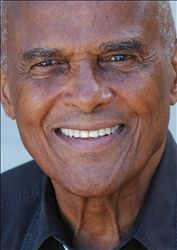
Actor, singer and activist Harry Belafonte accepted the NAACP’s Spingarn Medal on Friday night in New York City for outstanding achievement by an African American in 2012. Reprising a powerful speech he delivered at the NAACP Image Awards on February 1 in Los Angeles, he urged Black America, especially its artists, to get involved in the ongoing fight for social and economic justice, particularly in the areas of gun and prison reform, and eradicating poverty.
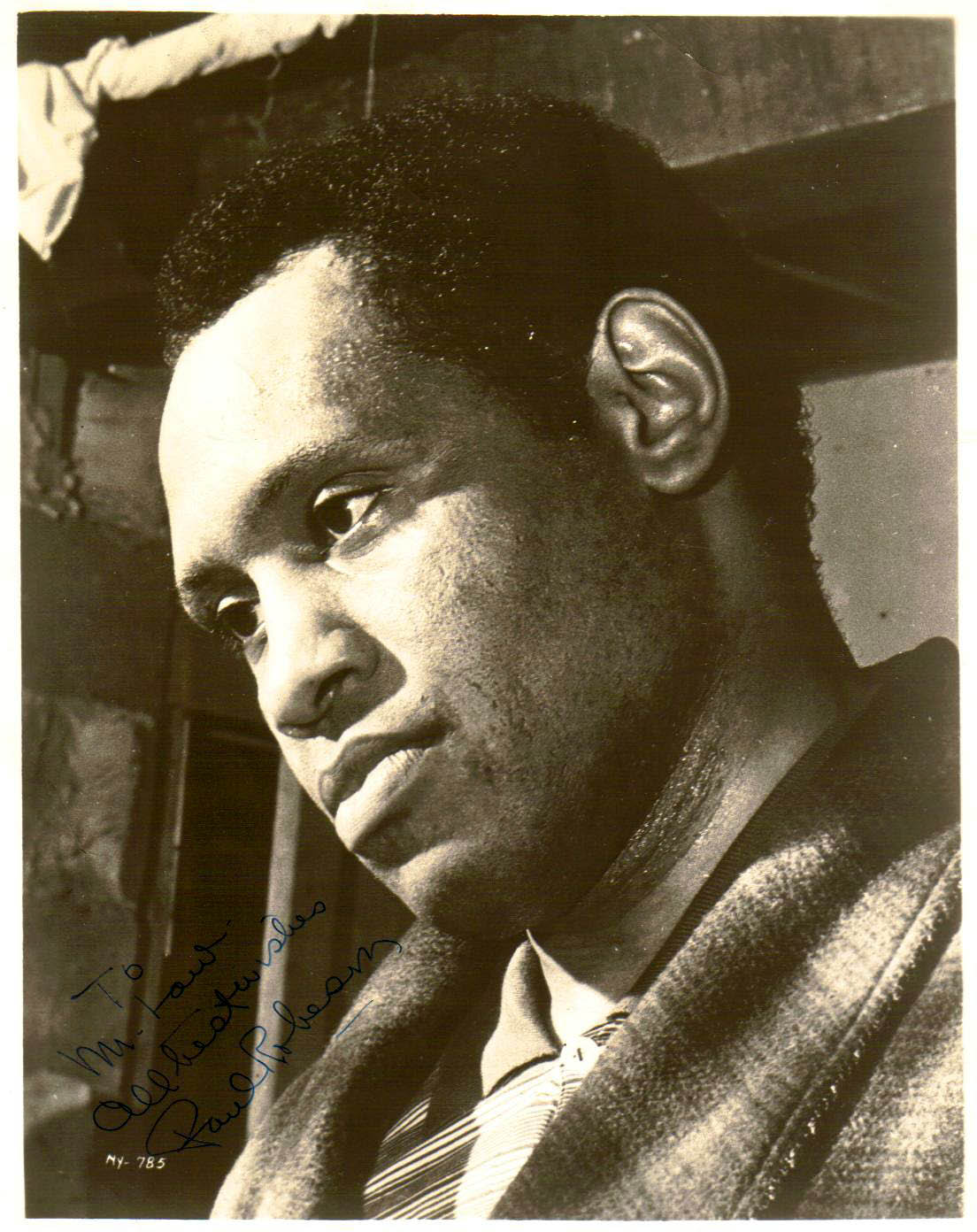
Asking for leadership while calling out the names of his mentors, his inspirers, those he cited as his moral compass, “W.E.B. Du Bois, Martin Luther King Jr., Eleanor Roosevelt, Fannie Lou Hamer, Ella Baker, Bobby Kennedy, Ms. Constance Rice and perhaps for me, most of all, Paul Robeson,” he honored their names and others like them as “The men and women who spoke up to remedy the ills of the nation.”
He elaborated on the role the accomplished singer, actor, athlete, and activist Robeson played in inspiring his own work as an artist/activist.
“For me, Mr. Robeson, was the sparrow. He was an artist who made those of us in the arts understand the depth of that calling when he said, ‘Artists are the gatekeepers of truth. We are civilization’s radical voice.'”
Belafonte continued with his own inspiring message to America’s next freedom singers. “Never in the history of black America has there be such a harvest of truly gifted and powerfully celebrated artists. Yet, our nation hungers for their radical song. In the field of sports, our presence dominates. In the landscape of corporate power we have more of a presence of captains and leaders of industry than we have ever known. Yet, we suffer still from abject poverty and moral malnutrition.”
He suggested as a solution, that what’s missing in the struggle for justice today is radical thought. “America keeps that part of the discourse mute,” he claimed.
“I would make an appeal to the NAACP as the oldest institution in our quest for dignity and human rights that they stimulate more fully the concept and the need for radical thinking…Unless Black America raises its voice loud and clear…America will never become whole, and America will never become what it dreams to be, until we are truly free.”
Here is the speech in its entirety from today’s broadcast of Democracy Now.
Read more on Harry Belafonte, Paul Robeson and singing for justice in Keep on Pushing
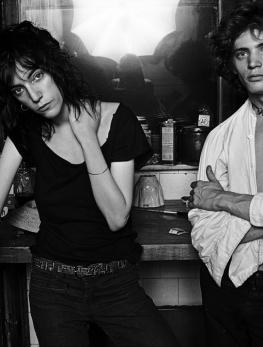
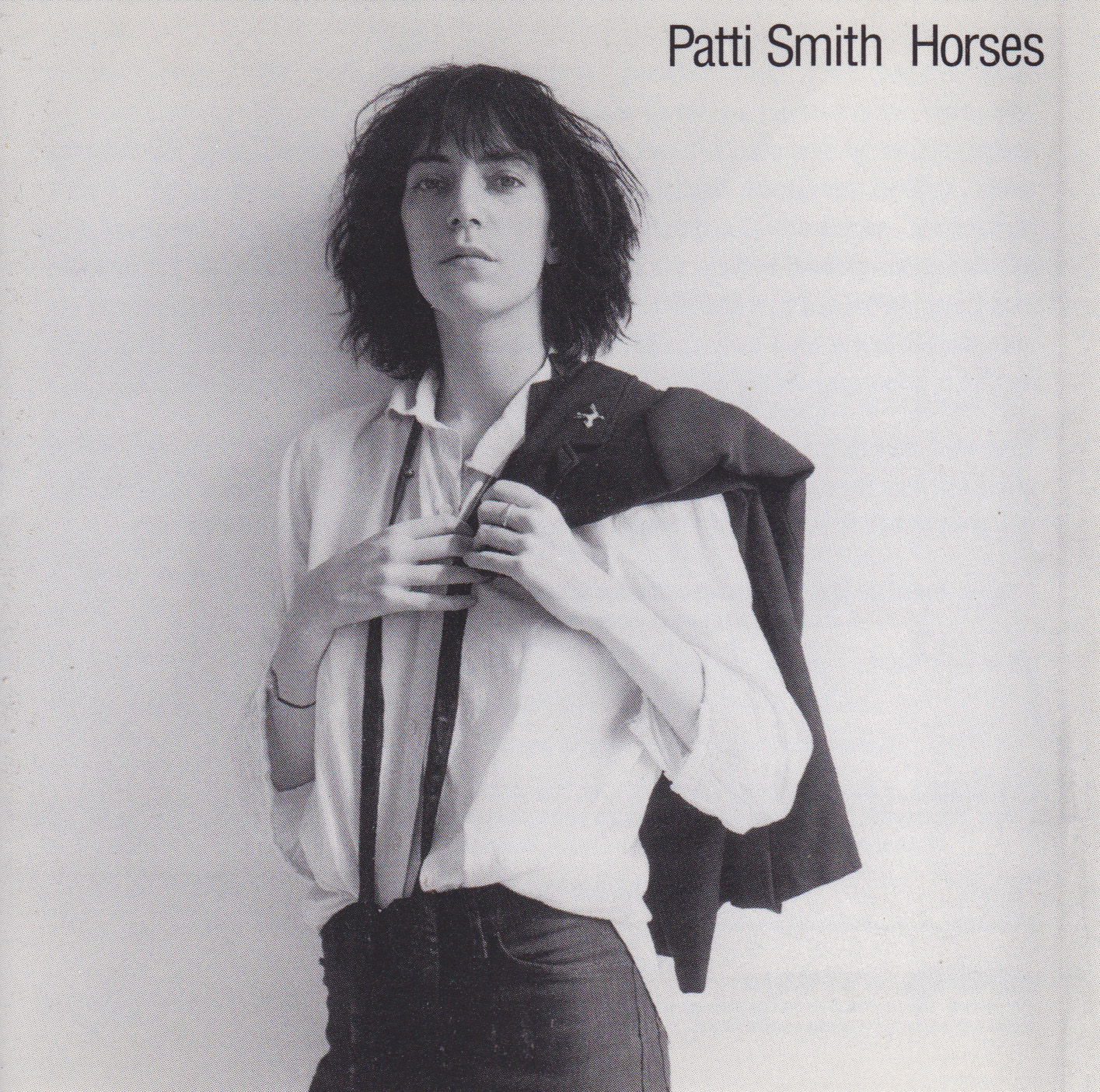
“He wrote me a note to say we would make art together, and we would make it with or without the rest of the world,” writes Patti Smith of Robert Mapplethorpe in Just Kids, her memoir of their lives and great love. Concerning their time as young artists discovering New York City and themselves in the late ‘60s and early ‘70s, not only would both of them make art together, they would eventually become nothing short of internationally recognized, particularly among artists, freethinkers, and members of their blank generation. But while Mapplethorpe’s life was cut short by AIDS in 1989, Smith lived on to keep the fire of rock’s poetic origins alight, Mapplethorpe’s influence on her inseparable from the origin of inspiration in her art and life. Without his prodding—his love—it’s quite possible that an entirely different Patti Smith than the one we know would have emerged. In Just Kids, Smith reveals Mapplethorpe’s commitment to art, his companionship, and his collaboration in the years leading up to her debut album Horses was invaluable to its creation: Not only did he capture the image of the poet/rock star-to-be on its cover, but it was he who first encouraged her to sing.
Produced (reportedly with some difficulty) by John Cale and performed by the Patti Smith Group (with songs written mostly by Smith and co-writers Tom Verlaine, Allen Lanier, and members of her group, specifically Lenny Kaye), Horses launched at least a hundred punk bands, if not a generation of kids with punk attitude, and it remains fully alive today. Infused with the spirit of Smith’s dead poet/rock ‘n’ roll heroes—particularly Arthur Rimbaud, the libertine poet whose spirit she’s kept moving through rock ‘n’ roll—the first word of the first song is “Jesus,” as Smith cleverly fuses her own invocation to Van Morrison, proclaiming rock ‘n’ roll “Gloria: In Excelsis Deo.” Whether intertwined with the Catholicism of Mapplethorpe’s youth or with Rimbaud’s travels to Ethiopia and his relationship to Rastafari, Smith made bold statements, particularly for a young woman who claimed to be shy by nature; she summoned the spirits of two men named James (Hendrix and Morrison) with three Bobs (Marley, Dylan, and Neuwirth) or four if you count Mapplethorpe, and her own strong desire to merge poetry with performing rock ‘n’ roll.
“I felt, watching Jim Morrison, that I could do that. I can’t say why I thought this… yet, I harbored that conceit,” she writes in Just Kids. Her connection with Hendrix was slightly more intimate: She was invited to the opening of his recording studio, Electric Lady. “I was excited to go. I put on my straw hat and walked downtown, but when I got there, I couldn’t bring myself to go in,” she writes. “By chance, Jimi Hendrix came up the stairs and found me sitting there like some hick wallflower and grinned.” He talked to Patti, revealing that he didn’t like parties either. “He spent a little time with me on the stairs and told me his vision of what he wanted to do with the studio. He dreamed of amassing musicians from all over the world in Woodstock and they would sit in a field in a circle and play and play… Eventually, they would record this abstract universal language of music in his new studio. ‘The language of peace. You dig?’ I did.” And then he was off, to catch a plane to England, from which he never returned. Smith read the news of his death about a month later while on a trip to Paris—on one of her rare respites from her gigs as a bookstore clerk/rough living artist/caretaker of Robert.
In New York, she happened to meet singer-songwriter and painter Bob Neuwirth in a coffee shop (she recognized him from the Dylan documentary, Don’t Look Back), and becomes just a little more inspired to try her hand at turning her poems into songs. “Next time I see you I want a song out of you,’ he said as we exited the bar,” she writes. But when she reports to Mapplethorpe of meeting Neuwirth, the photographer snaps back, “Maybe he’ll be the one to get you to sing, but always remember who wanted you to sing first.” Mapplethorpe doesn’t approve of Smith’s Marley-inspired pot smoking either, but the pair go on to spark up some sacred herb together, in the name of enhancing creativity.
Trying on her voice, reading her poetry aloud, Smith dove into performance mostly without Robert’s help, as he was moving deeper into the world of street hustling (this time it’s Patti who is disapproving). She reads for unappreciative fans of the New York Dolls and gets heckled by drunks before finding her sea legs and accompanists—first guitarist Lenny Kaye, and then Richard Sohl on piano. But when it’s time to record a single, it’s Robert who pays for the studio time at Electric Lady. For the recording, they choose “Hey Joe”, a song made famous by Hendrix. While Jimi closed his set at Woodstock with it, Smith and co. use it to usher in the era of the punk rock seven-inch. Recording at Jimi’s place, “I felt a real sense of duty,” she told the Observer in 2005. “I was very conscious that I was getting to do something that he didn’t.” Though Horses’ de facto title track “Land” was famously inspired by William Burroughs’ The Wild Boys, the lesser-acknowledged last third—“La Mer (de)”—makes reference to Jimi (“In the sheets there was a man”), as well as Rimbaud. “Elegie”, the final song on Horses, is also for Hendrix: It was recorded on September 18th, the anniversary of his death. “I think it’s sad, just too bad, that all our friends can’t be with us today,” she wrote, the words closely echoing those from Jimi’s “Well, it’s too bad that our friends can’t be with us today,” from “1983… (A Merman I Should Turn to Be)” from Electric Ladyland. As for fellow inspirer and rock star ghost Jim Morrison, “Break It Up” was based on a dream Smith had about him covered in plaster—like a statue.
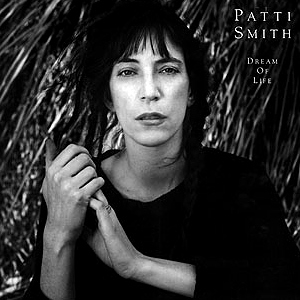
The making of Smith’s own image as a rock star poet was yet another Mapplethorpe collaboration. “You should take your own photographs,” she once told him, and eventually he turned his attention away from jewelry, objects, and installations and towards photography. For the Horses cover Mapplethorpe knew exactly what he wanted, and so did Smith: “I flung the jacket over my shoulder, Frank Sinatra style; I was full of references,” she writes. Though still developing as a photographer, Mapplethorpe was clear that he would work only in shades of black and white. Illuminated only by natural light, he got the image of Patti in 12 shots.
“Patti, you got famous before me,” said Mapplethrope in 1978 as he and Smith walked the streets of Greenwich Village. “Because the Night”, the song Smith wrote with Bruce Springsteen, blared from a series of storefront radios, “fulfilling Robert’s dream that I would one day have a hit record,” Smith writes. The song rose to lucky 13 on the pop charts, but Smith was burning out on the biz before she’d barely gotten stared in it. Following the recording of the album Wave, produced by her friend Todd Rundgren and again cover photographed by Mapplethorpe, she retreated from New York and rock to live as a wife and mother in Detroit, where her husband, Fred “Sonic” Smith of the MC5, hailed. But the hiatus didn’t really take, and by 1986, she was ready to make a comeback. With the encouragement of her husband, she called her old friend Robert to see if he would shoot a portrait for the album, Dream of Life; Mapplethorpe, who had become a major art star in the interim, took the photo of Patti as a 40th birthday gift. But the reunion between artists was fated to be brief, and the sessions that took place yielded some of his final photos.
Mapplethorpe’s patron and partner Sam Wagstaff succumbed to AIDS during the making of the album (Smith and Smith recorded “Paths That Cross” in Wagstaff’s memory). She had sung “The Jackson Song” (for the Smiths’ son) in which Mapplethorpe is also referenced (“little blue star that offers light”) to Wagstaff as a lullaby in his final days. Recording for Dream of Life continued, and she wrote “Wild Leaves” for Robert on the occasion of his 41st birthday. Somewhere in this mix, Smith and Smith also penned an enduring protest anthem, “People Have the Power”—the kind of song people sing when they need to raise a little spirit to keep on keeping on. Dream of Life was finally released in June of 1988, 10 years after the success of “Because the Night.” Mapplethorpe died in March of 1989, and Smith wrote “Memorial Tribute” (“little emerald soul, little emerald eye”) for him (it appears on the 1993 No Alternative AIDS awareness compilation).
In 1994, Fred “Sonic” Smith died, followed by the death of Patti Smith’s brother Todd and her bandmate Richard Sohl. Soon to turn 50, she returned to Electric Lady for the recording of the 1996 album Gone Again, a tribute to her dead friends and loved ones. Kurt Cobain was mourned (“About a Boy”) and soon to be gone Jeff Buckley sang on “Beneath the Southern Cross”, a song that survives as part of the Patti Smith Group’s concert repertoire. Following an eight year gap after Dream of Life, Gone Again, recorded in Fred’s memory, proved to be Smith’s real comeback. Now without Fred or Robert, she was supported as ever by guitarist Lenny Kaye and by new friend Oliver Ray, a young poet and guitarist who joined her band and photographed her. Michael Stipe (who had been inspired to become an artist himself upon hearing Horses) was also on board as a road friend when Bob Dylan invited her to tour with him. Back on the swing shift as a musician, there was no time to write the book she promised Robert on the day before he died that she would one day write.
In 2010, 35 years after its debut, Horses was added to the National Recording Registry of the Library of Congress, archived for posterity alongside sonic artifacts by Little Richard, Willie Nelson, and Ethel Merman. That same year, Just Kids won the National Book Award. Moved to tears as she accepted the honor, Smith recalled what it was like to work as a bookstore clerk, dreaming of what it might feel like to author a book with the award-winning seal one day. “Thanks for letting me know,” she said by way of acceptance. For the reader, Just Kids is the kind of book that serves not only as a history of a bygone age or a how-to as an artist, but as inspirational literature. It is a reminder that we are all members of the human family and artists of the everyday. If we are lucky, we have friends, relatives, and inspirers, our own set of losses, and our own unique memories, as well as a collective conscience from which we draw. There are dreams to be accessed and visions to fulfill, all day, everyday, whether through words, music, pictures, or the creation of an artful life. As Allen Ginsberg told Patti upon the occasion of the death of Fred “Sonic” Smith: “Let go of the spirit of the departed and continue your life’s celebration.”
While Mapplethorpe depicted dark against light—and vice versa, his increasingly sexually explicit images landed him in much hot water. But there is something innocent in his early photograph of Smith that portends more about the new wave of rocker than words could have ever described at the time: Smith is an original and reverent, androgynous yet vulnerable, regular but inscrutable. Mapplethorpe’s true image of her on Horses ripples through the contemporary persona who conducted the interviews for Just Kids: Patti Smith in black and white has her humble and “bravada” sides; the disheveled waif converges with the mensch in designer clothes. Open but reserved, she is a wizened poet who’s still girlish, gangly, and awkward—and still very much in love with art and life.
“I and I vibration is positive (got to have a good vibe),” sang Bob Marley. Nesta Marley was born on February 6, 1946 in the Nine Mile village of St. Ann’s Parish, to a black mother and a white father. Shuttling between two worlds, two homes, Marley translated a fractured urban/rural experience into a music with an alarmingly positive vibration that also sent a message. Born from an expression of outrage at injustice and frustration at western societal values, Marley’s sound was as unique as it was soulful and universal; today, his image serves as an international symbol of peace and liberation. There were of course detractors—people who found fault with Marley’s brand of “Rastaman vibration”, his strength and his convictions. “Government sometimes maybe don’t like what we have to say,” he once said. “Because what we have to say too plain”, while non-believers had little patience for what they heard as platitudinous refrains, along the lines of “Every little thing gonna be alright ” from the song, “Three Little Birds.”
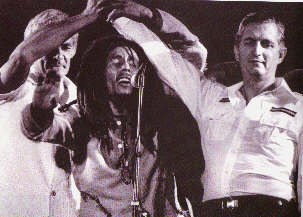
Doom-saying, despair, negativity and futility were not in Marley’s repertoire: “Why not help one another on the way? Make things much easier,” he sang. He also backed up the message in the music with action, as in 1978, when he was called out of exile by Jamaican authorities and asked to return home to Kingston, to join the effort to help quell escalating violence there. At the One Love Peace concert, Marley called opposing party leaders Michael Manley and Edward Seaga to the stage and raised their hands in a show of unity.
Taking his cues from the messaging in the records of Curtis Mayfield and the Impressions, the teachings of Black Nationalist Marcus Garvey (a Rastafari prophet), and with devotion to Ethiopian emperor Haile Selassie whom he believed to be the incarnation of Jah or God, Marley, alongside Bunny Livingston and Peter Tosh, brought reggae music to the world as the Wailers. Their songs provided not only temporary relief from fear, loneliness, isolation and other human conditions, they were also stepping stones toward solutions to world war, poverty, famine, and all forms of human rights violations. A short life with maximum impact, Bob Marley died of cancer in 1981 at the age of 36; his eulogy was delivered by Prime Minster Seaga.
In this upcoming clip, comedian/activist Dick Gregory pays tribute to Marley’s work as he introduces him to the stage at the Amandla–Festival of Unity for Southern Africa, held at Harvard Stadium in 1979 (the event also attempted to shed light on race relations in Boston). Marley is accompanied by his band and the I Threes, featuring Judy Mowatt, Marcia Griffiths and his wife, Rita Marley.
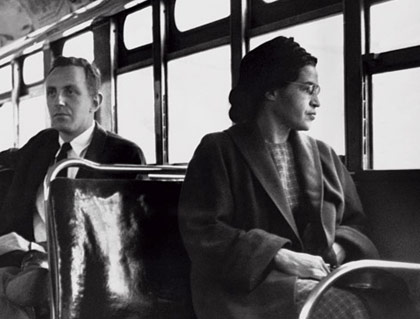
February 4 is the birthday of Rosa Parks, the civil rights activist remembered for refusing to move to the back of the bus: The Montgomery Bus Boycott, in the name of the desegregating public transit, was organized immediately following her arrest on December 1, 1955.
Born Rosa Louise McCauley in Tuskegee, Alabama in 1913, Parks was a student of non-violent protest and an active member of her local chapter of the NAACP in Montgomery, but her refusal to move on the bus that day was not part of any kind of group action or occupation—she held her seat on her own steam. And yet far from receiving any heroine’s awards, Parks paid the price for asserting her right to ride: In the immediate aftermath of the desegregation effort, she could no longer find work in Montgomery. She and her husband Raymond moved north, eventually settling in Detroit where she worked the better part of her life as a secretary for US Representative John Conyers.
Parks would one day receive the highest honors in the land– from the NAACP’s Spingarn Medal (Harry Belafonte will be honored this year), to the Presidential Medal of Freedom (awarded to her by President Bill Clinton) and the Congressional Gold Medal. But if you dared to mess with the Mother of the Modern Day Civil Rights Movement and her legacy in a movie or a song, look out: Parks was liable to slap you with a legal action or a boycott. “Sister Rosa,” a tribute to her by New Orleanians, the Neville Brothers, appears to have passed the test (though atypically for the Nevilles, it’s a rap track, taken from their 1989 album, Yellow Moon).
Parks passed in 2005, though matters of her personal estate have not been resolved and her detailed personal archive has not yet found a permanent home. She would’ve been 100 this year. For more information on Rosa Parks, visit the Rosa and Raymond Parks Institute.
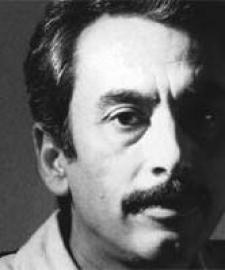
Following an incantatory opening by Jorge Molina, Shaman of the Mission, remarks by poetic elder, Roberto Vargas, and a performance by Dr. José Cueller (also known as musician Dr. Loco), Murguía took the stage on Sunday at the San Francisco Public Library’s Koret Auditorium.
“I learned to read in workingman cafes,” he said, as he offered his appointment to the community—those who read before him, the poets of the here and now, and the voices of the future. He read his poems “16th and Valencia,” “Lorca’s Dream,” and “The Poet Recalls His First Reading,” among other vivid, humorous, and moving bits and pieces.
Born in the US but living in Mexico until age six, Spanish is his native tongue, though childhood trauma left him speechless for a spell. He claims his first English words were “Pepsi, please,” ironic given his concerns as a poet and activist. As a young man and new arrival from the southland, Murguía was embraced by North Beach poets Lawrence Ferlinghetti, Jack Hirschman, Allen Ginsberg, Gregory Corso and Bob Kaufman; his compañeros were the writers (like Ishmael Reed, Janice Mirikitani and Jessica Hagedorn) of Asian, Black, Latino and Pacific Islander heritage who were part of the Bay Area’s cultural empowerment movements of the ‘60s and early ‘70s.
In addition to his home among the Beats in North Beach and the poets of progress and resistance, Murguía fell into La Mission: The district became his cultural home, the place where he made lifelong friends, got politicized and became a fixture in the neighborhood. He was among the founders of the Mission Cultural Center, preserving and promoting Latino arts, and those of the area’s indigenous people. However, Murguía is not just a Latino poet—he embraces his post as poet laureate as an opportunity to serve all of the city’s people.
“From this day forward, we will no longer speak of parallel histories but of a literary history and true history of San Francisco, punto final,” he said. He would like to see San Francisco officially adopt the slogan, The City of Poets, and he suggests that we would all benefit from poetry workshops (but especially those in governance would benefit from studying the relationship between words and the truth, so to speak). Reminding listeners that poetry is a form best read aloud, he encouraged the reading not only of our own work, but of poems written by others. I once heard him read with tremendous impact from Ishmael Reed’s Flight to Canada. Here’s the clip:
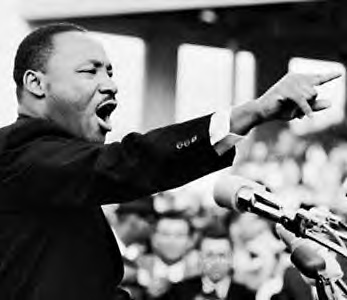
It was a long road to the third Monday in January when all 50 states will observe the birth of Martin Luther King, Jr. and the day named in his honor in their own unique ways. Largely owed for making the dream of a King holiday a reality is Stevie Wonder, who back in 1980, wrote the pointed song “Happy Birthday,” then launched a 41-city U.S. tour (and invited Gil Scott- Heron along) to promote the idea which was first mooted by Rep. John Conyers in 1968. The musical efforts were ultimately the key in collecting the millions of citizen signatures that had a direct impact on Congress passing the law signed by President Ronald Reagan in 1983, declaring a day for MLK. Observed for the first time in 1986, some states were late to the party, however, by the turn of the 21st Century, all were united in some form of remembrance of the civil rights giant. “Happy Birthday”, which served as the Wonder-campaign theme (and is now the “official” King holiday tune) is the last track on Hotter Than July. The album also features “Master Blaster”, Wonder’s tribute to Bob Marley who had been scheduled for the tour until he fell too ill to participate. Stepping into the breach was Scott-Heron whose 2011, post-humously published The Last Holiday, details his own journey with music and activism, while it retraces the long and winding road Wonder took to bring home a US federal holiday with the help of a song. The tour brought Gil and Stevie to Oakland, where they played in the name of King, as did Rodney Franklin and Carlos Santana, on the shocking night John Lennon was killed (though that is a story better read in Scott-Heron’s memoir).
In King’s birthplace of Atlanta, Georgia, the King Center, has a full schedule of events currently underway; the celebrations and various symposiums are of course dedicated to the King’s teachings in non-violence. In San Francisco on January 21, there will be an all-day celebration of King’s life at Yerba Buena Center for the Arts from 11 a.m. — 5 p.m. The City of Santa Monica also has a full weekend schedule of events beginning on Friday. The photo above was of course taken during the historic “I Have a Dream” speech, delivered on August 28, 1963 at the March on Washington now in its 50th anniversary year. Had he lived, Dr. King would’ve been 84 today—and still dreaming.
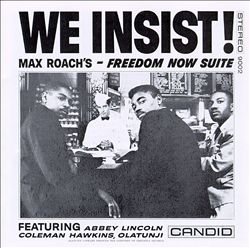
Two albums credited for fusing the politics of black liberation with the sound of freedom are Sonny Rollins’s Freedom Suite—the first experiment in 1958—and We Insist! Max Roach’s Freedom Now Suite— the fulfillment of the form. Born for the record in rural North Carolina on January 10 (by his family’s recollection it was the 8th) 1924, and raised in Bedford-Stuyvesant, Brooklyn, Roach was not only an innovative drummer who revolutionized jazz rhythms, he was actively engaged as a civil rights advocate and performed frequently for the cause. His Freedom Now Suite was initially conceived as a performance piece to coincide with the fast-approaching centennial of the Emancipation Proclamation in 1963: Fifty years later, as the historic document that freed all slaves celebrates its 150th anniversary, Roach’s piece with vocals by his then-wife Abbey Lincoln, (with Coleman Hawkins on sax, Olatunji on congas and lyrics by Oscar Brown Jr.) sounds as radical as the ’60s revolution in words and sound it helped to launch.
The cover art, in bold black and white, was groundbreaking graphic and image-wise in its depiction of three African American men at a lunch counter, a white waiter standing by, a reference of course to the sit-in on February 1, 1960 at a Greensboro, North Carolina Woolworth’s store that became a pivotal action in the non-violent fight for civil rights. But inside the cardboard sleeve, the vinyl grooves were an assault on the senses, capturing as they did the sound of exploitation, degradation, and ultimately, freedom. A sonically and politically strong statement, the Freedom Now Suite is a cornerstone recording in the history of contemporary black liberation music and remains a challenging, invigorating, and inspiring listen for anyone interested in such things. Making a link between the oppression of blacks throughout the world, Roach and other politically motivated American artists like Harry Belafonte and Nina Simone sought to parallel the civil rights movement in the US with the unfolding liberation of Kenya, Ghana, Congo, and Algeria. Dubbed the Year of Africa, 1960 held hope for the continent for independence from France, Britain, and Belgium and the promise that human rights, dignity, and economic health would be restored throughout the land. Fifty-three years later, the people here and there continue the fight for human rights, and the chance to be emancipated from the conditions of poverty, ill-health, environmental crisis, and violence that defines both our lands, while Freedom NowSuite still pounds out the sound of impending liberation.
The following clip depicts civil rights power couple Max Roach and Abbey Lincoln with their band performing the suite’s “Triptych (Prayer/Protest/Peace)” on Belgian television in 1964. Roach passed in 2007, though in his lifetime he he’d been a recipient of the USA’s MacArthur genius award, a commandeur in France’s Ordre des Artes et les Lettres, and a RIAA (Grammy) honoree. Read more on both Rollins, Roach, and their respective Freedom Suites in Keep on Pushing.

 Denise Sullivan