Denise Sullivan

Author, Arts & Cultural Reporter and Worker

The Black Power Mixtape 1967-1975

Last year’s most insistent documentary, The Black Power Mixtape 1967-1975, makes its public television debut this month: By any and all means, see this film.

Written and directed by Göran Hugo Olsson and co-produced by actor and one-time San Francisco State student activist Danny Glover, The Black Power Mixtape is a visual record of a period that inalterably changed America, as viewed through outsider lenses.  Edited from footage shot then by a Swedish television crew, the material was rescued and revisited 35 years later by Olsson and a cast of contemporary American musicians and activists who provide voiceovers. The resulting mash-up is as disassociated and cohesive, chaotic and united, as were the times themselves; the film is a testament to the people who lived and died through the upset.

This new version of American history, as told by Europeans and African Americans could ideally serve the new generation as a long-overdue introduction to who and what made the Black Power Movement move. From the Black Panther Party’s survival programs, toward its mission for freedom for all oppressed people, and into black empowerment’s more  general directive to teach true history, self-reliance and pride, the film also spells out the forces that conspired to decimate the people and dismantle the movement from within and outside it.  As for those already well-familiar with the subjects of political activism and the social changes that took place in the US in the ’60s and early ’70s, The Black Power Mixtape offers an opportunity to view rare footage that you haven’t seen a million times; rest assured, the contemporary voiceovers not only add fresh insights but are in synch with contemporary survival issues, as well as with the current protests taking place in US town squares.

My enthusiasm for The Black Power Mixtape is partly based on my interest in the subject matter and my passion for passing on recommended listening, viewing and reading materials; I also see it as the perfect  audio/visual companion to my own text on the subject, specifically chapters four, five and six of Keep on Pushing (though the film is undoubtedly more concentrated and is  enhanced by the voices of Questlove, Erykah Badu, Talib Kweli, Angela Davis, Sonia Sanchez and author Robin D.G. Kelley, among other noted artists and activists). I’m about to quote heavily from the film here so if you haven’t yet seen it and like being surprised,  you may want to stop reading and start streaming.

There’s a moment when the historic footage of the activists-then, dovetails in chilling harmony with the now-narration. Talib Kweli, a contemporary rapper/resistor, in the black radical tradition, begins his story of being inspired by the words of Stokely Carmichael. “He was a fiery speaker and had passionate ideas, but he was a calm, cool, collected person,” say Kweli. “None of these people were evil or bad or even extra violent.  Common sense meant that they had to speak and stand up for themselves….” In the name of research and inspiration, and in preparation for his own studio recording, Kweli began to study some of Carmichael’s widely available speeches.  “It was shortly after 9/11 in America,” he explains. “I was making a reservation on Jet Blue airlines to fly to California.  When I got to the airport…they came and intercepted me, all these guys in black suits, and they took me into a back room and started questioning me…They were very concerned with me listening to this Stokely Carmichael speech from 1967,” says Kweli. “We have gangster rappers talking about shooting people all the time but the FBI is not looking for them. They’re looking at me because I’m listening to a speech from 40 years ago…”

As the film wraps, author and scholar Robin D.G. Kelley underscore’s black power’s links to second wave feminism and gay liberation movement.  Readers of Keep on Pushing will also recollect that the entire second half of the book is dedicated to the impact of black power on other minority cultural and political movements, while it also follows power music into its next black incarnations. In The Black Power Mixtape, singer Erykah Badu puts in a word for the importance of documentation—the writing and reading—of black history by blacks, while filmmaker Melvin Van Peebles suggests that the movement was not a racial cause, but a freedom cause, for all the world’s people.

“People need to know, particularly in the 21st Century, it is important even under a black president, to bring the kind of pressure, to force the kinds of issues that will allow us to imagine a future without war, without racism and without prisons,” says Angela Davis.

“The rich are getting richer, not only in America but in the world…” says Sonia Sanchez.  “You’ve got to talk about that one percent or five percent that runs everything. It’s a lot of work. You don’t get any reward…The reward is knowing that when you make transition when you die, if you have children, there’s a better world for them and if you don’t have children, there’s a better world for other people too.”

Check your local PBS listings and Independent Lens for further February screenings of  The Black Power Mixtape 1967-1975—there are many.  The film is also available as a DVD.

Filed under: Angela Davis, film, Keep On Pushing, , , , , ,

Now Playing: Come Back, Africa

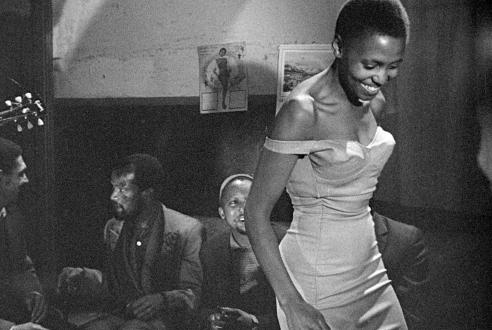
Come Back, Africa is a rare piece of cinema:  Not only will fans of cinéma vérité, Italian neorealist, and French new wave film find much to love about its style, historians will find it to be a valuable film document of an otherwise largely unrecorded period in Africa’s history.  At once a brilliant documentary and strong anti-apartheid statement, Come Back, Africa is also jammed with music: From the streets and townships of South Africa to its speakeasies or shebeensCome Back, Africa introduced singer Miriam Makeba to the world. Among those impressed by the Lionel Rogosin film was Harry Belafonte; the actor/singer/activist would become a mentor, friend and benefactor to Makeba, would help her secure gigs, and would set her in the direction of performing the sounds of South Africa around the globe, while spreading the word against apartheid. 

With South African writers, Bloke Modisane and Lewis Nkosi, Rogosin developed a filmic narrative  driven by the dilemma of people being forceable removed from their land. Come Back, Africa “laid bare apartheid’s ruthless cruelties,” wrote Belafonte, as it tells the story of Zacharia, a man who leaves his country life, his wife Vinah, and their children, to seek work in Johannesburg. What he finds there are unfamiliar laws rooted in racism and a series of dead-end jobs. He confronts inadequate housing and street violence, though a handful of souls provide sanctuary; he is introduced  to political ideas and dialogue by the artists and writers of the Sophiatown Renaissance.

Putting non-actors to work amidst the unrest, Come Back, Africa depicted dignity and tragedy; it exposed tremendous human failing, and it revealed glimpses of humanity and compassion.  A prize-winning documentarian for his first film On the Bowery (concerning the men on New York’s Skid Row in the late ‘50s), Rogosin made Come Back, Africa largely in secrecy, under the pretense that he was making a travelogue of South African music. He was eventually granted permission to make the film; Time Magazine called it one of the best films of 1960 (alongside The Apartment and Elmer Gantry).  “I took a vow at the end of World War II to fight fascism and racism wherever I saw it,” he said.

Writer, producer and director Rogosin was characterized by John Cassevettes as “probably the greatest documentary filmmaker of all time.” He founded the Bleeker Street Cinema and would continue to make films, though later in life, he would have trouble finding the funding for his projects.

Come Back, Africa, starring Zacharia Mgabi, Vinah Bendile, and featuring Miriam Makeba, has been beautifully restored and is currently in re-release. It screens at San Francisco’s Roxie Theater from February 3-8.

Read more about Miriam Makeba, Harry Belafonte and the music of anti-apartheid in

Keep on Pushing.

Filed under: Harry Belafonte, Keep On Pushing, Now Playing, , , ,

Stew and Heidi Rodewald, aka The Negro Problem, on Making It

Stew and Heidi Rodewald left Los Angeles for New York and Broadway where they found success with their coming-of-age musical, Passing Strange (now available as a Spike Lee Joint on DVD).  I spoke with them about their new album, Making It, and how their love got lost in the mix in the new issue of Blurt.

Filed under: Interview, new article, , , , ,

Etta James: 1938-2012

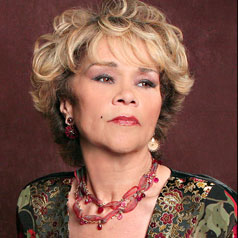
R&B legend Etta James, who would’ve turned  74 in a couple of days, has passed away after a long battle with leukemia complicated by dementia. Discovered by Johnny Otis (he was the one who rechristened Jamesetta Hawkins, Etta James), she was brought closer to the mainstream by Leonard Chess, and remained in her lifetime the First Lady of the Blues.  James was known for her hits “At Last,” “Tell Mama,” “Wang Dang Doodle” and “I’d Rather Go Blind” among many other greats, as well as for her struggle with drug addiction.  Inspired by Malcolm X, she joined the Black Muslims, as a way to get clean.  As Jamesetta X, she attended Temple 15 in Atlanta where Louis Farrakhan was minister.  “I became an honorable Elijah Muhammad Muslim…No more slave name.”  She believes her example may’ve had some influence on Cassius Clay turning toward the organization, though in her case, the faith didn’t stick.  She lived to tell these stories and more in her autobiography, A Rage to Survive.  Following a near decade sidelined by trouble, she resurfaced in the late ’80s after appearing in the Chuck Berry tribute film, Hail, Hail Rock’n’Roll, to largely resume her career and receive awards from all quarters, from the Blues Foundation, Grammy and the Rock and Roll Hall of Fame to the Rockabilly Hall of Fame, for her contribution to early rock’n’roll.

Sadly, Ms. James’ final months were disquieted by family finance trouble and a lawsuit pending between her husband, Artis Mills, and her son, Donto James (which was reportedly settled before her passing). She also made headlines in recent years when while falling ill she was still touring, performing, and calling out Beyonce (the singer had portrayed her in Cadillac Records, though it wasn’t the celluloid portrayal of her that the blues diva minded so much—in fact she went on the record as quite liking it). James didn’t like it when Mrs. Jay-Z went and performed the James signature song, “At Last”, for the President and Mrs. O at the inaugural festivities, though she eventually came clean about the hurt feelings behind being excluded from the inaugural ball proceedings.  Truth be told, James would’ve had to have had to considerably clean-up her NC-17 stage show for a G-rated White House appearance, as even in her early ’70s, the blueswoman walked the razor’s edge. Ms. James has been in my thoughts this past year, and especially in the last day since her early mentor Johnny Otis’ passing; my condolences to the James-Mills families, friends and fans.  Here she is one more time, with Robert Cray, Johnnie Johnson, and Keith Richards, singing Willie Dixon’s “Hoochie Coochie Gal”.

More on Etta James, her relationship to early rock’n’roll, and her experience with the Nation of Islam in Keep on Pushing.


Filed under: Blues, Keep On Pushing, Rhythm & Blues, Roots of Rock'n'Soul, , , , , ,

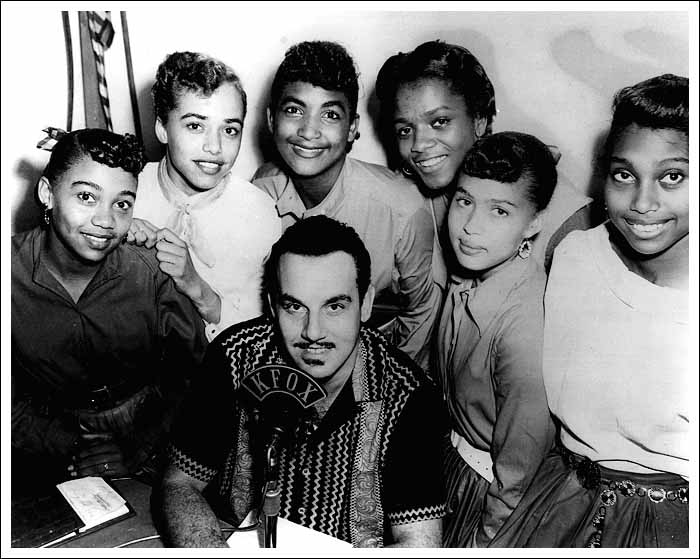
Johnny Otis: 1921-2012


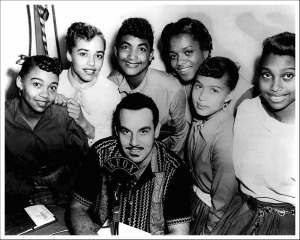
Johnny Otis, the great bandleader, writer/performer/producer, nurturer of musical talent, political activist, broadcaster, preacher, visual artist, and apple grower has died.  He was 90 years old.

Ioannis Alexandres Veliotes was born to Greek immigrant parents in Vallejo, California, and grew up in a predominantly black neighborhood in Berkeley.  It was Nat “King” Cole and Jimmy Witherspoon who suggested that he relocate to Los Angeles where he joined up with Harlan Leonard’s Kansas City Rockers, the house band at the Club Alabam on Central Avenue; from there, his career as a bandleader began in earnest. He hit with a version of “Harlem Nocturne” and took his California Rhythm & Blues Caravan on the road, bringing his revue to Black America.  Known to some as “The Godfather of Rhythm and Blues,” what Otis gave to rock’n’soul as a DJ, producer, writer and advocate of African American culture is incalculable:  He produced Big Mama Thornton and the original version of “Hound Dog”; he was an early discoverer of Jackie Wilson, Hank Ballard and Little Willie John, whom he noticed at a Detroit talent show.  He gave early breaks to Little Esther  Phillips and Etta James (he produced “Roll With Me, Henry”, her answer song to Ballard’s “Work With Me, Annie”) and produced some early takes by Little Richard.  He played on and produced “Pledging My Love” by Johnny Ace and wrote “So Fine” and “Willie and the Hand Jive.”  He nurtured artists from Jackie Payne and Sugar Pie DeSanto as well his son Shuggie Otis, and his grandson Lucky Otis.  He remained devoted to R&B throughout his lifetime, promoting it on his public radio broadcast, The Johnny Otis Show, on which he also spoke out about the issues he was passionate about—chiefly poverty and racism. “The fact that so many human beings in American are without adequate food, clothing, shelter, medical care, or hope for the future constitutes a national disgrace,” he wrote in 1993.  “I fear that as more of our country’s wealth is concentrated into fewer hands and American corporate fascism becomes more entrenched, the shame in the streets will grow.”

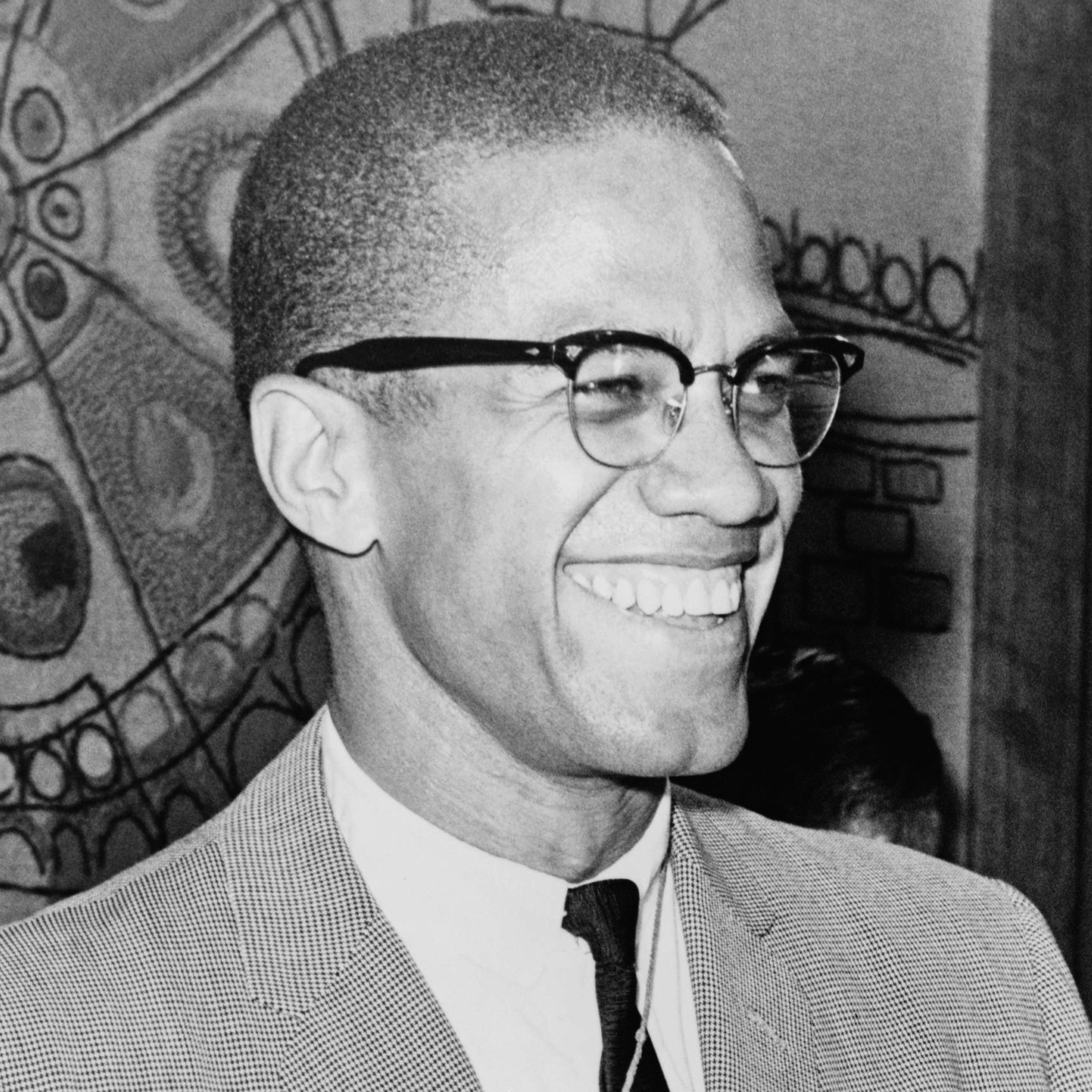
Otis lived his life if not passing then certainly living more comfortably among blacks, participating in the struggle for equality in the early ‘60s, and becoming adept at his own political and spiritual speechifying. His first book, Listen to the Lambs concerned the Watts riots of 1965.  Influenced early on by Minister Malcolm X, Otis ultimately entered politics working as Deputy Chief of Staff to Mervyn M. Dymally, a lifelong California politician. Otis also started his own churches, the Landmark Church in Los Angeles, turned Landmark Community Gospel Church in Santa Rosa: All were welcome.  “The most meaningful activity at our church was feeding homeless people,” Otis wrote.

Otis was also a visual artist with paintings, carvings and sculptures to his credit; believe it or not, he also marketed a line of apple juice, made from apples grown at his Sebastopol farm. Splitting his life between his native Nor Cal and his adopted Southern California homes, he died in Los Angeles, leaving his wife of 60 years, Phyllis, and an entire extended Otis clan.  My condolences to all of them, and to all those who loved him: “Rock Steady”, Mr. Otis, and thank you.

Johnny Otis is among the artists whose stories contribute to the rich history of where music meets social and political activism.  Read more about Otis and others like him in Keep on Pushing.  He told his own story in Upside the Head!  Rhythm and Blues on Central Avenue, available through his website.

Filed under: Keep On Pushing, Rhythm & Blues, Roots of Rock'n'Soul, , , , ,

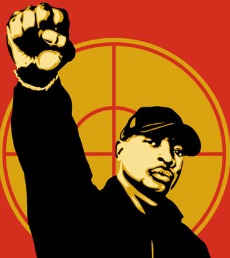
Chuck D: A Hero to Skid Row

Rapper Chuck D brought the noise, the love and his ministry of music on Sunday to the folks who need it most:  The residents of LA’s Skid Row, the largest community of homeless people in the USA.

Chuck D organized Operation: Skid Row with LA CAN (Community Action Network) which provides homes for the homeless and with whom he collaborated on the new book, Freedom Now, concerning the human right to housing. He brought Public Enemy (Flavor Flav, Professor Griff)  along to the show which also featured the old school talent of Brother J of X-Clan, Kid Frost, Yo-Yo and Egyptian Lover of “Egypt, Egypt” fame, as well as Money B and Korrupt (read the full report from the LA Times).

“When America has a recession, black America has a depression. When America hits depression, then you have a group of people based on their visual characteristics who are in total desperation,” Chuck D told the Ventura County Reporter last week, though details about the concert were kept vague until the last minute,  to keep the focus on homelessness and to discourage gawkers and overzealous fans.

The Skid Row neighborhood is described as having the largest “stable” population of homeless people—approximately 4,000— in the US, though in practical terms, the area is anything but stable:  It is under-served, its residents for the most part are unheard, and it exists as a world largely invisible to the greater Angeleno and American population. Filmgoers caught a glimpse of the Hollywood version of Skid Row in the 2009 film, The Soloist, starring Jamie Foxx and Robert Downey, Jr,   based on the true story of LA Times reporter Steve Lopez and his relationship with a homeless musician, Nathanial Ayers.  At the beginning of 2011, Pulitizer Prize-winning journalist Patt Morrison of KPCC broadcast a two-part series on the area in which she spoke to residents, some of them belonging to families spanning three generations there, as well to law enforcement and emergency and social service personnel who serve the neighborhood.  More recently, eyes have been on Skid Row in relation to where its concerns intersect with the Occupy LA movement.

I can think of no better way to honor the work of Dr. Martin Luther King, Jr. on his actual birthdate than by shining some light on the plight of our poorest—the bottom one percent—and making the effort to extend a hand to them. “Feed the people, their minds, body and souls, and hopefully attract attention to make this invisible situation visible,” says Chuck D, now celebrating 25 years since the release of Public Enemy’s Yo! Bum Rush the Show.  I have a feeling this is not the last we’ll be hearing from him or from hip hop on the matter of Skid Row.

More on Chuck D, Public Enemy and hip hop consciousness in Keep on Pushing.

Filed under: Concerts, Hip Hop, Keep On Pushing, , , , , , ,

Happy Birthday Dr. King

It was a long road to the third Monday in January when all 50 states observe Martin Luther King, Jr. Day in their own unique ways.  Largely owed for making the dream of a King holiday a reality is Stevie Wonder, who back in 1980, wrote the pointed song “Happy Birthday” then launched a 41-city U.S. tour (and invited Gil Scott- Heron along) to promote the idea which was first mooted by Rep. John Conyers in 1968. The musical efforts were ultimately the key in collecting the millions of citizen signatures that had a direct impact on Congress passing the law signed by President Ronald Reagan in 1983, declaring a day for MLK. Observed for the first time in 1986, some states were late to the party, however, by the turn of the 21st Century, all were united in some form of remembrance of the civil rights giant. “Happy Birthday”, which served as the Wonder-campaign theme (and is now the “official” King holiday tune) is  the last track on Hotter Than July. The album also features “Master Blaster”, Wonder’s tribute to Bob Marley who had been scheduled for the tour till he fell too ill to participate. Stepping into the breach was Scott-Heron whose new book, The Last Holiday, is part memoir/part the story of how Wonder used a song to bring home a US federal holiday. Born in Atlanta Georgia on January 15, 1929, Dr. King would’ve been 83 this year.

Filed under: Concerts, Gil Scott-Heron, , , , , , ,

Survive Baraka, Survive

“Never settle for the given.  What is it that hasn’t been mentioned? What is beyond that?” These are the words of activist, actor, poet, playwright, director, and music critic Amiri Baraka. “Art is supposed to unlock you, make the world more available to you,” like the way he felt when he heard Thelonious Monk for the first time, he said. Baraka was at the Hammer Museum in Los Angeles last weekend, in conversation with his daughter, Kelly Jones, curator of the wildly successful exhibit, Now Dig This! Art and Black Los Angeles 1960—1980, to discuss art and family, though the conversation inevitably turned to Baraka’s recurrent theme, surviving America. “Do you understand the world?…What do you think?… What is important to you?…What is it you want to say?…How do you say what the world is?…How do you tell us who lives on this planet?…How do you make something speak to the world?…” These are the questions he asks of himself and of other artists.

Born LeRoi Jones in 1934 in Newark, NJ, where he lives today, Baraka chronicled the birth of free jazz as a journalist; he wrote an Obie award-winning play, The Dutchman, and he is the author of Blues People, one of the first books to make connections between music and social history. Equally informed by the poetry of Langston Hughes, the politics of Malcolm X and the Black Mountain College poets, Allen Ginsberg and the Beat movement, in the mid-‘60s, Baraka founded the Black Arts Repertory Theater/School (BARTS) in Harlem which contributed to the development of a new, unapologetically black style of writing, its creation dovetailing with the Black Power movement’s cultural agenda. His album It’s Nation Time—African Visionary Music, for Motown’s Black Forum label, features his Black Nationalist poetry set to music.

Stirring it up for 50 years, in 2002, Baraka was named Poet Laureate of New Jersey and of the Newark Public Schools amidst controversy over his poem, “Somebody Blew Up America” (who? who?  who?). That same year, The Roots accompanied him on “Something in the Way of Things (In Town),” on their album, Phrenology. More on Amiri Baraka, the Black Arts Movement, and his connections to music, from blues to hip hop in Keep on Pushing.

Filed under: Blues, Jazz, Keep On Pushing, , , , ,

Goodbye Old Year, Happy New You

Among arts enthusiasts, there is the year-end tradition of list-making, that compulsive, hierarchical compiling of bests and worsts that at its most sinister and cynical is rooted in the marriage of media and market forces and at its most benign is a form of entertainment for us media freaks and geeks. I happen to enjoy the tradition of critically reviewing the year in culture; it helps me remember its themes and threads and some of the good times as I determine what I shall carry forward versus what I’d rather forget. Listmaking or at least the act of reading and sharing of lists, is a form of community; and a little like resolutions, a list can hold you accountable for your taste, revealing however impeccable, poor, quirky, or mediocre it might be. Top Tens are also great conversation starters, and they can contribute toward creating a grassroots buzz for the otherwise unheralded.  Word of mouth is still my favorite way of receiving a recommendation, especially when so many other channels of information have been cut-off or rendered unreliable.  “I didn’t hear it, but a friend told me she liked it,” is often a good enough reason for me to try something new. Which brings me to my own list of a few of my favorite things from 2011.

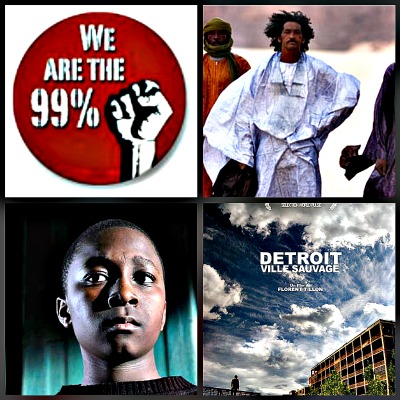
Tassili by Tinawiren produced by Ian Brennan: Mali music spiked with the art rock of TV on the Radio, a taste of New Orleans from the Dirty Dozen Brass Band, and all the soul of Tinawiren’s distinct desert blues.

Detroit Ville Sauvage aka Detroit Wild City, directed by Florent Tillon, concerns the regenerating landscape and pioneering people of one of America’s greatest cities.

The Black Power Mixtape 1967-1975, directed by Goran Hugo Olsson, conjoins lost and found footage of the struggle in the ‘60s and early ‘70s with the voices of contemporary artists and activists (its narrative echoes the story told in Keep on Pushing, but that’s not the only reason I liked it).

La Havre by Aki Kurismaki.  A middle-aged French bohemian with problems of his own offers asylum to a young immigrant from Africa, separated from his family in the port city of La Havre.

Activist and educator, Dr. Cornel West and journalist Tavis Smiley for The Poverty Tour.

Nobel Peace Prize winner Leymah Gbowee for her activism.

Journalist Amy Goodman for her coverage of the Occupy movement

All the citizens who occupied our streets and parks, from coast to coast.

The Marriage Plot by Jeffrey Eugenides.  The story of trio of students forced to reevaluate everything they’ve learned up until graduation day will ring through for not only ’80s grads but the graduating classes of  2012 and 2013, too.

The Last Holiday by Gil Scott-Heron: A memoir as well as the story of how a hip hop original, alongside Stevie Wonder, contributed toward establishing the federal holiday honoring Dr. Martin Luther King, Jr. I can’t wait to read it.

Who and what contributed to some of your most treasured moments, events and artistic endeavors from the year that was?  And what are you looking forward to in the year that is?

Twenty-eleven was chock-a-block with personal milestones on my calendar—not least of which was the publication of Keep on Pushing--though I’d like to begin 2012 with a few words of thanks for the memories, inspiration and encouragement from this past super-year. First to my readers—whether we are strangers, relatives, colleagues, kindred spirits or friends for real, your support of the book has meant a great deal to me.  In the cases where we’ve dialogued, whether about the book’s themes, its soundtrack, the artists, and my reasons for writing about them, your inquiries and  feedback have been most gratifying. I am indebted to the thoughtful interviewers—broadcast and print journalists—who took the book to their hearts and invited me in for conversation.  In a new section of the blog headed Audio, I’ve recapped some of those recorded highlights (or I should say, the miracle that is internet radio and its archives has preserved them, in perpetuity).  Also, I owe yet another round of thanks to the publications that reviewed the book, as well as to the book sellers and librarians who invited me to participate in events at their stores and institutions, my editors and publisher Lawrence Hill Books and its distributor IPG, as well as the the musicians and poets who supported me at those appearances by performing for free. Chuck D’s tweet  about the book on New Year’s Eve ended the year on a sweet, high note.

We plan to Keep on Pushing throughout the election year with our revue. If you are a musician, a poet, an educator, activist, or a citizen who wants to get into it and get involved, please be in touch. Wishing us all peace, prosperity and good health in the new year (and whatever else it takes to move up a little higher, someway, somehow).

Filed under: Keep On Pushing, Occupy Wall Street, Reviews, , , , ,

Happy Xmas (War Is Over)

And so it was that a centuries-old folk song about a race horse launched a rock ‘n’ roll Christmas standard 40 years ago this month. “Happy Xmas (War Is Over)”, in part inspired by “Stewball”,  was recorded by John and Yoko, the Plastic Ono Band, the Harlem Children’s Choir and produced by Phil Spector in December of 1971, though it didn’t hit the charts until the following Christmas. Sung seasonally ever since, this year as ever, the song serves as a reminder that war—its horrors and its costs—are still very much with us.

As for “Stewball”, I don’t know much about race horses, but I’ll do my best to impart the origins of the song.  The first song about him was written in the late 1700s. At that time, Stewball went by the name Skewball, though you might also see versions that tell of Sku-ball and Squball,  likely because his coat was of the skewbald variety, or what we call “pinto,” a horse with patches of color, usually on a chestnut or reddish base.

According to folk music lore and some reliable sources, Arthur Marvell’s Sku-Ball was set to race Sir Ralph Gore’s gray mare Miss Portly in Kildare, Ireland. But when the dark horse, or more accurately, the skewbald horse won, it took the horsey people by surprise:  They had expected the animal with the pedigree to take home the prize. Newsworthy as this was, the story made the broadsides: Printed on cheap paper and passed around, a popular ballad was born, beginning its journey through time and around the world.

Lyrically, there are plenty of variations on the “Skewball” story: For example, “Molly and Tenbrooks” is an American telling of a late 19th century horse race between California’s Mollie McCarty and Kentucky’s Ten Broeck. Versions of “Molly and Tenbrooks” were cut by bluegrass giants, the Stanley Brothers and Bill Monroe, but theirs are a different melody, though related by subject and genre to “Stewball” by kissin’ cousins the Greenbriar Boys. There lay the origin of the melody Joan Baez recorded. Her version is also somewhat of a conflation of the stories told in “Stewball” (who in some cases is a wine-drinking, winning race horse), and “Molly and Tenbrooks” (in which the mare stumbles and thus explains Stew’s win).

Comparing, compiling, and commenting on centuries-old ballads is a vocation to which I am not called; the work is best left to experts like Steve Roud of Croydon, London—he’s compiled the Roud Folk Song Index, listing 33 versions of Stewball and 22 versions of Skewball with data to match. He’s got the info on the John Lomax recordings of inmates of Parchman Farm singing their version in the ’30s, as well as Lead Belly’s ’40s adaptation (which begins “Way out in California…”), but again, different melody, different words, though the horse legend remains inasmuch as the “Stewball” recorded by Lead Belly, Woody Guthrie, and Cisco Houston concerns a race between a California and a Texas horse.

The version many of us know as “Stewball” entered the folk-rock zone in the ’60s, delivered by Joan Baez and Peter, Paul and Mary via the Greenbriars song, credited to John Herald, Ralph Rinzler, and Robert Yellin. For rock’n’roll folk, there could hardly be worse news than the prospect of yet another rousing verse of the song about a race horse by these buttoned-up icons of civil rights and traditional song. But by 1966, the Hollies came up with a folk-rock take on it, adding some zing with their multi-layered harmony style. Which is where we depart from the green fields of Ireland and the pastures of the Southwest and the story of Stewball moves to New York City in 1971, where John Lennon and Yoko Ono borrowed the melody and came up with their Christmas song, concerning peace on earth and life during wartime.

“‘Happy Christmas’ Yoko and I wrote together. It says, ‘War is over if you want it.’ It was still that same message—the idea that we’re just as responsible as the man who pushes the button. As long as people imagine that, somebody’s doing it to them and they have no control, then they have no control,” Lennon said in his final major interview. Lennon and Ono had used the “War Is Over! (If You Want It)” slogan in their billboard campaign of 1969, based on the idea that peace must be sold to the people just as aggressively as consumer goods and war is promoted.

John and Yoko and the Plastic Ono Band (whose star players for the purpose of this session were Jim Keltner, Nicky Hopkins, and Hugh McCracken) and the Harlem Children’s Choir (“War is over if you want it”) recorded the song in October at the Record Plant, assisted by producer Spector. It was released in the US on December 6th and held ’til the following November of 1972 for release in the UK.

Spector’s influence is clearly a presence on the track:  In addition to inspiration plucked from the Greenbriars’ version, as rendered by PPM and Baez, you can hear the injection of his claustrophobic effects, as heard on the Paris Sisters’ “I Love How You Love Me” and “To Know Him Is to Love Him”, as well as the influence of another song from Lennon’s past: “Pledging My Love” by Johnny Ace. “Happy Xmas” bears traces of all those melodies, with notes of their somberness.

Opening with a whisper to their children from whom they were estranged at the time (“Happy Christmas Kyoko, Happy Christmas Julian”), the lyrics open with a pointed question (“And so this is Christmas, and what have you done?”), with wishes for a better world to follow. By the final uplift, all is forgiven.

There are plenty of covers of “Happy Xmas (War Is Over)”, none of them mentionable, and some of them unmentionable (Billy Bob Thornton), though Lennon’s imaginative use of the “Stewball” melody has insured that not only the old race horse is remembered at least once a year, but that we remember each other, with love and thanks, forgiveness and faith.

A very Merry Christmas and a Happy New Year. Let’s hope it’s a good one, without any fear.

[A version of this text was originally published Dec 8., 2009 in Crawdadddy!]

Filed under: Folk, ,

Archives

Recent Posts

Browse by subject or theme